Abalone: The Ocean’s Ear-Shaped Jewel — Biology, Sustainability, and the Delicate Art of Dining
Introduction: A Shell with a Story Worth Hearing
Introduction:
A Shell with a Story Worth Hearing
Shimmering with the iridescence of polished pearls, abalone — sometimes called the “ocean’s ear” — has captivated both marine biologists and culinary artists for centuries. From the stormy coasts of New Zealand to the kelp forests off California’s rugged cliffs, these marine mollusks aren’t just delicacies — they are living fossils, ecological keystones, and emblems of cultural heritage. Yet today, abalone’s future is precariously balanced between demand and decline. This article dives deep into the genus Haliotis — its taxonomy, biology, ecological role, culinary grandeur, and the effort to ensure its survival. Whether you’re an aquaculturist, a chef, or a curious gourmand, abalone’s story is one of delicate beauty, evolutionary wonder, and the challenge of sustainable indulgence.
1. Taxonomy: The Living Fossil of Marine Gastronomy
Belonging to the family Haliotidae, abalone falls under the genus Haliotis, a name derived from Greek, meaning “sea ear,” referencing the mollusk’s flattened, auriform shell. These gastropods are marine snails — members of the class Gastropoda — yet they have earned a cultural status far beyond their taxonomic simplicity.
- Genus: Haliotis
- Class: Gastropoda
- Family: Haliotidae
- Common Names: Ormer (UK), Paua (Māori/NZ), Awabi (Japan), Loco (Chile)
There are over 50 known species within the genus, but a handful dominate global consumption:
- Haliotis rufescens (Red Abalone): Found on the Pacific coast of North America; prized for size and flavor.
- Haliotis discus hannai (Pacific Abalone): Especially farmed in Korea and Japan.
- Haliotis midae (South African Abalone): High export value, heavily poached.
- Haliotis iris (Pāua): Indigenous to New Zealand; known for its vivid shell and chewy texture.
Each variety offers distinct flavors and ecological adaptations, creating a mosaic of regional significance and culinary potential.
2. Biology: Armor, Adaptation, and Iridescent Mystery
Abalones are slow-growing, single-shelled gastropods. Their exterior shell is rugged and pitted with a line of respiratory pores, while the inner nacre gleams in hues of blue, green, and silver — often repurposed into jewelry and inlay. But this beauty is functional: the nacre’s microstructure is one of nature’s strongest composite materials, inspiring biomimetic innovations in engineering.
- Reproduction: External broadcast spawners; females release eggs, males release sperm into the water.
- Lifespan: Up to 40 years in the wild.
- Diet: Herbivorous, grazing on algae and kelp using a rasping tongue (radula).
Abalones cling tenaciously to rocks using a muscular foot, evolved for life in turbulent tidal zones. Their cryptic coloration and low mobility make them both marvelously adapted and tragically vulnerable.
3. Ecology: A Kelp Forest Citizen Under Siege
Abalones are vital contributors to the marine ecosystem. By feeding on algae and seaweed, they help regulate the balance of rocky reefs and kelp forest environments. They are prey for sea otters, octopuses, and lobsters — yet no predator matches the efficiency of humans.
The combination of high market demand, slow growth, and habitat degradation has led to critical declines:
- Endangered Species: Haliotis sorenseni (White Abalone) is federally listed as endangered in the U.S.
- Poaching and Overfishing: Especially devastating in South Africa and California.
- Marine Heatwaves and Disease: Withering syndrome and warming seas threaten abalone aquaculture.
However, sustainable solutions are emerging:
- Abalone Farms: Land-based closed-cycle aquaculture in Japan, Korea, and California is reducing pressure on wild stocks.
- Community Quotas: New Zealand’s Māori fisheries integrate traditional knowledge into sustainable harvesting.
- Marine Protected Areas: Sanctuaries are helping to regenerate wild populations with some measurable success.
4. Uses: Economics, Sustainability, and Symbolism
Abalone shells are coveted in artisan crafts and ceremonial artifacts, but the mollusk’s real value lies in its flesh. Once considered “poor man’s protein” in coastal Asia, it is now a luxury item in fine dining, traditional medicine, and festive rituals.
- Price: Live abalone can fetch over $100/kg in luxury seafood markets.
- Economic Impact: China, Japan, and South Korea dominate aquaculture and consumption.
- Cultural Significance: Symbolizes longevity and prosperity in Chinese New Year celebrations; sacred to coastal indigenous tribes in North America.
Sustainability initiatives face an uphill battle, but innovations in eco-labeling and vertical farming show promise in reshaping the industry.
5. Culinary Aspects: Ocean Umami on the Plate
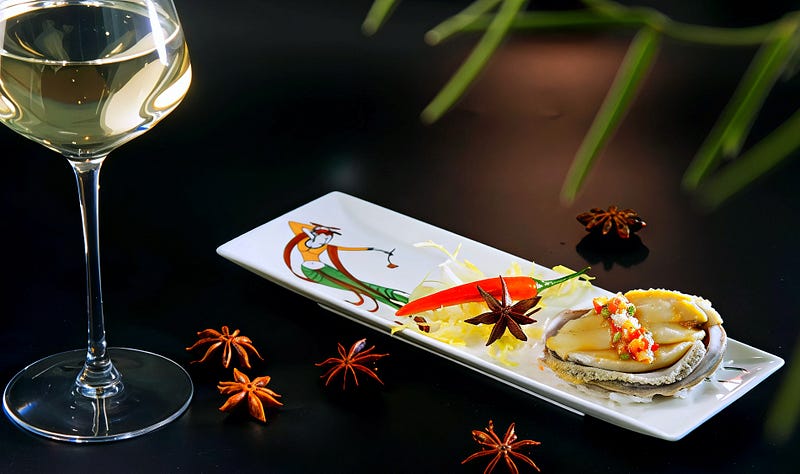
Abalone is delicate, dense, and prized for its elusive umami — a cross between scallop sweetness and calamari chew, with a finish of ocean brine. It’s an ingredient that punishes haste and rewards patience.
Cultural Preparations:
- Japan: Sliced sashimi or steamed in sake (awabi).
- China: Braised with oyster sauce or double-boiled in herbal broths.
- Mexico: Grilled with chili-lime marinade.
- New Zealand: Minced pāua fritters served with lemon and garlic.
Nutritional Value:
- High in lean protein
- Rich in iodine, Vitamin E, and Omega-3 fatty acids
- Low in saturated fats
Whether pan-seared in butter or thinly sliced raw, abalone demands minimal interference. Simplicity elevates it.
6. Wine Pairings: Sea-Salt Elegance Meets Cellar Sophistication
The best wine pairings for abalone mirror its briny delicacy and rich texture. Think crisp, mineral, and elegant:
- Chablis (France): The steely acidity and flinty notes enhance abalone’s oceanic flavor.
- Albariño (Spain): Saline finish and citrus complexity mirror abalone’s brine.
- Sauvignon Blanc (New Zealand): Especially from Marlborough — grassy, citrusy, and vibrant.
- Champagne: The effervescence acts as a palate cleanser between tender bites.
For richer preparations (like braised or sauced), a restrained Chardonnay (un-oaked or lightly oaked) from Sonoma or Burgundy complements beautifully.
Conclusion: Listening to the Ocean’s Oldest Whisper
In the folds of an abalone’s spiral shell lies a story of survival, seduction, and warning. This ancient mollusk, both fragile and resilient, invites us to reflect on how we consume nature’s rarest gifts. Can luxury align with sustainability? Can tradition coexist with preservation?
If the abalone teaches us anything, it is this: there is value in slowness, in savoring, in knowing where our food comes from — and in leaving enough behind for the next generation of divers, chefs, and sea otters.
Endnotes & Media:
- National Oceanic and Atmospheric Administration (NOAA) — White Abalone Recovery Program
- FAO Fisheries Division — Global Aquaculture Production Database
- Monterey Bay Aquarium — Seafood Watch: Abalone
- NZ Ministry for Primary Industries — Māori Fisheries Sustainable Management
- International Wine Journal — Seafood and White Wine Pairing Principles