America and China: The Unraveling Strategy Behind a Dangerous Rivalry
The contemporary relationship between the United States and China stands at one of the most precarious junctures in modern geopolitical…
The contemporary relationship between the United States and China stands at one of the most precarious junctures in modern geopolitical history. What once appeared to be a stable, mutually beneficial partnership despite long-standing disputes has rapidly deteriorated into an increasingly confrontational strategic competition. This transformation has left policymakers, analysts, and citizens alike grappling with fundamental questions about how Washington should navigate this fraught relationship while protecting American interests without stumbling into catastrophic conflict. The RAND Corporation’s extensive research into this dynamic reveals not only the scope of the challenge but also significant weaknesses in how the United States has approached China policy — weaknesses that threaten to undermine American strategic objectives in the years ahead.
Understanding the Current State of US-China Relations
The United States and China have entered what scholars term a period of intense strategic competition, a reality starkly different from the engagement-oriented approach that characterized relations for decades. This shift reflects fundamental changes in both countries’ capabilities and ambitions. China’s economic rise has been nothing short of extraordinary, transforming it into the world’s second-largest economy with a GDP that narrows the gap with the United States each year. When measured by purchasing power parity, China’s economy has already surpassed America’s, generating profound implications for the global balance of power.
This economic ascent has been accompanied by dramatic military modernization. The People’s Liberation Army has evolved from a largely defensive, territorially focused force into one capable of projecting power throughout its periphery and increasingly beyond. China now possesses the world’s largest navy by hull count, advanced missile systems that threaten American military bases across the western Pacific, and growing capabilities in space, cyber, and nuclear domains. These developments have fundamentally altered the military calculus in East Asia, where the United States once enjoyed unquestioned superiority.
Yet the competition extends far beyond military and economic dimensions. It encompasses technology leadership, particularly in critical sectors like artificial intelligence, advanced semiconductors, and telecommunications. It involves competing visions for international order, with China seeking to renovate existing institutions and norms to reflect its preferences while the United States works to preserve an order built largely on liberal democratic principles. The competition plays out in diplomatic arenas, through information campaigns, and in the contest for influence across developing nations hungry for infrastructure investment and economic partnerships.
This multidomain, multilevel competition unfolds simultaneously at regional and global scales, creating extraordinary complexity for American policymakers. In Asia, the contest centers on questions of regional leadership and security architecture. Globally, it revolves around which power will shape international rules, norms, and institutions. The stakes could hardly be higher: the emerging order will determine not just the relative position of the two great powers, but the nature of the international system itself for decades to come.
China’s Ambitions Over Taiwan and US Strategic Response
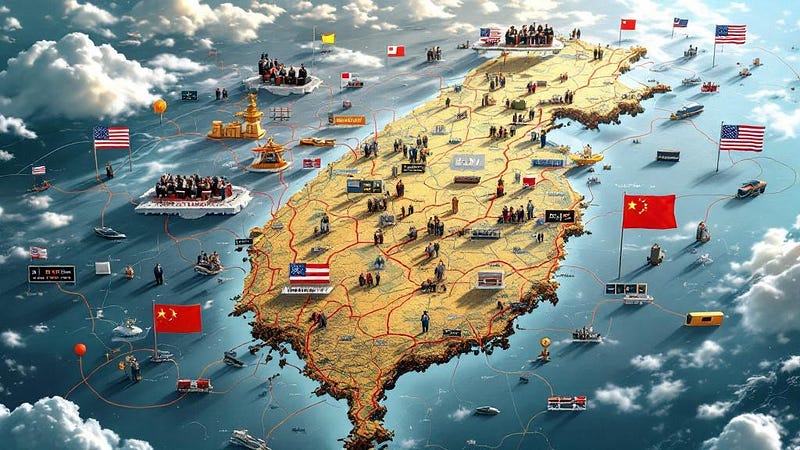
Taiwan sits at the very heart of US-China strategic competition, representing both the most dangerous flashpoint for potential conflict and a test case for broader questions about coercion, deterrence, and resolve. For Beijing, Taiwan represents an unfinished chapter of China’s national reunification, a core interest for which the Chinese Communist Party has explicitly refused to renounce the use of force. President Xi Jinping has directed the PLA to be ready by the late 2020s to fight and win in a Taiwan scenario, a timeline that concentrates minds in Washington and capitals across the Indo-Pacific.
China’s approach toward Taiwan has grown increasingly sophisticated and multifaceted. Rather than relying solely on the threat of invasion, Beijing has developed what analysts call a gray zone strategy — a campaign of pressure that remains below the threshold of armed conflict but steadily erodes Taiwan’s political confidence and conditions the international community to accept Chinese dominance as inevitable. This strategy manifests in multiple domains simultaneously. In the air, PLA aircraft conduct hundreds of sorties into Taiwan’s air defense identification zone each year, normalizing their presence and exhausting Taiwanese defenses. At sea, Chinese naval vessels and coast guard ships operate with growing frequency in waters surrounding the island, while maritime militia vessels — ostensibly civilian fishing boats that act as instruments of state power — shadow military exercises and harass Taiwanese maritime activities.
The economic dimension of China’s gray zone campaign proves equally potent. Beijing revokes tariff-free status for Taiwanese exports at politically opportune moments, imposes antidumping investigations against Taiwanese companies, and targets agricultural products from electoral constituencies that support Taiwan’s Democratic Progressive Party. The message Beijing sends is unambiguous: Taiwan needs China economically, and there are costs to be paid for resisting unification. China has demonstrated through actions against countries like Lithuania and Australia that it will impose economic punishment on any nation it perceives as transgressing on Taiwan, making clear its willingness to weaponize trade and investment for political ends.
In the information domain, China conducts influence operations targeting Taiwanese elections, spreads disinformation to undermine confidence in Taiwan’s government, and works through united front organizations to build economic dependencies that can be leveraged politically. The cumulative effect of these gray zone tactics is to create a new normal where Chinese pressure is constant, where Taiwan’s international space shrinks incrementally, and where the psychological toll on Taiwan’s population mounts steadily.
For the United States, China’s gray zone approach presents acute dilemmas. Traditional deterrence focused on preventing overt military aggression, but gray zone operations by definition fall below the threshold that would trigger American military intervention under existing policy frameworks. Each Chinese action might seem minor, not worth risking war over, yet collectively they shift facts on the ground in Beijing’s favor. Washington struggles to calibrate responses that impose meaningful costs on China for gray zone coercion without escalating to confrontation.
The military dimension remains central to Taiwan’s security and American strategy. China has built formidable capabilities specifically designed to prevent American military intervention in a Taiwan scenario. Its arsenal of conventional ballistic and cruise missiles can strike every American military base in the western Pacific, potentially overwhelming defenses and imposing devastating losses in the early stages of conflict. Advanced air defense systems protect Chinese airspace while fighters and surface-to-air missiles threaten American aircraft operating near the first island chain. Anti-ship ballistic missiles and increasingly capable submarines menace American carrier strike groups that might sail toward Taiwan.
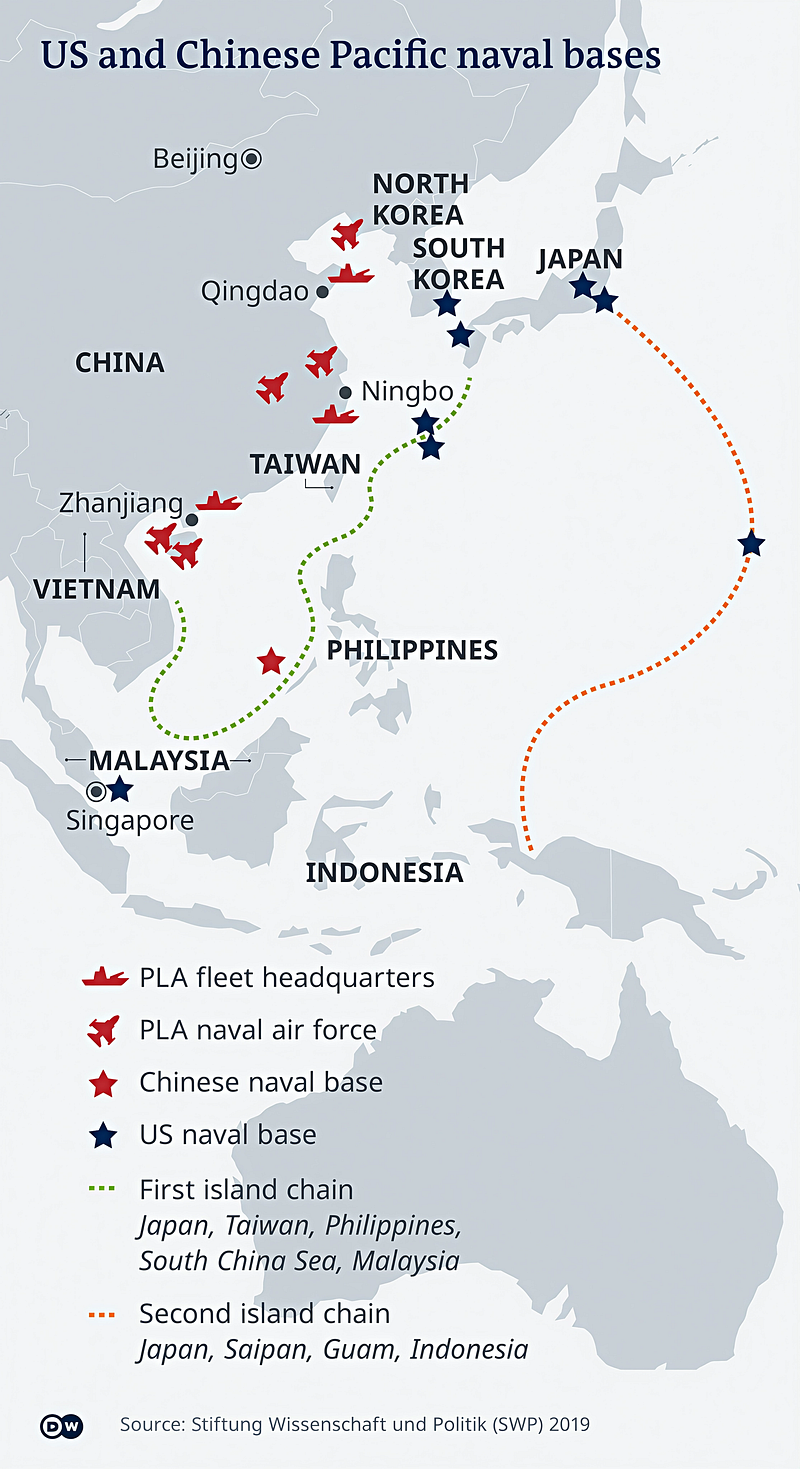
These anti-access and area-denial capabilities do not make American intervention impossible, but they raise the potential costs dramatically. War games consistently show that even if the United States ultimately prevails in defending Taiwan, both sides would suffer catastrophic losses — tens of thousands of casualties, severe attrition of naval and air forces, and potential escalation to strikes on each other’s homelands. The economic devastation from such a conflict would reverberate globally, potentially triggering depression-level contractions given the integration of the American, Chinese, and global economies.
American strategy for deterring Chinese aggression against Taiwan rests on several pillars. Military engagement with allies and partners in the region seeks to demonstrate American commitment and readiness while improving interoperability. Arms sales to Taiwan aim to enhance the island’s self-defense capabilities, with increasing emphasis on asymmetric systems that could impose heavy costs on Chinese forces attempting an amphibious invasion. Diplomatic statements seek to communicate that the status quo serves everyone’s interests while any attempt to change it unilaterally would face severe consequences. Enhanced intelligence, surveillance, and reconnaissance capabilities work to maintain awareness of Chinese military activities and provide warning of potential aggression.
Yet for all these efforts, the relative military balance in the Taiwan Strait has shifted steadily in China’s favor. Geography gives Beijing inherent advantages — Taiwan sits barely one hundred miles from the Chinese mainland, while American forces must project power across thousands of miles of ocean. China’s defense spending continues to grow even as American resources face competing demands from other regions and domestic priorities. The window during which the United States could confidently intervene to defend Taiwan with acceptable costs and risks appears to be closing, a reality that concentrates minds among strategists and policymakers.
Taiwan’s own role in its defense proves critical. The island must invest in capabilities that can survive Chinese attacks and inflict heavy losses on invasion forces, emphasizing resilience and the ability to sustain resistance even if initial defenses are penetrated. Yet Taiwan faces its own political and resource constraints, with domestic debates about defense spending levels and the proper military strategy creating vulnerabilities that Beijing seeks to exploit. The psychological dimension matters profoundly: if Taiwan’s population comes to believe resistance is futile, if political will erodes under sustained gray zone pressure, deterrence fails even if military capabilities remain intact.
Efforts to Roll Back US Influence in East Asia
China’s challenge to American predominance in East Asia extends far beyond Taiwan to encompass a broader campaign to supplant the United States as the region’s leading power. This effort operates across diplomatic, economic, and military dimensions, seeking to weaken American alliances, expand China’s own network of partners and clients, and create facts on the ground that gradually establish Chinese hegemony.
The economic dimension of this campaign has been particularly visible through the Belt and Road Initiative, an ambitious infrastructure investment program spanning dozens of countries across Asia, Africa, the Middle East, and beyond. Through the BRI, China offers developing nations access to capital for roads, ports, railways, power plants, and telecommunications networks — the sinews of economic development. For countries long neglected by Western investors or frustrated by conditionality attached to loans from institutions like the World Bank, Chinese investment proves attractive. The scale is staggering: China has already spent approximately one trillion dollars on BRI projects, with estimates of eventual spending ranging much higher.
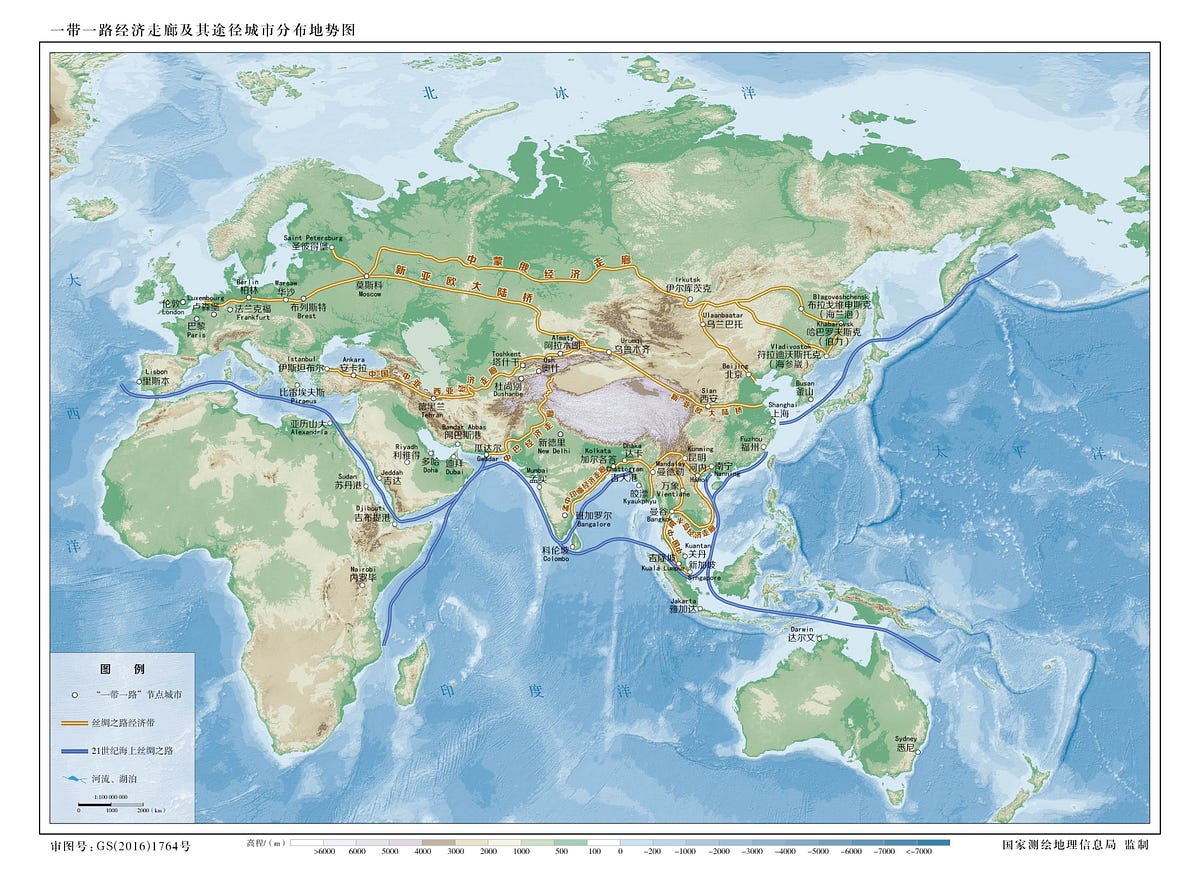
Yet the BRI serves strategic purposes beyond economic development. Infrastructure projects give China leverage over recipient nations through debt obligations that can be called in or restructured to extract political concessions. The case of Hambantota port in Sri Lanka exemplifies this dynamic — when the Sri Lankan government could not service Chinese loans, Beijing assumed control of the strategically located port for ninety-nine years. BRI projects often include provisions requiring Chinese technology, equipment, and even labor, deepening economic dependencies. Ports built with Chinese money can provide logistics hubs for Chinese naval vessels. Telecommunications networks built by Chinese firms create opportunities for intelligence collection and potential leverage in crises.
The BRI represents just one element of broader Chinese economic statecraft. Beijing has shown sophisticated skill in using its massive market as both a carrot and a stick to influence other nations’ behavior. Countries that align with Chinese preferences on issues Beijing cares about — Taiwan, the South China Sea, Xinjiang, Hong Kong — can expect favorable treatment: investment flows, tourist arrivals, preferential trade terms. Those that transgress face consequences: import restrictions, tourism cutoffs, regulatory harassment of their companies operating in China, and diplomatic pressure. Australia experienced this firsthand when it called for an independent investigation into COVID origins, prompting Beijing to impose approximately twenty billion dollars in trade sanctions.
China has worked systematically to weaken American alliances and partnerships while building its own network of client states. This effort involves both pressure and inducement. Chinese diplomats warn countries that hosting American military forces or participating in American-led security initiatives will harm their relationship with China. Meanwhile, Beijing offers security assistance, arms sales, military training, and increasingly, security agreements that create dependencies on Chinese support. The pattern extends globally: countries in Southeast Asia, Central Asia, Africa, Latin America, and Oceania have signed onto BRI projects or accepted Chinese security assistance, expanding Beijing’s influence at the expense of American and Western power.
In regional multilateral institutions, China has pursued a strategy of shaping agendas, norms, and rules to favor Chinese interests while constraining American freedom of action. After initially opposing regional organizations during the Cold War out of fear they would be used to contain China, Beijing reversed course and joined institutions like APEC and the ASEAN Regional Forum to prevent them from evolving into instruments of American power. Within these bodies, China works to stall progress on issues contrary to its interests, wields institutional rules to limit American initiatives, and reassures smaller neighbors that might otherwise balance against Chinese power by aligning more closely with Washington.
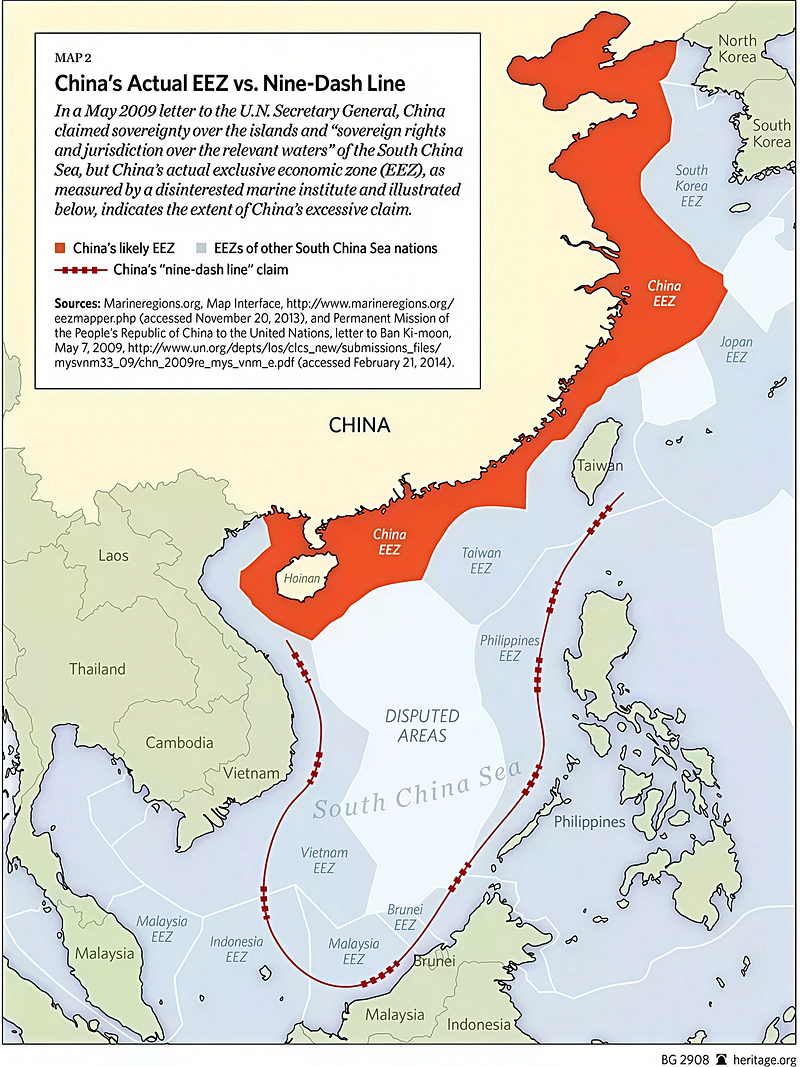
The military dimension of China’s rollback strategy manifests in multiple ways. Territorial claims in the South China Sea and East China Sea, backed by artificial island construction and military deployments, challenge the territorial integrity of multiple American allies and partners while establishing a Chinese presence in strategically vital waters. China’s seizure of Scarborough Shoal from the Philippines in 2012 demonstrated Beijing’s willingness to use force to change facts on the ground, then consolidate gains by drawing baselines and restricting access. The cumulative effect of such actions is to create a new status quo where Chinese control expands incrementally, each step calibrated to avoid triggering war yet collectively shifting the regional balance.
China’s information warfare capabilities support its rollback efforts by shaping narratives about American decline, the unsustainability of American security guarantees, and the inevitability of Chinese regional dominance. State media outlets broadcast these themes relentlessly across Asia. Influence operations work to turn public opinion in allied and partner nations against hosting American forces or participating in American-led initiatives. Disinformation campaigns sow discord and undermine confidence in democratic institutions and American leadership.
For the United States, countering Chinese efforts to roll back American influence requires multifaceted responses. Strengthening alliances through deeper security cooperation, more frequent exercises, enhanced intelligence sharing, and forward deployment of capabilities signals American commitment while improving collective defense. Economic engagement through trade agreements and investment can provide alternatives to Chinese capital and reduce dependencies on Beijing. Competing in infrastructure development through initiatives like the BUILD Act offers partner nations choices beyond the BRI. Exposing and countering Chinese disinformation helps inoculate populations against influence operations.
Yet the challenge proves formidable. China’s geographic proximity to its East Asian neighbors, its position as the region’s largest trading partner for most countries, and its growing military capabilities create structural advantages difficult for the United States to overcome. Many regional states prefer to avoid choosing between Washington and Beijing, seeking instead to maintain good relations with both powers. This hedging strategy allows them to benefit from American security guarantees while pursuing economic opportunities with China, but it also limits their willingness to support American efforts to constrain Chinese power. The result is an environment where American influence faces steady erosion despite continuing security relationships and deployments.
Economic Competition During the Trump Administration
The Trump administration marked a watershed in American economic policy toward China, implementing tariffs and other restrictions that departed sharply from decades of engagement-oriented approaches. The administration framed these measures as essential to address unfair Chinese trade practices, protect American industries, reduce the trade deficit, and spur manufacturing revival. Yet the effectiveness of this approach remains hotly contested, with evidence suggesting significant gaps between rhetoric and reality.
The tariff campaign began in 2018 when President Trump imposed duties on Chinese imports, initially targeting solar panels and washing machines before expanding to steel, aluminum, and eventually hundreds of billions of dollars worth of Chinese goods. The administration justified these actions under national security authorities and trade remedy laws, arguing that Chinese subsidies, intellectual property theft, forced technology transfer, and market access restrictions created unfair advantages that devastated American industries and workers. The tariffs aimed to raise the costs of Chinese imports, making American-made alternatives more competitive while pressuring Beijing to change its economic practices.
China retaliated with its own tariffs on American exports, triggering an escalating trade war that saw duties rise on both sides. By the end of Trump’s first term, the effective rate of American tariffs on Chinese goods had climbed from near zero to around twenty percent, fundamentally altering trade flows. Imports from China to the United States fell in absolute terms as companies sought alternative suppliers or absorbed higher costs. Some production did shift to other countries, particularly in Southeast Asia, though analysts debate whether this represented genuine supply chain diversification or merely transshipment through third countries to avoid tariffs.
The impacts on American manufacturing proved mixed at best. While some specific industries like steel saw temporary boosts from import protection, broader manufacturing employment remained essentially stagnant. The promise that tariffs would bring factories and jobs roaring back to American shores went largely unfulfilled. Multiple factors explain this outcome. Many tariffs fell on intermediate goods and inputs that American manufacturers use to make their products, raising their costs and making them less competitive. According to Federal Reserve data, nearly one-third of intermediate goods used by American manufacturers come from abroad, meaning tariffs functioned effectively as taxes on American producers. Retaliatory Chinese tariffs on American exports hurt industries like agriculture and aerospace, leading to job losses that offset gains elsewhere.
Economic research consistently found that American consumers and businesses bore the costs of tariffs through higher prices rather than Chinese exporters absorbing them through lower margins. Studies showed complete pass-through of tariff costs to American buyers, contradicting administration claims that China would pay. While the tariffs did lead to some increase in American business applications — suggesting entrepreneurs saw opportunities in protected markets — this positive effect was substantially outweighed by negative impacts from Chinese retaliation and disrupted supply chains. The net result left American manufacturers worse off as rising input costs and lost export markets more than offset benefits from import protection.
The uncertainty surrounding tariff policy itself imposed costs on business planning and investment. Companies need policy stability to make long-term decisions about where to locate production, which suppliers to use, and what investments to make. But tariff rates, product coverage, and exemptions changed frequently, with deals announced and then altered, creating an environment where businesses struggled to plan. Many firms adopted a wait-and-see approach rather than undertaking expensive supply chain restructuring or new facility construction, limiting the policy’s ability to drive the desired reshoring of production.
The longer-term effectiveness of tariffs in rejuvenating American manufacturing faces deep structural challenges. Manufacturing’s share of American employment has declined for six decades, driven by automation, productivity gains, and the evolution of the economy toward services. Even if tariffs eliminated the entire trade deficit by forcing all consumption to shift to domestically produced goods — an unrealistic scenario — the resulting increase in manufacturing employment would amount to only one or two percentage points. The nature of modern manufacturing means far fewer workers are needed to produce the same output compared to past generations, placing inherent limits on how many manufacturing jobs can be restored regardless of trade policy.
Agricultural sectors faced particularly acute damage from the trade war. China targeted American soybean farmers with retaliatory tariffs, causing exports to crater and farm incomes to collapse. The administration responded with tens of billions of dollars in emergency subsidies to farmers, effectively using taxpayer money to cushion the blow from its own policies. These payments temporarily eased farmer distress but represented an admission that the tariff strategy was inflicting significant collateral damage on key constituencies while failing to force meaningful concessions from Beijing.
The Trump administration’s approach to Chinese technology companies added another dimension to economic competition. Restrictions on Huawei’s access to American technology and markets, along with controls on semiconductor exports to China, aimed to prevent Beijing from leveraging American innovation for military modernization and technological advantage. These measures reflected genuine national security concerns about Chinese companies’ ties to military and intelligence agencies and the risks of Chinese technology embedded in critical infrastructure. Yet they also raised questions about coordination with allies — many of whom continued using Huawei equipment despite American pressure — and the long-term implications for American technology leadership if China succeeds in developing indigenous alternatives to American components.
The Phase One trade deal signed in January 2020 offered a temporary truce, with China committing to purchase additional American goods while the United States agreed to some tariff reductions. Yet China fell far short of its purchase commitments, and fundamental issues around subsidies, state-owned enterprises, technology transfer, and market access remained unresolved. The deal represented more of a pause than a solution, leaving in place the bulk of tariffs and underlying tensions that would continue into subsequent administrations.
The second Trump administration, which began in 2025, has shown even more aggressive use of tariffs as both economic and geopolitical tools. Escalations in April 2025 saw tariff rates climb dramatically, with the United States imposing duties exceeding one hundred percent on Chinese goods and China retaliating with similarly high rates. These levels effectively embargoed bilateral trade, though negotiations produced subsequent de-escalation. The pattern of rapid tariff increases, threats of even steeper duties, followed by negotiated truces, created even more uncertainty and disruption. China’s deployment of rare earth export controls in response demonstrated Beijing’s own capacity for economic coercion, exploiting its dominance over materials critical to semiconductors, defense systems, and clean energy technologies.
The fundamental challenge for tariff-based strategies is that they represent inherently reactive tools poorly suited to the complex, systemic challenge China poses. Tariffs might provide leverage in negotiations or protect specific industries from import surges, but they do little to address underlying competitiveness issues rooted in education systems, innovation ecosystems, infrastructure quality, and investment in research and development. They cannot substitute for comprehensive industrial policy, workforce development, or technological strategy. Used in isolation, tariffs risk imposing costs on the American economy while failing to achieve broader strategic objectives of maintaining technological leadership and economic vitality in competition with China.
The Coordination Problem in U.S.-China Policy
Perhaps no challenge in American strategy toward China proves more troubling than the fragmented, ad hoc nature of decision-making that has characterized policy across multiple administrations. The competition with China spans every domain of statecraft and every region of the world, demanding coherent strategies that integrate diplomatic, economic, technological, military, and informational instruments of power toward clear objectives. Yet American policy has too often lurched from crisis to crisis, with decisions made in isolation, poor coordination across government agencies, and limited connection between tactical actions and strategic goals.
This fragmentation stems partly from the sheer complexity of the US-China relationship. The two nations remain deeply economically interdependent even as they compete strategically. They cooperate on some global challenges while clashing over others. Different agencies across the American government — State, Defense, Treasury, Commerce, the intelligence community, and many others — have distinct mandates, perspectives, and equities in China policy. Bureaucratic politics leads departments to pursue organizational interests that may conflict with others or with broader strategy. The result is a system that struggles to achieve what military parlance calls joint interoperability, but applied to the interagency level.
The problems manifest in multiple ways. Export controls designed to protect American technological advantages get imposed without coordination with trade negotiations, undermining deals and confusing allies about American intentions. Military deployments and exercises proceed without adequate diplomatic preparation or economic follow-through to reinforce messaging. Sanctions go forward without planning for how to sequence pressure with engagement or how to build multilateral coalitions that magnify impact. Technology policies get developed in narrow specialties without considering second-order effects on climate, trade, or alliance relationships.
The case of semiconductor export controls illustrates these coordination challenges vividly. The Biden administration developed sweeping restrictions on advanced chip exports to China, aiming to slow Chinese progress in artificial intelligence and military applications. Yet these controls emerged from specialized bureaucratic channels with limited visibility or input from other agencies; allies were not adequately consulted beforehand, and commercial considerations received insufficient weight. The announcement timing coincided with or contradicted other diplomatic initiatives, creating confusion about American priorities. When the second Trump administration considered rescinding major portions of the AI diffusion rule, it highlighted how policy can whipsaw across administrations without enduring strategic consensus.
The repeated failure to develop comprehensive, durable China strategies that transcend individual administrations amplifies these problems. Each new president comes to office, reviews existing policy, makes adjustments, and perhaps articulates new frameworks. But the political polarization and rapid personnel turnover that characterize contemporary American politics mean these frameworks rarely mature into truly integrated strategies with sustained implementation. Career officials across agencies struggle to maintain continuity and long-term focus amid changing political leadership and shifting priorities. Allies and partners lose confidence in American reliability when they cannot predict policy direction beyond a single presidential term.
The opacity and siloed nature of some crucial policy processes make coordination even harder. Decisions about foreign investment screening, export licensing, and sanctions designations occur in specialized forums with limited participation and information sharing. Individual industries like semiconductors receive intensive focus while broader patterns and interconnections get less attention. Traditional China specialists may have limited input into technology policy, while technology experts lack a deep grounding in Chinese strategy and behavior. The inability to see and address the complete picture leads to strategies that optimize for narrow objectives while creating broader strategic liabilities.
Resource allocation poses another coordination challenge. The defense budget, intelligence funding, diplomatic presence, foreign assistance, and economic engagement tools all come through different appropriations processes with different political constituencies and considerations. Securing the resources needed for a comprehensive strategy requires not just executive branch planning but congressional buy-in across multiple committees with varying priorities. The result is often that military capabilities receive funding while diplomatic, economic, and informational tools remain under-resourced relative to strategic need.
Summit meetings between American and Chinese leaders create action-forcing events that can drive bureaucratic coordination, but their episodic nature limits effectiveness. When presidents meet and issue joint statements committing to cooperation on specific issues — fentanyl precursor controls, climate change, military crisis communication — bureaucracies must scramble to implement. Yet without sustained high-level attention between summits, implementation slows, other issues crowd the agenda, and progress stalls. The pattern becomes one of spikes of activity around summits followed by drift, rather than steady, cumulative advancement of strategy.
The problem extends to intelligence community coordination and assessment. Different agencies collect and analyze information on China through distinct channels and with varying mandates. Ensuring that policymakers receive integrated, coherent intelligence that addresses their questions rather than agency-specific interests requires extensive coordination mechanisms that don’t always function smoothly. When assessments of Chinese intentions, capabilities, or likely responses diverge across agencies, policymakers lack the clear basis for decision-making that strategy requires.
Alliance coordination introduces yet another layer of complexity. Effective competition with China increasingly requires working through coalitions — whether formal alliances, minilateral formats like the Quad, or ad hoc groupings on specific issues. Yet American agencies often develop policy domestically before engaging allies, creating buy-in problems and missing opportunities to leverage allied capabilities and perspectives from the outset. Different allies have different relationships with China and varying levels of willingness to participate in initiatives that might antagonize Beijing. Managing these differences while building sufficient unity of purpose and action demands diplomatic skill and close civil-military-economic integration that the American system struggles to achieve.
The contrast with China’s approach proves striking. While Beijing certainly faces its own bureaucratic politics and coordination challenges, the Chinese Communist Party’s hierarchical authority structure enables whole-of-government mobilization when top leadership makes strategic decisions a priority. Party committees embedded in every institution ensure alignment with central directives. Key policy domains have been consolidated under fewer agencies with clearer mandates. The system can sustain multi-decade strategies like the Belt and Road Initiative across leadership transitions because they reflect Party consensus rather than individual administrations.
Some improvements have emerged in recent years. The establishment of new coordinating structures, greater interagency participation in technology policy decisions, enhanced information sharing on Chinese activities, and elevated attention to strategic competition from senior leadership all represent progress. The bipartisan consensus on China as a strategic challenge provides a foundation for sustained policy that can transcend individual administrations. Recognition that effective competition requires more than military tools has driven increased focus on economic security, technology leadership, and alliance management.
Yet fundamental structural challenges persist. The American political system’s division of powers, rapid turnover of political appointees, congressional involvement in foreign policy, and pluralistic decision-making processes create inherent obstacles to the kind of centralized, long-term strategic planning that competition with China demands. Overcoming these obstacles requires not just better processes, but also cultural changes in how agencies work together, how Congress relates to foreign policy, how strategy is developed and resourced, and how continuity is maintained across administrations. Without such changes, American China policy risks remaining reactive, fragmented, and strategically incoherent — precisely the weakness a patient, disciplined adversary like China is positioned to exploit.
The stakes of this coordination failure extend beyond policy inefficiency to questions of strategic success or failure. A coherent approach that integrates all elements of national power toward clear objectives could enable the United States to compete effectively with China despite Beijing’s advantages in proximity to contested regions and its own whole-of-government mobilization. A fragmented approach that allows China to exploit seams between military, economic, and diplomatic dimensions risks frittering away American advantages in alliance networks, technological leadership, and economic dynamism. The contest between an integrated Chinese strategy and a disjointed American response may prove decisive in determining which power shapes the twenty-first-century international order.