Atrocities Inflicted by Hamas: Documentation and Analysis
Executive Summary
Executive Summary
Hamas, a Palestinian Islamist militant movement governing the Gaza Strip since 2007, has committed systematic atrocities against Israeli civilians and Palestinians alike through deliberate targeting of non-combatants, hostage-taking, sexual violence, and use of human shields. This report documents egregious violations of international humanitarian law and human rights law based on investigations by the United Nations, human rights organizations, and eyewitness testimonies. The October 7, 2023, attack on southern Israel represented a watershed moment in the conflict, with Hamas and allied militants committing war crimes and crimes against humanity on an unprecedented scale. Beyond its violence against Israelis, Hamas has also inflicted severe suffering on Palestinian civilians through its governance practices and military strategies that prioritize armed struggle over civilian protection. This report provides a comprehensive examination of these atrocities, their ideological foundations, and the international response.
1 Introduction: Hamas as a Non-State Actor
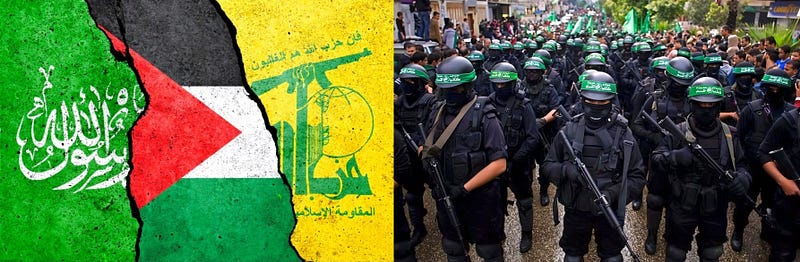
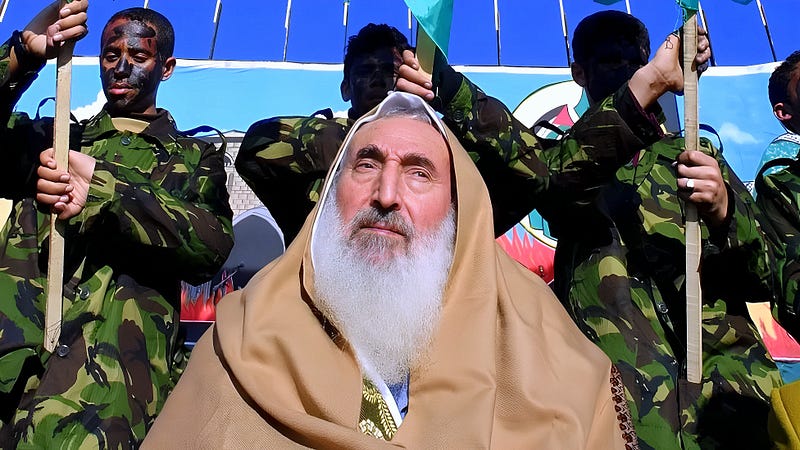
Hamas (an acronym for Harakat al-Muqawama al-Islamiyya, or “Islamic Resistance Movement”) emerged in 1987 during the First Intifada as an offshoot of the Muslim Brotherhood. Its 1988 founding charter explicitly called for the destruction of Israel and the establishment of an Islamic Palestinian state in its place. While a 2017 document adopted somewhat more moderate language, claiming to distinguish between Jews as people and Zionism as a political ideology, Hamas’s continued commitment to armed resistance and its refusal to recognize Israel’s right to exist have maintained its designation as a terrorist organization by the United States, European Union, Israel, and several other countries. Hamas exercises de facto control over the Gaza Strip since seizing power from the Palestinian Authority in 2007, governing approximately two million Palestinians while maintaining a significant military wing (the Izz al-Din al-Qassam Brigades) that engages in armed conflict with Israel.
2 October 7, 2023 Attack: Unprecedented Violence Against Civilians
2.1 Scope and Coordination of Attacks
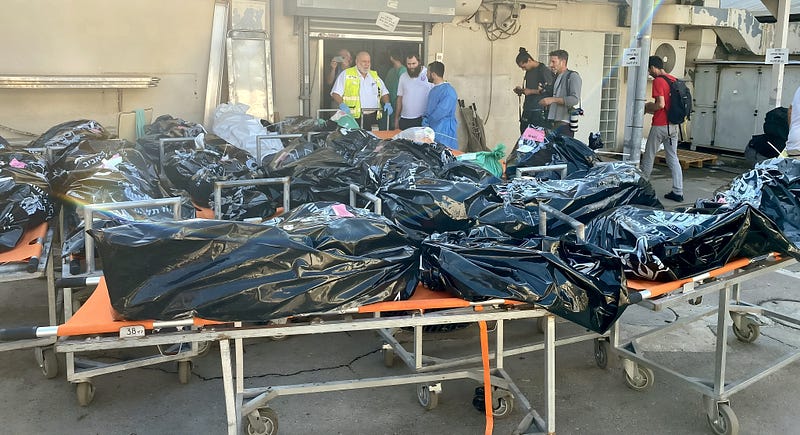
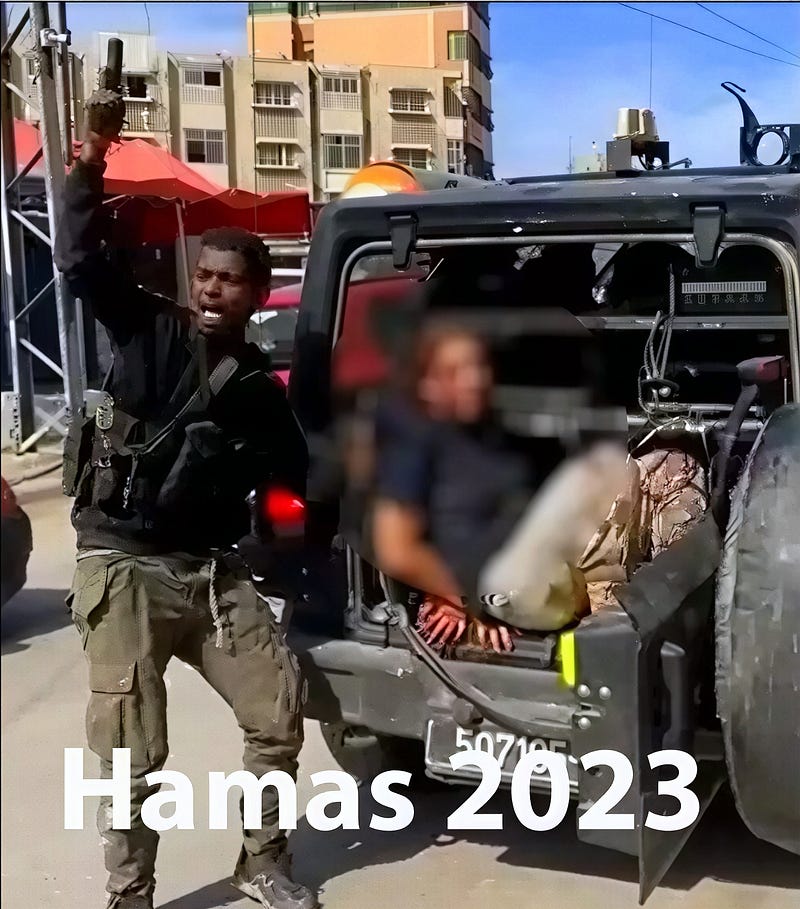
On October 7, 2023, Hamas-led armed groups launched a coordinated assault on southern Israel from the Gaza Strip, representing the most significant breach of Israel’s borders since the state’s establishment in 1948. The attack involved an estimated 3,000 militants from Hamas and several other Palestinian armed groups who infiltrated Israel by land, sea, and air using paragliders. The assault targeted at least 19 kibbutzim (collective communities), 5 moshavim (cooperative communities), the cities of Sderot and Ofakim, and multiple civilian gatherings, including two music festivals and a beach party 3. The fighting continued throughout much of the day and in some cases lasted longer, with Israeli forces taking hours to reach besieged communities.
2.2 Targeted Communities and Civilian Gatherings
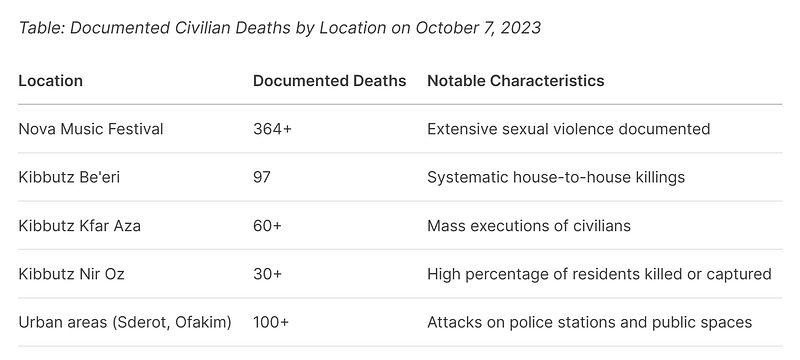
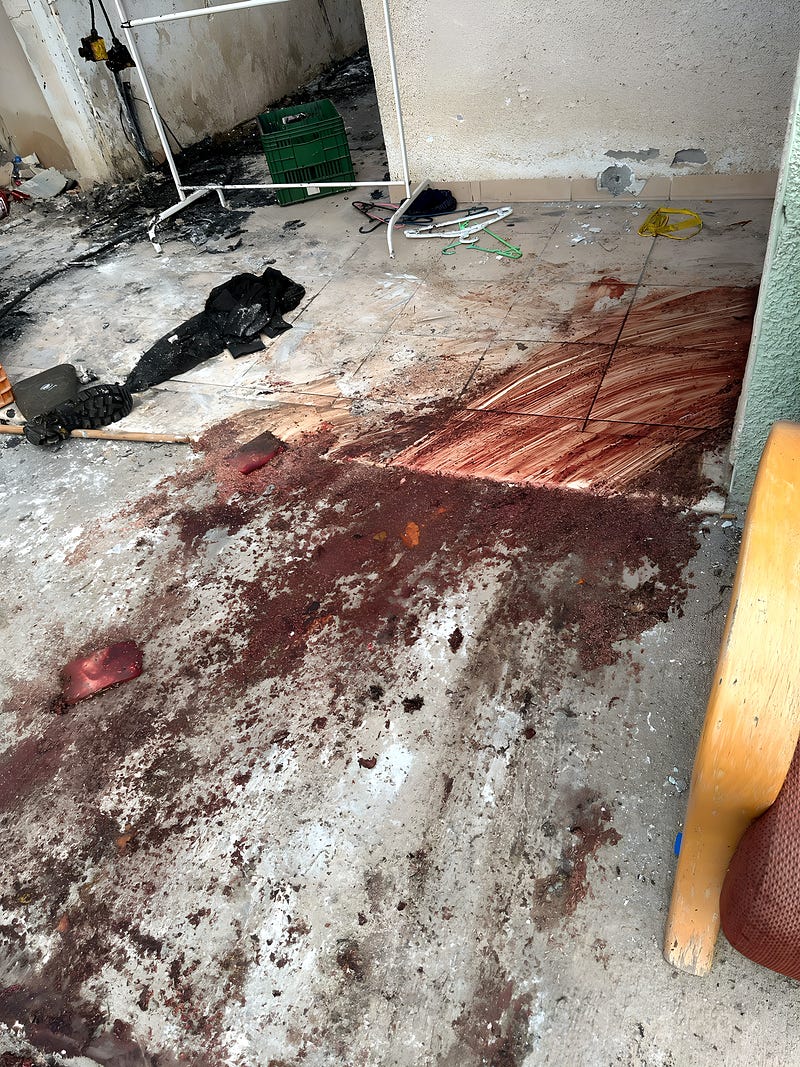
- Kibbutz Be’eri: Among the hardest hit communities, where 97 civilians were killed according to survivor testimonies. Militants systematically moved from house to house, shooting at hiding and fleeing civilians, setting homes on fire, and killing families in their safe rooms 3. Nirit Hunwald, a nurse from Kibbutz Be’eri, described dragging a wounded rapid response team member into the dental clinic for treatment: “There was a blood trail. I cannot erase it from my mind, all the blood” 3.
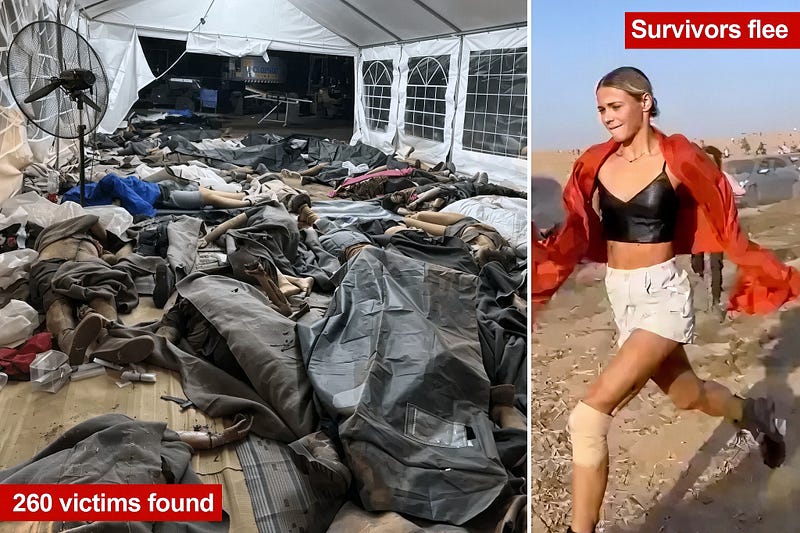
- Nova Music Festival: Hamas militants attacked an outdoor music festival attended by approximately 3,500 young people near Kibbutz Re’im. Armed attackers fired indiscriminately into the crowd, killing hundreds and taking numerous hostages. The UN Commission of Inquiry documented sexual violence against women and men at the festival, with evidence including restraints placed on victims, positions and signs of violence on bodies, and disseminated imagery of undressed bodies 6.
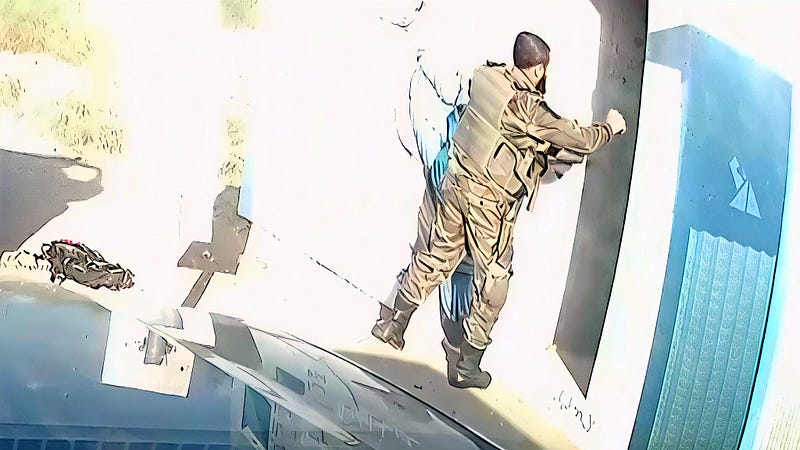
- Kibbutz Nahal Oz: Journalist Amir Tibon and his family sheltered for nearly 10 hours in their safe room while Hamas militants rampaged through their community. Tibon described hearing gunfire and shouts outside while desperately trying to keep his two infant daughters quiet: “We had only one advantage… if we managed to keep the girls calm and quiet, they wouldn’t hear us” 8. His parents, retired Major General Noam Tibon and his wife, fought their way into the kibbutz to rescue them.
2.3 Civilian Casualties and Methods of Killing
According to Agence France-Presse, which cross-referenced numerous data sources, 815 of 1,195 people killed on October 7 were civilians 3. The UN Commission of Inquiry documented that among the dead were 40 children (including a nine-month-old shot and killed while hiding with her mother) and 130 people aged sixty-five and older 6. The methods of killing were particularly brutal:
- Systematic house-to-house attacks: Militants methodically cleared residential homes, shooting families in their safe rooms, setting houses on fire to force occupants out, and shooting them as they emerged 3.
- Execution-style killings: At numerous locations, militants gathered civilians together before executing them. The Israeli military announced on September 1, 2024, that it had recovered the bodies of six Israelis — five civilians and one soldier — who had been shot at close range shortly before their retrieval 2.
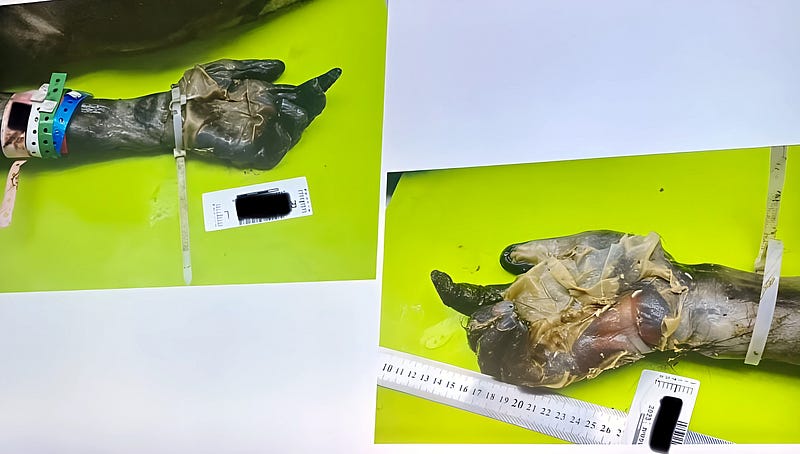
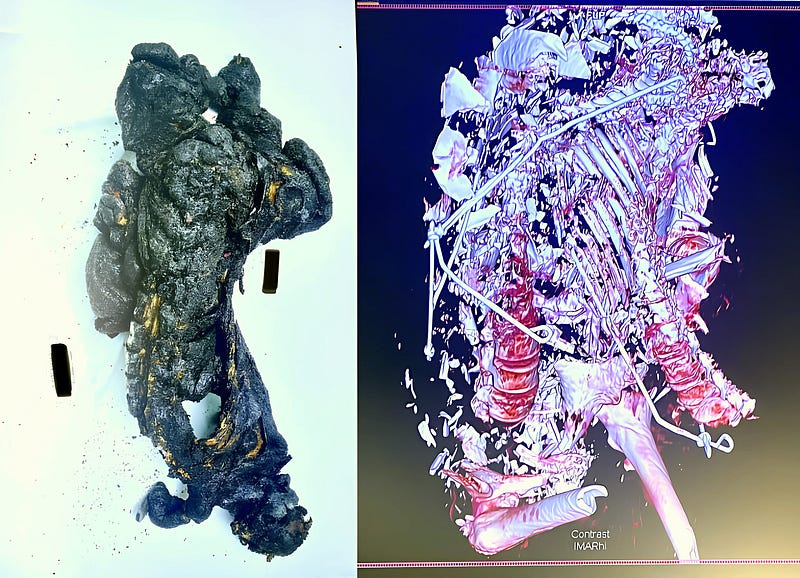
- Desecration of corpses: The UN found evidence of the war crime of “outrages upon personal dignity” through desecration of corpses, including burning, mutilating, lacerating, decapitating, and undressing and subsequently exhibiting bodies 6.
3 War Crimes and Crimes Against Humanity
3.1 Murder and Intentional Targeting of Civilians
Human Rights Watch documented in a 236-page report that Hamas-led armed groups committed numerous war crimes and crimes against humanity during the October 7 assault 3. The report concluded that “the planned murder of civilians and the hostage-taking were crimes against humanity” 3. The UN Commission of Inquiry found that members of Hamas’s military wing and other Palestinian armed groups “deliberately killed, injured, mistreated, took hostages and committed sexual and gender-based violence against civilians” 9. These actions violated fundamental principles of international humanitarian law, particularly the principle of distinction between combatants and civilians and the prohibition against intentionally targeting civilian persons and objects.
3.2 Hostage-Taking and Treatment of Captives
Hamas and other armed groups abducted 252 people from Israel (approximately 20 security forces personnel and the remainder civilians, including 36 children) and took them to Gaza 6. As of May 21, 2024, half of the hostages had been released or rescued, with the remainder in captivity, whether alive or dead 6. The UN Commission found that hostage-taking constituted a war crime — often combined with outrages upon personal dignity and inhumane treatment, including sexual and gender-based violence, assault, harassment, and intimidation 6.
The taking of hostages represents an ongoing crisis, with 49 men and women — including two Americans — still held captive in Gaza more than 20 months after the October 7 attack 1. Hostages have been held without contact with the International Committee of the Red Cross (ICRC), a violation of international humanitarian law 2. Released hostages reported enduring or witnessing severe beatings and sexual assault while in captivity 2. Statements posted by Abu Obeida, spokesperson for Hamas’s military wing, suggested that some hostages were killed to prevent their rescue 2.
3.3 Sexual and Gender-Based Violence
The UN Commission of Inquiry confirmed acts of sexual violence against women and men at multiple locations on October 7, including the Nova music festival, Route 232, Nahal Oz military base, and the kibbutzim of Re’im, Nir Oz, and Kfar Aza 6. The Commission found that gender-based violence was “perpetrated in similar ways in several locations and by multiple Palestinian perpetrators,” with patterns including:
- Abducting women with force or threats
- Coerced close physical proximity to abductors
- Treatment of women’s bodies as “victory trophies”
- Use of gendered slurs 6
The Commission noted it could not verify reports of rape, sexualized torture, and genital mutilation due to lack of access to victims, witnesses, and crime sites, and did not find evidence that militants were ordered to commit sexual violence 6. Nonetheless, the patterns observed suggested systematic gender-based violence amounting to war crimes.
4 Use of Human Shields and Civilian Endangerment
4.1 Military Operations from Civilian Areas
Hamas has consistently conducted military operations from densely populated civilian areas in the Gaza Strip, endangering Palestinian civilians. Amnesty International reported that Palestinian armed groups fired “indiscriminate rockets from or near civilian areas in Gaza and located their fighters in civilian areas, including shelters for displaced people, endangering Palestinian civilians” 2. This practice violates the international humanitarian law requirement that combatants distinguish themselves from the civilian population and avoid locating military objectives within civilian areas.
The UN Commission of Inquiry noted it continues to investigate reports that Hamas and other militants operate from civilian locations, but could not verify evidence Israeli authorities publicly presented. The Commission made no finding regarding Hamas’s use of human shields, though this tactic has been widely documented by other human rights organizations and military experts.
4.2 Impact on Palestinian Civilians
Hamas’s military strategies have contributed significantly to Palestinian civilian casualties during Israeli military operations. By situating military infrastructure in residential areas, storing weapons in schools and mosques, and launching attacks from populated neighborhoods, Hamas has increased the risks to Gaza’s civilian population. During the 2023–2024 Gaza war, these practices contributed to the deaths of over 37,900 Palestinians, most of them civilians, according to the Ministry of Health in Gaza 3.
Hamas authorities have also suppressed dissent and restricted freedom of expression within Gaza. According to the Palestinian Centre for Development and Media Freedoms (MADA), journalists came under pressure from Palestinian authorities in Gaza, with nine journalists attacked or otherwise prevented from reporting in November and December 2023 alone 2. Government officials stopped journalists from covering local protests against Hamas’s management of aid scarcity 2.
5 Ideological Foundation and Hate Speech
5.1 Antisemitic Rhetoric and Incitement
Hamas’s ideology contains a strong anti-Jewish stance manifesting in the use of tropes from The Protocols of the Elders of Zion, derogatory descriptions of Jews, and equations of Israel with Nazi Germany 5. While academic Esther Webman notes that antisemitism is not the main tenet of Hamas ideology, she acknowledges that “antisemitic rhetoric is frequent and intense in Hamas leaflets,” which generally “do not differentiate between Jews and Zionists” 5.
Examples of hate speech by Hamas representatives include:
- Hamas imam Yousif al-Zahar stated in a 2008 sermon: “Jews are a people who cannot be trusted. They have been traitors to all agreements. Go back to history. Their fate is their vanishing” 5.
- Hamas legislator and imam Sheik Yunus al-Astal discussed a Quranic verse suggesting that “suffering by fire is the Jews’ destiny in this world and the next,” concluding “Therefore we are sure that the Holocaust is still to come upon the Jews” 5.
- Ahmad Bahr, Deputy Speaker of the Hamas Parliament, stated in a 2012 sermon: “O Allah, destroy the Jews and their supporters. O Allah, destroy the Americans and their supporters. O Allah, count them one by one, and kill them all, without leaving a single one” 5.
5.2 Holocaust Denial and Distortion
Hamas has engaged in explicit Holocaust denial and distortion. In reaction to the 2000 Stockholm conference on the Holocaust, Hamas issued a press release describing the Holocaust as “an alleged and invented story with no basis” 5. In August 2003, senior Hamas official Abd Al-Aziz Al-Rantisi wrote in the Hamas newspaper Al-Risala that Zionists encouraged the murder of Jews by the Nazis to force them to immigrate to Palestine 5.
In 2009, Hamas’s Popular Committees for Refugees called the Holocaust “a lie invented by the Zionists” and refused to let Gazan children study it 5. Hamas leader Yunis al-Astal stated that teaching the Holocaust in UNRWA schools amounted to “marketing a lie and spreading it” and constituted a “war crime” 5. Despite these statements, some Hamas officials have offered more moderate views, with Health Minister Basim Naim stating in 2009: “The Holocaust was not only a crime against humanity but one of the most abhorrent crimes in modern history. We condemn it as we condemn every abuse of humanity.” 5
6 Political Repression and Governance Failures
6.1 Human Rights Abuses in Gaza
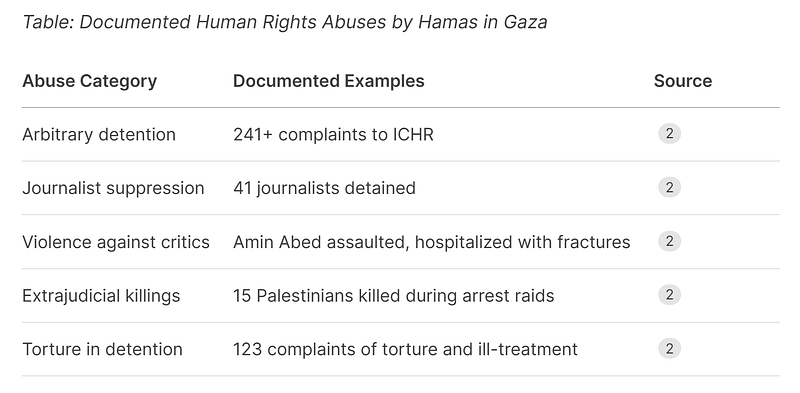
Hamas has established a repressive governance system in Gaza characterized by suppression of dissent, arbitrary detention, and violence against critics. According to Amnesty International, critics of the authorities in Gaza were physically assaulted, with prominent critic Amin Abed requiring hospitalization for multiple fractures after being attacked by masked armed men identified as Hamas affiliates 2.
The Independent Commission for Human Rights (ICHR) received more than 241 complaints of arbitrary detention by Palestinian authorities in the West Bank and Gaza 2. According to the Palestinian Centre for Development and Media Freedoms (MADA), 41 journalists were detained by Palestinian police for periods ranging from a few hours to a week and interrogated about their work 2.
6.2 Treatment of Hostages and Prisoners
Hamas has consistently violated international humanitarian law in its treatment of hostages and prisoners. The UN Commission of Inquiry found that hostages were subjected to inhumane conditions and treatment, including sexual violence, assault, harassment, and intimidation 6. Palestinian fighters published approximately 20 videos, photographs, and messages showing the suffering of hostages and captives, potentially amounting to psychological torture 2.
Within Gaza, Hamas authorities have failed to conduct proper investigations into serious violations of international law. According to Amnesty International, “Hamas authorities continued to consistently fail to conduct investigations into serious violations of international law, including possible war crimes” 2. For example, Hamas security forces killed aid worker Islam Hijazi in Khan Younis by firing 90 bullets at her car. Still, they blamed the killing on mistaken identification and failed to conduct any investigation or hold those responsible accountable 2.
7 International Response and Legal Accountability
7.1 United Nations Investigations
The UN Independent International Commission of Inquiry on the Occupied Palestinian Territory issued a comprehensive report in June 2024 examining violations of international law committed by all parties to the Israel-Hamas conflict 6. The Commission found that “Hamas and other Palestinian militants committed war crimes and violated international humanitarian and human rights law in their October 7, 2023, attack” 6. The report was based on thousands of forensically verified open-source items, more than 350 items received from public calls for submissions, and witness and survivor interviews in Turkey and Egypt 6.
The Commission concluded that Hamas’s military wing and at least four other Palestinian armed groups committed numerous war crimes and crimes against humanity against civilians during the October 7 assault 3. These findings may support future accountability proceedings at the International Criminal Court or in domestic courts under the principle of universal jurisdiction.
7.2 International Criminal Court Proceedings
The International Criminal Court (ICC) has confirmed that its mandate to investigate alleged war crimes committed since June 2014 in the State of Palestine extends to the current conflict 7. On May 20, 2024, Chief Prosecutor Karim Ahmad Khan announced his intention to seek arrest warrants against leaders of both sides of the conflict, including Hamas leaders Yahya Sinwar, Mohammed Deif, and Ismail Haniyeh 7. In November 2024, the ICC issued arrest warrants for Mohammed Deif alongside Israeli leaders Prime Minister Benjamin Netanyahu and Minister of Defense Yoav Gallant, alleging “criminal responsibility” for war crimes and crimes against humanity 7.
7.3 Condemnation by Human Rights Organizations
Leading human rights organizations have uniformly condemned Hamas’s atrocities:
- Human Rights Watch: Documented that Hamas-led armed groups committed numerous war crimes and crimes against humanity against civilians during the October 7 assault 3.
- Amnesty International: Reported that Palestinian armed groups fired hundreds of indiscriminate rockets and mortar shells towards Israel from civilian areas in Gaza, endangering Palestinian civilians 2.
- UN Office of the High Commissioner for Human Rights: Called for an independent court to review potential war crimes committed by both sides 7.
8 Conclusion: Patterns of Atrocity and Need for Accountability
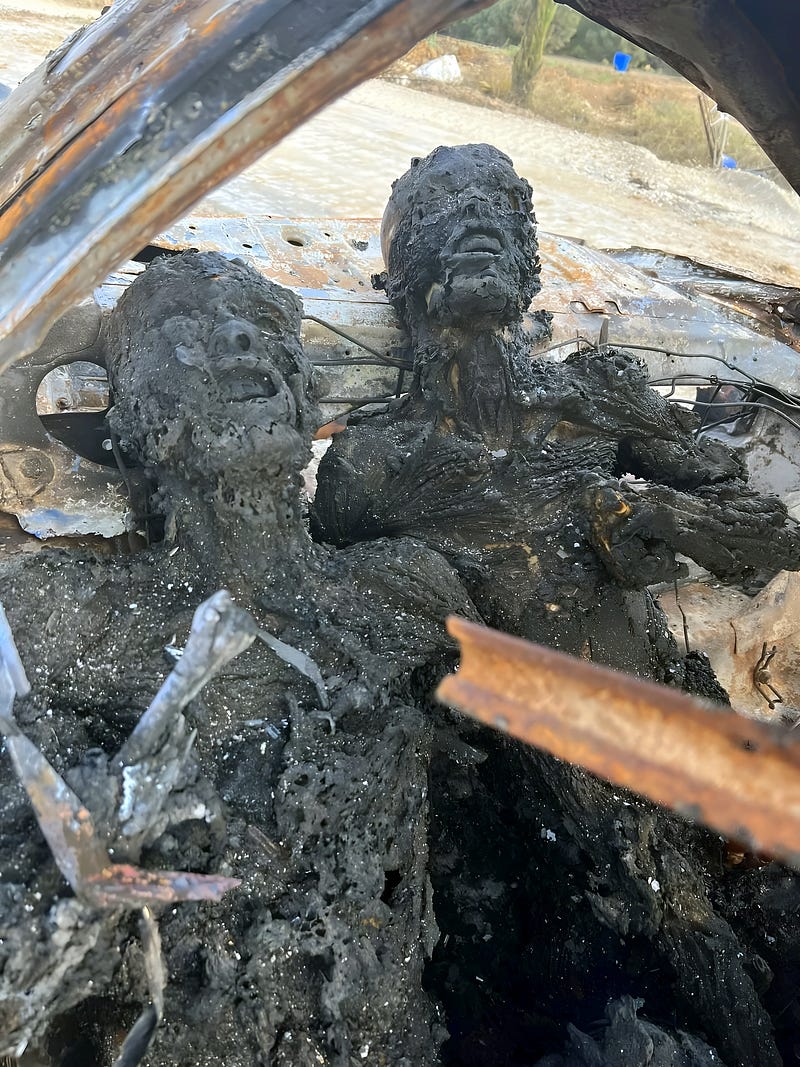
Hamas has committed systematic atrocities against Israeli civilians through deliberate targeting, hostage-taking, and sexual violence, while simultaneously endangering Palestinian civilians through its military strategies and governance practices. The October 7, 2023, attack represented a clear turning point in the conflict, with Hamas demonstrating unprecedented brutality in its targeting of civilian communities and gatherings 9.
These atrocities are not isolated incidents but rather stem from an ideological foundation that includes antisemitic rhetoric, rejection of Israel’s right to exist, and glorification of violence. Hamas’s actions violate fundamental principles of international humanitarian law, including the principles of distinction, proportionality, and precaution, and constitute war crimes and crimes against humanity under the Rome Statute of the International Criminal Court.
Achieving accountability for these crimes is essential not only for victims but for breaking the cycle of violence that has characterized the Israeli-Palestinian conflict for decades. As the UN Commission of Inquiry concluded: “The only way to stop the recurring cycles of violence, including aggression and retribution by both sides, is to ensure strict adherence to international law” 9. This includes holding perpetrators of atrocities accountable through credible judicial mechanisms while addressing the root causes of the conflict through political means.
The international community must unambiguously condemn Hamas’s atrocities while simultaneously working to address the underlying grievances that fuel the conflict. Only through a combination of justice for victims, security for civilians on both sides, and a genuine political process can a sustainable peace be achieved that prevents such atrocities from recurring.
Citations
- General Assembly Adopts Resolution Calling for Immediate, Sustained Humanitarian Truce Leading to Cessation of Hostilities between Israel, Hamas
- Hamas’ October 7th Genocide: Legal Analysis and the Weaponisation of Reverse Accusations
- Hamas says October 7 attack on Israel was a ‘necessary step’
- The Hamas massacre of Oct 7, 2023, and its aftermath, medical crimes, and the Lancet commission report
- Treasury Targets Key Hamas Leaders and Financiers
- “I Can’t Erase All the Blood from My Mind”: Palestinian Armed Groups’ October 7 Assault on Israel
- Report of the Independent International Commission of Inquiry on the Occupied Palestinian Territory, including East Jerusalem, and Israel
- Israel-Hamas War: Quotes from Iran’s Allies
- Human rights in Palestine (State of)
- 1Hamas: What has happened to its most prominent leaders?