Black-and-White Legends: The Story of the Magpie Across Continents
Magpies are among the most misunderstood birds in the world — celebrated as clever mimics and despised as notorious thieves. In Europe…
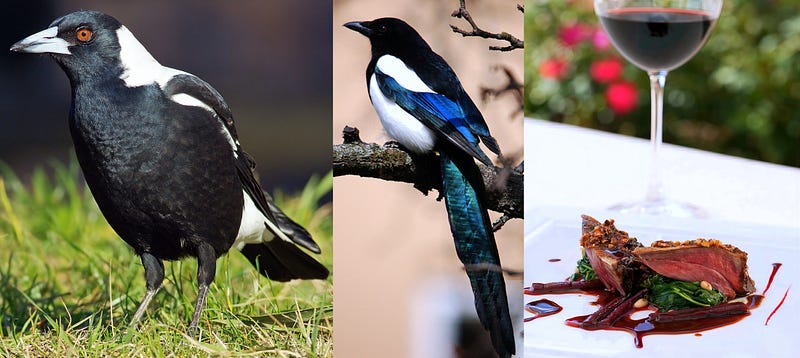
Magpies are among the most misunderstood birds in the world — celebrated as clever mimics and despised as notorious thieves. In Europe, the Eurasian Magpie (Pica pica) commands a place in folklore as both a bearer of bad luck and a creature of uncanny intelligence. In Australia, the Australian Magpie (Gymnorhina tibicen) enjoys a different status — part national treasure, part seasonal menace when nesting season turns cyclists into sprinting prey. Both species share the same stark black-and-white palette, a similar cunning in behavior, and a long-standing, complicated relationship with humankind.
Taxonomy
The Eurasian Magpie, Pica pica, belongs to the family Corvidae, which also includes ravens, crows, and jays. Within this species, several subspecies stretch from Western Europe across Asia to North Africa. Its Australian counterpart, Gymnorhina tibicen, is not a true corvid but belongs to the Artamidae family alongside butcherbirds and currawongs. Despite the shared name, the two evolved their striking plumage independently — a classic case of convergent evolution. Common names for Pica pica include “common magpie” and, in some regions, simply “magpie,” while Gymnorhina tibicen carries epithets like “flute-bird” for its melodic song.
Biology
The Eurasian Magpie typically measures about 44–46 cm (17.3–18.1 in) from beak to tail, with a wingspan of 52–60 cm (20.5–23.6 in). Its iridescent tail feathers shimmer green and blue in sunlight, and its brain-to-body ratio rivals that of great apes. The Australian Magpie is slightly smaller, averaging 37–43 cm (14.6–16.9 in) in length, but more powerfully built, adapted for terrestrial foraging. It boasts one of the most complex vocal repertoires in the avian world, with fluting calls that can carry over 1 km (0.62 mi) in the right conditions. Both species form strong pair bonds, often mating for life, and their lifespan in the wild can reach 15–25 years — remarkably long for birds of their size.
Ecology
Pica pica thrives in open landscapes, farmlands, and suburban parks, avoiding dense forests. It is omnivorous, feeding on insects, seeds, carrion, and even the eggs and chicks of other birds. Its ecological role includes both controlling pest populations and scavenging carrion, making it an unintentional cleaner of the environment.

Gymnorhina tibicen inhabits open woodlands, grasslands, and increasingly urban areas across Australia and southern New Guinea. Its foraging on ground-dwelling insects benefits ecosystems by reducing pest loads. The main ecological tension with humans arises during “swooping season,” when protective males dive at intruders to defend their nests.

Uses
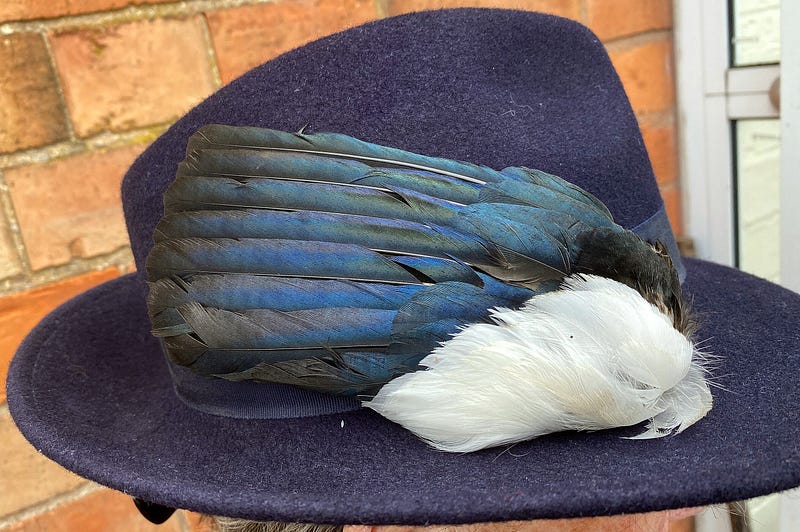
Historically, magpie feathers have been used in millinery and ceremonial attire. In rural Europe, Pica pica sometimes served as a natural pest controller, though its habit of raiding chicken coops reduced its popularity. In Australia, the magpie’s value lies largely in cultural identity — it appears in sports team names, literature, and Indigenous folklore. Modern conservationists recognize both species as important urban-adapted birds that can coexist with humans if their needs and breeding behaviors are respected.
Culinary Aspects
While rarely consumed in modern times, historical accounts from rural Europe record Pica pica being eaten during periods of scarcity. The meat was said to have a strong, gamey flavor — comparable to crow — requiring slow cooking to tenderize. Recipes often involved stewing with root vegetables and herbs to mellow the intensity. The Australian Magpie, protected by law in most regions, is not part of the culinary tradition. Ethical and ecological considerations now largely preclude these birds from the table, yet their past as survival fare offers insight into the adaptability of human diets.
Wine Pairings
For those recreating historical Eurasian rural recipes with game birds of similar flavor — such as pigeon or rook — a full-bodied red like a Syrah or Cabernet Sauvignon works well, as the bold tannins stand up to the robust, slightly earthy taste. A rustic Côtes du Rhône at 16°C (60.8°F) offers a balance of spice and fruit that mirrors the complexity of the dish.
Conclusion
Magpies are paradoxical — villainous nest thieves in one tale, loyal family birds in another; a symbol of bad luck in Europe, a beloved songster in Australia. Both Pica pica and Gymnorhina tibicen reveal how culture shapes perception, and how a single striking plumage pattern can evolve oceans apart. To watch one strut through a field or hear its call echo across a dawn sky is to be reminded that the world’s most familiar wildlife can still surprise us.