
Challenges of AI Implementation in the Fast Food Industry
The fast food industry has eagerly embraced artificial intelligence in hopes of boosting efficiency and cutting costs, but implementing AI…
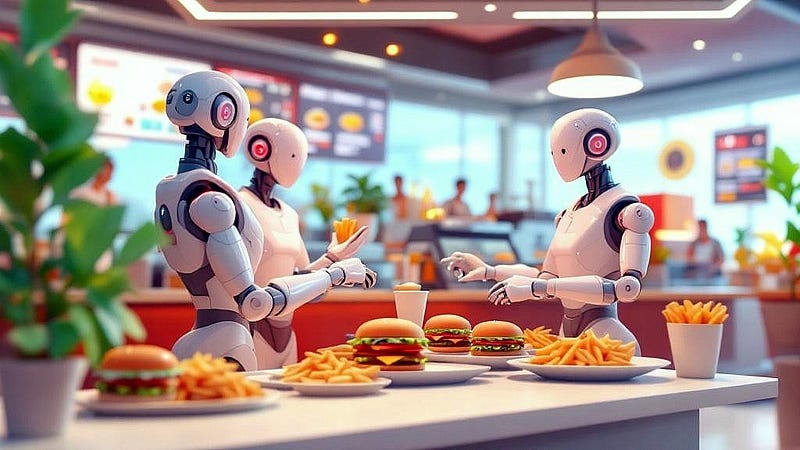
The fast food industry has eagerly embraced artificial intelligence in hopes of boosting efficiency and cutting costs, but implementing AI in this sector has exposed a range of problems. Early trials of AI-driven ordering systems — such as voice assistants at drive-thru lanes — underscore the operational difficulties of integrating this technology into busy restaurants. These systems often struggle with technical limitations: background noise, heavy accents, or complex orders can confuse the AI, leading to misinterpreted requests and incorrect orders. Instead of streamlining operations, such glitches sometimes slow down service and create bottlenecks at peak hours. The very tools meant to expedite ordering can end up causing delays and disruptions, revealing a gap between the promise of automation and its real-world performance.
For customers, the impact of these AI shortcomings is direct and palpable. Fast food patrons expect quick, accurate service, but when an AI mishears an order or adds unintended items to a bill, the experience quickly deteriorates. Frustration builds as customers have to repeat themselves or wait for errors to be fixed, and some of these mishaps have even gone viral online — embarrassing the companies involved and eroding trust. Moreover, interacting with an automated system can feel impersonal or awkward; the robotic tone and scripted responses are often unsettling, a reminder that the familiar human touch is missing. What was supposed to be a convenient innovation can thus turn into an annoyance, leaving customers less satisfied than before.
The drive toward automation also raises serious concerns for the fast-food workforce. AI systems are frequently introduced to reduce labor costs amid rising wages and staff shortages, and employees understandably view these technologies as a threat to their jobs. The fear of displacement is real: if machines take over tasks like order-taking or cooking, many frontline roles could shrink or disappear. This creates tension among workers, hurting morale and complicating the roll-out of new technologies. Even those who remain employed may see the nature of their work shift — staff might be reassigned to supervising machines or handling exceptions rather than interacting with customers, a difficult adjustment that demands new skills and training. In essence, the human workforce is being asked to adapt or risk being sidelined, a social cost that looms behind the pursuit of efficiency.
For the companies themselves, AI adoption has proven to be a double-edged sword. It promises greater productivity and lower ongoing costs, but it also brings substantial financial and operational risks. Implementing advanced AI systems requires a heavy upfront investment, and not every chain can afford the latest technology. Even those that do invest often face ongoing maintenance and technical support expenses that eat into the projected savings. And if the AI performs below expectations — say, an automated ordering system ends up slowing service or irritating customers — the returns on these investments can quickly evaporate. There’s also a reputational risk: a well-publicized AI failure, such as a viral video of a drive-thru chatbot bungling orders, can damage a company’s brand and erode customer goodwill. Thus, the business case for AI in fast food remains uncertain, as unanticipated costs, technical hiccups, and public missteps often undermine the anticipated benefits.
Beyond the operational and financial issues, AI’s rise in fast food also raises serious ethical questions. One major issue is privacy: these systems often rely on gathering customer data — from recording voice orders to analyzing buying habits — which can unsettle privacy-conscious patrons and may run afoul of data protection laws if mishandled. There is also the question of fairness and bias: AI algorithms can struggle with certain accents or dialects, meaning some customers consistently receive poorer service due to their background — an unintended and unacceptable form of discrimination. Replacing human workers with AI poses a societal dilemma, potentially widening economic inequality if companies displace large numbers of low-wage employees in the pursuit of efficiency without helping them transition to new roles. Finally, transparency and accountability are concerns: patrons may not always know when they are interacting with a machine or how their data is being used, which can erode trust. These issues remind us that technological progress cannot be divorced from social responsibility, and fast food companies must grapple with the moral implications of their AI experiments.