Clausewitz: Military Theory, Policy, and the Human Will
Writings Carl von Clausewitz’s On War is the flagship deliverable. Carl von Clausewitz wrote On War (Vom Kriege) primarily between 1816 and…
Writings
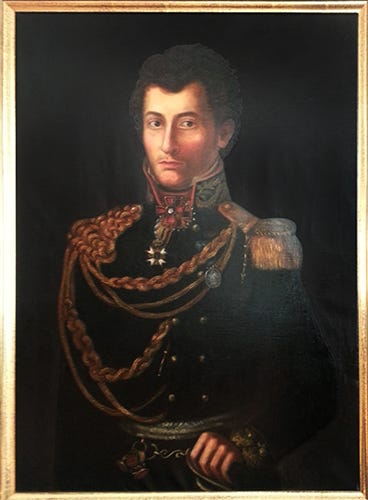
Carl von Clausewitz’s On War is the flagship deliverable. Carl von Clausewitz wrote On War (Vom Kriege) primarily between 1816 and 1830, following the Napoleonic Wars. The work was left unfinished at his death in 1831. Compiled posthumously from unfinished manuscripts by Marie von Brühl in 1832, it blends historical casework from the Napoleonic campaigns with a philosophical operating model for decision-makers. He distinguishes “absolute war” as an abstract limiting case from “real war” as it actually unfolds in political, social, and logistical constraints. He introduces a core toolkit still used in strategy: center of gravity as the source of an adversary’s strength; friction as the accumulation of small impediments that derail plans; fog of war as radical uncertainty; coup d’œil as decisive judgment at a glance; the culminating point of the offensive and of victory as thresholds where marginal gains invert into risk. Across the book, he resists universal formulas, using history not as a template but as a stress test for theory. His shorter writings, staff memoranda, and lectures reinforce the same theme set: war as a political instrument, command as a moral enterprise, and planning as hypothesis under fire.
Arguments
War is the continuation of policy with the admixture of other means. Politics does not end when combat begins; it shapes aims, resources, and risk appetite before, during, and after operations. Strategy links battles to political purpose; tactics stage the battles; logistics sets the ceiling on both. The “remarkable trinity” models the system dynamics: primordial violence and passion in the people; chance and probability in the army and its commander; reason and policy in the government. An effective strategy aligns these three nodes on both sides of the conflict, while misalignment generates self-defeating campaigns. He rejects decisive-battle romanticism when it conflicts with policy. He cautions that destruction of enemy forces is often necessary but not always sufficient or even required if limited political objectives can be secured by positional leverage, economic pressure, or coalition management. The drive for escalation is endogenous to war, but political leadership must cap it. Defense is the stronger form because it exploits ground, time, and population support, yet offense is necessary to seize initiative; the art is to time transitions and avoid overshooting the culminating point. He insists that comparative evaluation of strengths must identify and strike the true center of gravity, which can be a field army, a capital, an alliance framework, or a critical revenue stream, depending on the political architecture of the opponent.
Psychology
Clausewitz treats war as a human performance problem under stress. Moral forces — cohesion, leadership credibility, public sentiment, fear, honor — are performance multipliers or degraders that no numeric table captures. Friction is not a metaphor but an operating condition: weather, illness, bad maps, misheard orders, and cognitive overload compound into systemic drag. Genius, in his lexicon, is not IQ theater but a stable mix of determination, courage, and coup d’œil that converts ambiguity into timely action. He differentiates boldness grounded in competence from reckless gambling. He highlights the commander’s need to metabolize uncertainty and to preserve freedom of action through reserves, flexible planning, and simple orders. The psychology of organizations matters as much as individual psychology: disciplined routines, trust networks, and shared intent reduce friction and expand the range of feasible moves.
Philosophy
His method is dialectical and anti-dogmatic. He builds ideal types — absolute war, decisive battle — and then refutes their universal application by injecting political purpose, chance, and human limitations. He treats theory as an aid to judgment, not a rulebook. Causality in war is multivariate and path-dependent; small differences in information, time, and geography create nonlinear outcomes. He positions history as a laboratory for counterexamples, demanding analogical reasoning with rigorous attention to context. He assumes contingency and rejects teleology. The normative anchor is prudence: means must map to ends, and ends must adjust to means as reality pushes back. He treats clarity of aim as the first principle of strategy, because only a clear aim allows rational tradeoffs among blood, treasure, and time.
Political Ideas
Clausewitz is a realist. The state is the primary actor, sovereignty matters, and security dilemmas drive competition. War is embedded in the political economy of alliances, finance, mobilization, and legitimacy. He argues for political primacy over the military instrument. Civil-military alignment is a governance problem: politicians must articulate attainable aims and constraints; soldiers must design campaigns that accumulate effects toward those aims; both must iteratively reassess as facts change. He is skeptical of crusades that uncouple violence from policy. Limited wars are not moral failures but rational choices when interests are bounded or resources constrained. He views domestic politics as an input to strategy, not noise to be ignored, since public will and institutional capacity shape force generation and staying power.
Beliefs
Clausewitz’s values are austere and operational. Duty, clarity, and responsibility sit at the core. He believes in disciplined inquiry, historical literacy, and intellectual honesty about costs. He rejects system worship and silver-bullet solutions. He believes the commander must own risk, that boldness without insight is a waste, and that caution without purpose is drift. He believes wars should end on terms that match political objectives, and that victory that overshoots those objectives squanders capital. He trusts education and professional study to sharpen judgment, but insists that only experience under fire finishes the job.
Impact and Misreadings
On War shaped modern staff education, doctrine, and national strategy. His center of gravity construct migrated into operational planning; his friction and fog concepts inform training, mission command, and red-teaming; his culminating point frames sustainment and campaign tempo; his insistence on political primacy influences grand strategy debates from limited interventions to coalitional deterrence. Common misreadings flatten his argument. “War is the continuation of policy” is often clipped to suggest cynicism about politics rather than a governance requirement to keep violence bounded by purpose. “Total war” is projected onto him even though he writes about absolute war as a conceptual limit, not as a prescription. He is neither a prophet of annihilation battles nor a pacifier; he is a manager of violent means against finite political ends. In nuclear strategy, his logic of political control, escalation management, and culminating points remains structurally relevant. In irregular war, his emphasis on the people as one node of the trinity presaged the centrality of legitimacy, mobilization, and information in conflicts below conventional thresholds. In business, law, and competitive sports, leaders lift their framings as transferable heuristics: define the aim, identify the center of gravity, manage friction, preserve options, align the organization, and end campaigns when marginal returns go negative.
Execution Principles for Practitioners
Translate policy into a single, stable aim. Inventory means and constraints honestly. Infer the enemy’s political architecture to locate the true center of gravity. Build plans that accumulate effects toward that aim while preserving freedom to pivot. Expect friction and design for it through redundancy, simple schemes, disciplined reporting, and empowered subordinates. Track the culminating point with logistics data and political indicators, not vibes. Reassess aims as facts change; refuse to escalate out of habit. Close the campaign when the political job is done.