Colossus of the Deep: The Japanese Giant Spider Crab’s Biology, Culture, and Culinary Future
Introduction
Introduction
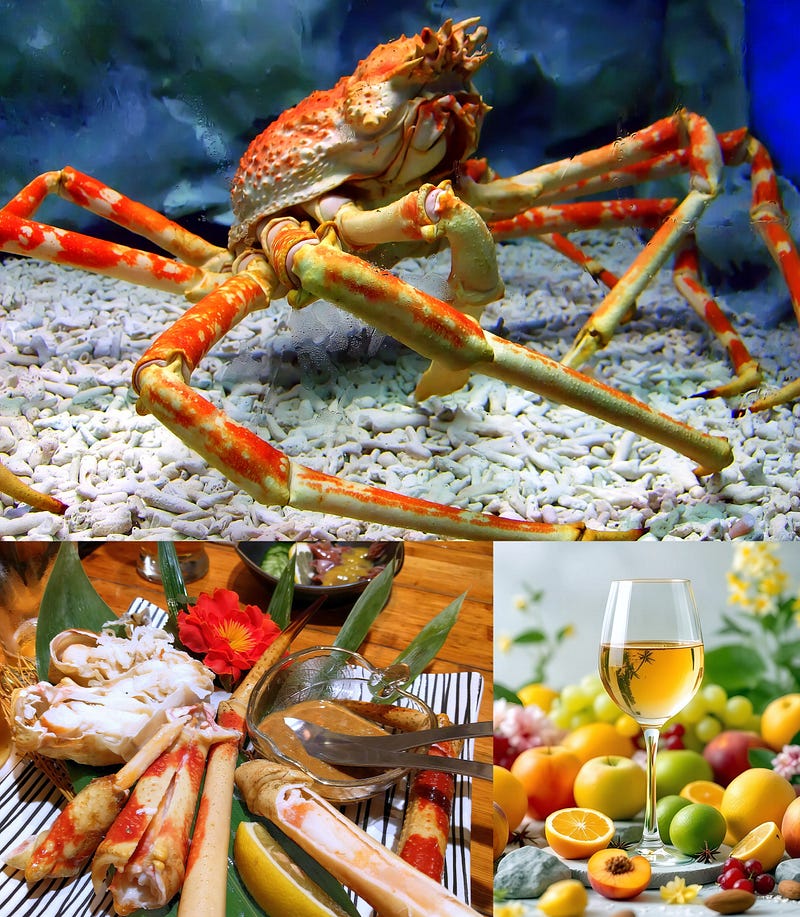
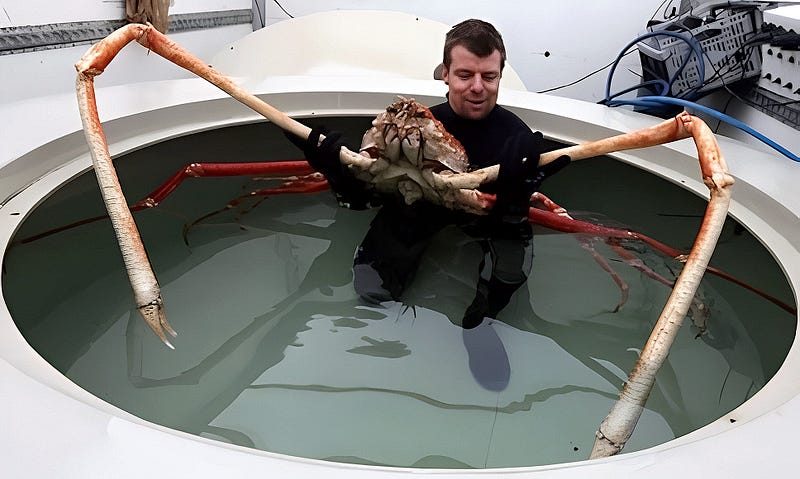
Among all the creatures that inhabit the world’s oceans, few stir both awe and intrigue like the Japanese giant spider crab, Macrocheira kaempferi. Known for its monstrous leg span that can stretch up to 3.7 m (12 ft), it is a living reminder of the ocean’s evolutionary extremes. Revered in Japanese culture, prized in select coastal cuisines, and increasingly scrutinized by conservationists, this species embodies the complex relationship between humans and marine biodiversity. Exploring the Japanese giant spider crab is not just a journey into taxonomy and biology, but into the intersections of gastronomy, sustainability, and global cultural imagination.
Taxonomy
Macrocheira kaempferi belongs to the order Decapoda, family Inachidae. It is the sole extant species of its genus, which makes it taxonomically unique. No recognized subspecies exist, but regional variations in size and coloration have been observed in different parts of the Pacific waters off Japan. In English, it is most commonly referred to as the “Japanese giant spider crab.” In Japanese, it is called “Taka-ashi-gani,” literally “long-legged crab,” a name used widely in fishing communities along Honshu. In the Kansai dialect, fishermen also use the shortened form “Gani,” which translates simply as “crab.” In culinary markets of Tokyo and Osaka, it is sometimes marketed under evocative names like “Sea Monster Crab” in Japanese-language advertising designed for tourists. These vernacular identities underscore its deep cultural embedding in Japan, though outside the country, it remains known almost exclusively by its scientific or English common name.
Biology
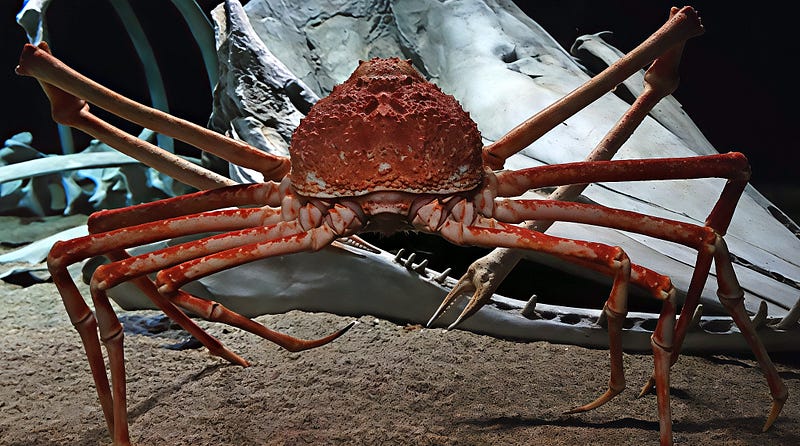
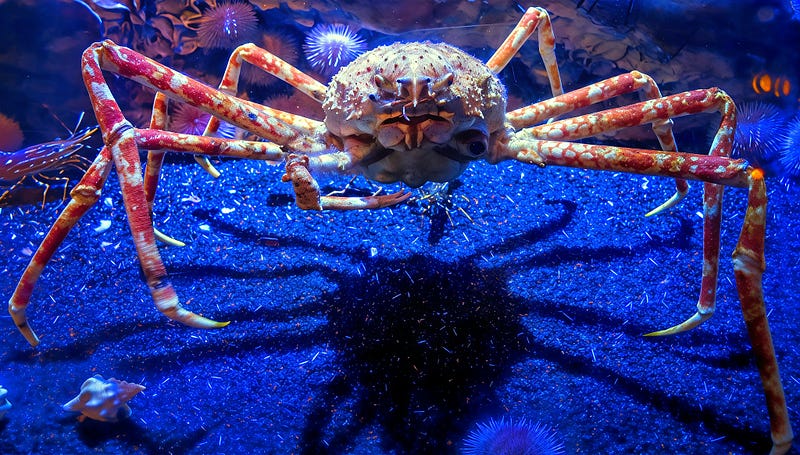
This crab is most striking for its morphology. The carapace itself is relatively small, rarely exceeding 40 cm (16 in) in width, but its legs give it the greatest leg span of any arthropod on Earth, reaching up to 3.7 m (12 ft). Adults can weigh up to 19 kg (42 lb). Their mottled orange-and-white coloration provides camouflage against rocky seafloors, and their spiny exoskeleton offers protection from predators. Japanese giant spider crabs inhabit depths ranging from 50 m (164 ft) to 600 m (1,969 ft), preferring colder waters during spawning. They are long-lived, capable of reaching 100 years, a rarity among crustaceans. Molting remains central to their growth, with juveniles actively camouflaging themselves with sponges and algae before maturing into massive, unadorned adults.
Ecology
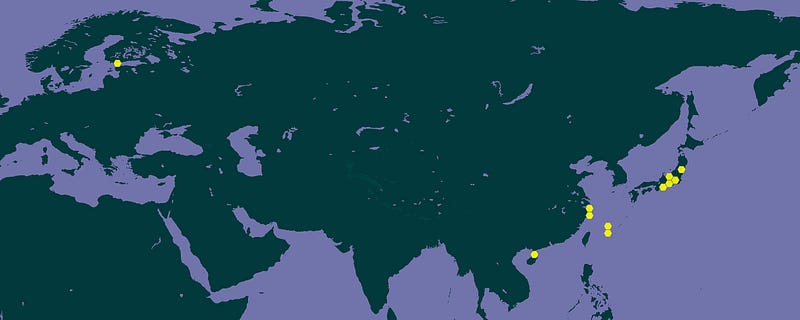
The species is endemic to the waters off Japan, particularly around Honshu, Shikoku, and Kyushu. It thrives in benthic environments with rocky substrates, where it scavenges for animal remains and opportunistically feeds on mollusks and slow-moving invertebrates. This ecological role as both predator and scavenger makes it a keystone species in certain local ecosystems, aiding in nutrient recycling. However, fishing pressures have historically reduced populations, particularly in Suruga Bay, leading to seasonal restrictions and conservation measures. Juvenile crabs inhabit shallower waters, making them more vulnerable to habitat disruption from coastal development and trawling practices. Sustainable management is critical, as overharvesting could destabilize their already limited geographic range.
Uses
The Japanese giant spider crab has been utilized in food, crafts, and culture, though its use is highly localized. Edible parts include the muscular leg meat and body meat, both of which require steaming or boiling for safe consumption. Preparation often involves simple boiling with salt water to preserve sweetness, followed by serving with soy-based dipping sauces. Traditional dishes in coastal Japanese villages include crab nabe (hot pot) and grilled legs served fresh from seasonal harvests. Seasonality peaks in early spring, aligning with spawning migrations. Yield per hectare varies significantly, but targeted artisanal fisheries can extract several hundred kilograms (660 lb) during a short window. A 100 g (3.5 oz) portion provides roughly 85 kcal, high-quality protein, omega-3 fatty acids, zinc, selenium, and vitamin B12.
Antinutritional concerns are minimal, though, like other crustaceans, it can accumulate heavy metals if harvested from polluted waters. Toxicity from shell residues is negligible once cooked. Commercial products remain rare, as the species’ fragility and conservation pressures prevent industrial-scale processing. Its taste is described as subtly sweet, delicate, and less briny than smaller crab species, with a clean marine aroma and firm texture. Best cooking methods include steaming, boiling, or broiling. Pairings often feature citrus-based sauces that enhance the sweetness while balancing the richness.
Medicinal uses are anecdotal, mostly linked to the general health benefits of marine protein and omega-3 intake. No specific pharmacological constituents have been extracted commercially from this species. In terms of feed use, the crab’s shell waste can be processed for chitin and chitosan, valued in biomedical, agricultural, and cosmetic applications. Chitosan extraction requires demineralization and deproteinization steps, with applications ranging from soil improvement to water purification. Cultural uses include folklore and festival imagery, particularly in fishing towns where the crab’s monstrous size is linked with maritime myth.
Harvest pressure is tightly regulated today, with seasonal closures and permit systems in Japanese fisheries. Certification programs for sustainable seafood do not currently cover this species, though its rarity makes black-market trade a concern. Market demand is niche but high-value, with prices ranging from ¥5,000 to ¥20,000 (about $33–133) per specimen depending on size and season. The conservation status is currently “not evaluated” by the IUCN, but Japanese regional assessments warn of overfishing risks, especially in Suruga Bay.
Culinary Aspects
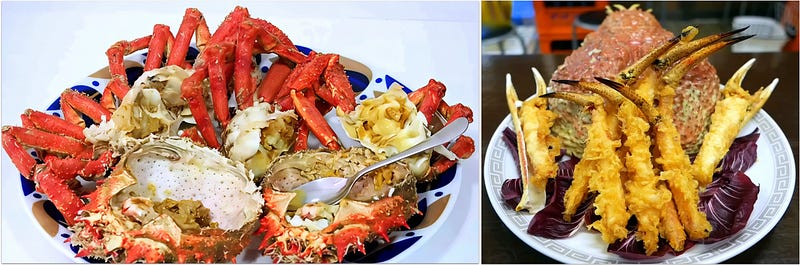
The taste of Macrocheira kaempferi is refined rather than overwhelming, with a slightly sweet marine flavor, a light umami note, and a clean aftertaste. The aroma is subtle, lacking the pungent brininess common to smaller crustaceans. Its texture is firm yet yielding, with a layered flake similar to lobster but less dense. Mouthfeel is light and refreshing, making it an ideal candidate for minimalist Japanese preparation styles that highlight natural quality. Balance and complexity arise not from aggressive seasoning but from careful pairing with complementary elements — ponzu, mirin glazes, or even simple grilled lemon. Its appearance, with immense legs plated whole, provides a visual spectacle in both traditional and contemporary dining. Cultural importance is high in coastal Japan, where the crab symbolizes abundance and oceanic power. Cooking methods emphasize steaming and boiling to preserve texture and nutritional integrity, though grilling is also traditional.
Wine Pairings
The delicacy of Japanese giant spider crab pairs best with wines that elevate subtle marine sweetness while not overpowering the refined flesh. A Wachau Grüner Veltliner from Austria offers crisp acidity, white pepper notes, and a saline edge that matches crab grilled over charcoal. A Sicilian Carricante from Mount Etna brings volcanic minerality and citrus that harmonize with hot-pot preparations featuring soy and seaweed broth. A Santorini Assyrtiko from Greece contributes bracing acidity and stone-driven flavors, enhancing the freshness of steamed crab with citrus sauces. For a more aromatic option, an Albariño from Rías Baixas in Spain aligns its peach and saline profile with the crab’s light umami. Finally, a Loire Valley Chenin Blanc, dry and mineral-driven, creates balance when the crab is paired with butter or mirin-based glazes. Each varietal supports different aspects of the crab’s complexity, ensuring that sensory harmony is achieved without defaulting to generic seafood wines.
Conclusion
The Japanese giant spider crab is more than an ocean curiosity. It is a species at the nexus of biology, culture, gastronomy, and conservation. Its size and lifespan make it a marvel of evolution, its role in Japanese foodways ties it to human tradition, and its vulnerability highlights the need for sustainable stewardship. Whether served at a springtime festival, studied in marine biology, or admired as a symbol of oceanic grandeur, Macrocheira kaempferi demands respect and careful management. Its story invites us to see the ocean not as an inexhaustible pantry but as a delicate system in which every giant has a role to play.