Colossus of the Southern Seas: The Remarkable Story of the Tasmanian Giant Crab
The southern edge of the world hides creatures that look as though they’ve marched straight out of myth. Among them, one stands apart, a…
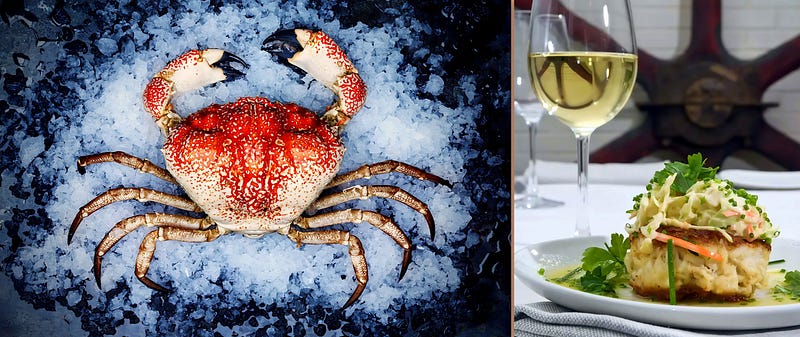
The southern edge of the world hides creatures that look as though they’ve marched straight out of myth. Among them, one stands apart, a red‑armored sentinel lurking in cold, deep currents — the Tasmanian giant crab, Pseudocarcinus gigas. To the uninitiated, it is simply one of the largest crabs on Earth, but those who have handled its claw or tasted its meat know it as something more: a rare synthesis of biological marvel, culinary treasure, and sustainability challenge.
A Titan by Any Other Name
In the language of taxonomy, this behemoth belongs to the family Gecarcinucidae, though it is often placed in its remarkable corner as the sole species of the genus Pseudocarcinus. Commonly called the Tasmanian giant crab or southern king crab, it holds no officially recognized subspecies, though local fishers sometimes distinguish between “reef giants” and “mud giants,” informal names tied to the texture of their shells and the subtle differences in flavor. Among edible crabs of the world, from the blue swimmer of the Indo‑Pacific to the prized Dungeness of the Pacific Northwest, none carry quite the same aura of rarity as this crimson southern titan.
Built to Command the Depths
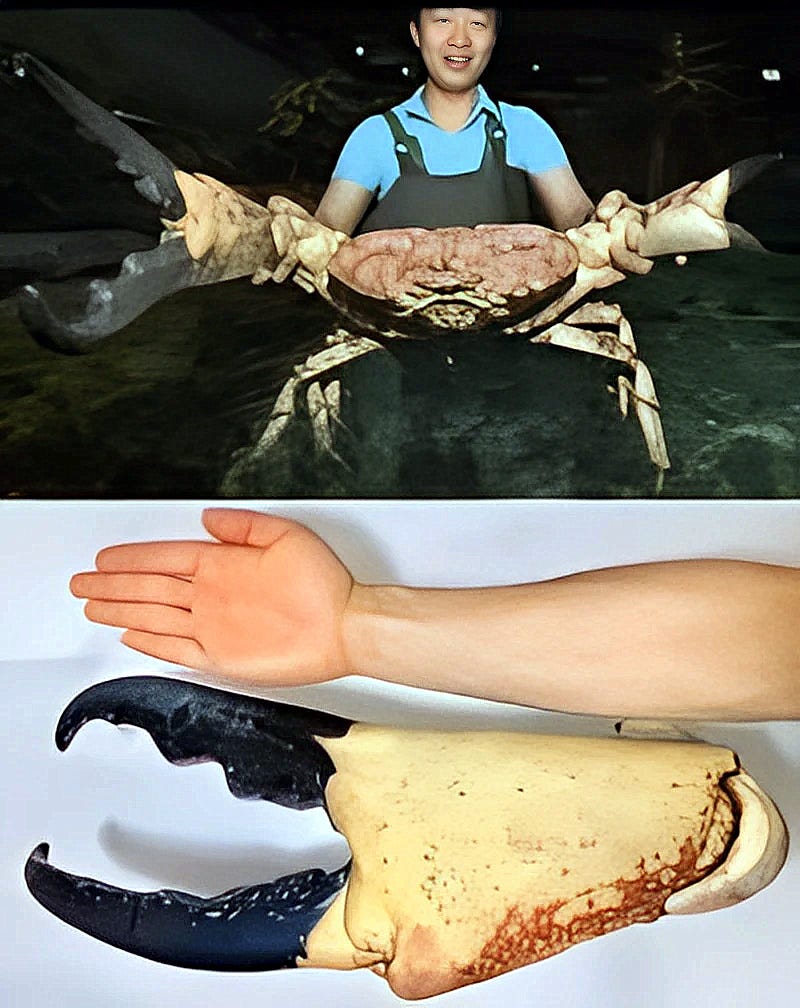
The biology of Pseudocarcinus gigas is as extraordinary as its size. Adults can weigh over thirteen kilograms (28.66 pounds), with carapaces exceeding forty centimeters (15.75 inches) in width. Males possess an outsized crusher claw, a weapon capable of shattering shellfish and defending territory with bone-rattling force. Their life cycle is measured in decades, not years, characterized by a slow maturation that mirrors their deep, cold-water habitat. Each molt is a high-risk transformation, leaving the crab vulnerable until its armor rehardens. The thick exoskeleton is not merely a suit of armor but a gallery of evolutionary adaptations, lined with sensory hairs to detect prey and predators alike in the darkened depths.
A Fragile Empire Beneath the Waves
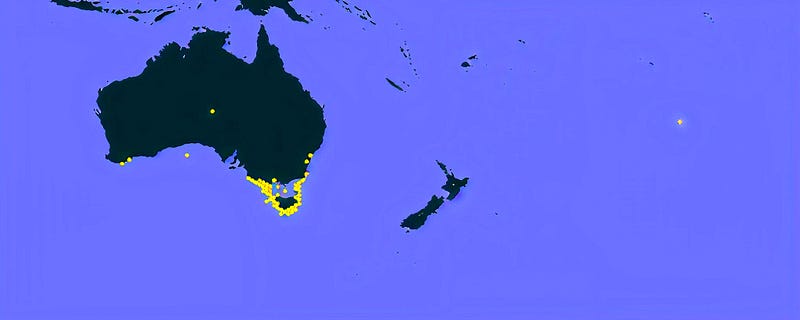
These crabs dwell on the continental shelf off southern Australia and Tasmania, favoring depths between 100 and 400 meters. There, light is dim and temperatures hover just above freezing. In this shadowy world, the Tasmanian giant crab is both predator and scavenger, consuming sea urchins, mollusks, and carrion, quietly maintaining ecosystem balance. Yet, this balance is delicate. Overfishing, driven by high market demand, threatens to tip the scales. Sustainable practices, such as strict quotas and size limits, are slowly taking root in Australian fisheries, though illegal harvests and bycatch remain pressing concerns. Conservationists warn that without vigilance, this deep-sea marvel could decline before its ecological role is fully understood.
Treasure and Trade
For those who sell or buy them, the Tasmanian giant crab is more than a curiosity; it is a commodity. Live specimens command eye‑watering prices in Asian markets, particularly in Hong Kong and Singapore, where their rarity is a badge of prestige. Tasmania’s fisheries have built a careful industry around them, balancing economic opportunity with stewardship. But because these crabs grow so slowly, a single immature harvest can erase decades of growth. As a result, the market increasingly celebrates sustainability certifications, appealing to chefs and diners who care about the future of their food.
A Taste of the Deep
Ask anyone who has cracked open one of these crabs, and they will wax poetic. The meat is firm yet sweet, a marriage of buttery lobster and briny blue crab with a lingering mineral note that whispers of its coldwater home. In coastal kitchens from Hobart to Melbourne, chefs serve it chilled with lemon and native pepperberry or steamed gently to preserve its delicate texture. Some pair the crab with hand‑rolled pasta, the flesh mingling with olive oil and herbs, while others grill it over smoldering wood for a smoky counterpoint to its natural sweetness. Beyond flavor, its nutritional profile is enviable: high in protein, low in fat, and rich in trace minerals that reflect its benthic origins.
The Right Wine Beside the Right Claw
Pairing wine with Tasmanian giant crab is an art in itself. A cool‑climate Chardonnay from the Tamar Valley mirrors the crab’s subtle sweetness with citrus and almond notes. A crisp Riesling from the Eden Valley cuts through the richness with a flash of acidity, while for those who crave indulgence, a vintage Champagne delivers brioche and bubbles that dance alongside the crab’s oceanic depth. Each pairing turns the meal into a dialogue between land and sea, a fleeting moment where flavor transcends geography.
Beneath the Shell, a Deeper Story
To savor a Tasmanian giant crab is to taste more than a meal. It is to touch the mystery of the deep oceans, to weigh in your hands the product of decades of growth and adaptation, and to recognize the fragile interplay between human appetite and marine sustainability. These creatures are not infinite, and their continued presence in our waters depends on choices we make today. Perhaps that is their greatest lesson: that true luxury lies not in indulgence alone, but in the reverence and restraint that ensure such wonders endure for generations to come.