Crowned Wanderer of the Highlands: The Enigmatic Life of the Dotterel
The dotterel, Charadrius morinellus, is a bird that wears its mystery like a royal cloak. This small, migratory plover has charmed…
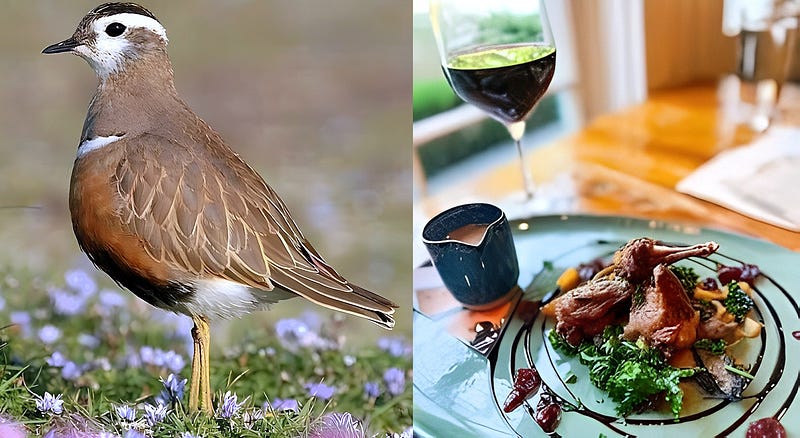
The dotterel, Charadrius morinellus, is a bird that wears its mystery like a royal cloak. This small, migratory plover has charmed naturalists for centuries, not only for its delicate beauty and unassuming nature but for its peculiar role reversal in the breeding season, where the females are the more vividly dressed suitors and the males quietly take on the domestic work of incubation and chick-rearing. Once a staple in aristocratic banquets, it now stands as a symbol of how human appetite can alter a species’ destiny, teetering between cultural memory and conservation necessity.
Taxonomy
The Eurasian dotterel belongs to the family Charadriidae, which encompasses a variety of plovers and lapwings. Its scientific name, Charadrius morinellus, reflects a long history of classification that ties it to shorebirds of open lands rather than the typical coastal haunts of many relatives. No subspecies are formally recognized, though slight regional variations occur. Known by the common name “dotterel” in English, the bird’s name was once synonymous with gullibility, a nod to its trusting nature and unfortunate ease of capture — a trait that made it a favored quarry in past centuries.
Biology
The dotterel is a small, elegant bird, measuring about 8.3 in (21 cm) in length with a wingspan of 20–22 in (51–56 cm), and weighing around 3.5–4.2 oz (100–120 g). Its plumage is a masterclass in subtlety and surprise. In the breeding season, females outshine males, with a russet breast, bold white breast band, and intricate brown-and-gold mottling on the back. Males, though slightly duller, still carry the same crisp patterning, blending beautifully with alpine tundra and heathland. In a curious inversion of avian norms, the females court multiple mates, while the males perform the delicate task of incubating eggs for about 24–27 days. The chicks are precocial, walking and feeding themselves within hours of hatching, yet remain under the father’s watchful care until they fledge.
Ecology
This is a bird of high places and far horizons. Breeding occurs in upland tundra, alpine meadows, and stony plateaus across northern Eurasia, from Scotland’s Cairngorms to the Siberian expanse. In the non-breeding season, the dotterel migrates south, wintering in North Africa and the Middle East. Its diet is a varied forage of invertebrates — beetles, ants, flies, caterpillars — supplemented by seeds and small berries when insects are scarce. Climate change, habitat encroachment, and historical overhunting have all played their part in shrinking its range. While still listed as “Least Concern” globally, some local populations — such as in the British Isles — have seen steep declines, making targeted conservation work urgent.

Uses
Historically, dotterels were prized both for sport and the table. In England during the seventeenth and eighteenth centuries, they were trapped in large numbers during migration, with their trusting nature making them easy prey. The meat was considered a delicacy, fetching high prices in markets and finding its way to the plates of the wealthy. Today, hunting is prohibited in most of the bird’s range, and its economic relevance lies chiefly in ecotourism and birdwatching, where its rarity makes it a sought-after sighting for enthusiasts.
Culinary Aspects
The flesh of the dotterel was once praised for being tender and delicately flavored, likened to a finer, more refined quail. Historical recipes often roasted the bird whole, sometimes basted with butter or wrapped in bacon to preserve moisture. In the absence of modern refrigeration, it was common to prepare and serve them fresh within hours of capture. Nutritionally, as with most small game birds, the meat would have been a rich source of protein, vitamins, and minerals, though such uses now belong firmly to history in light of conservation priorities.
Wine Pairings
Had one the chance, as in centuries past, to dine on dotterel, the pairing would lean toward delicate yet structured wines that enhance rather than overpower the meat’s subtlety. A Chablis from Burgundy, with its crisp minerality, would marry beautifully with the bird’s light game character, while a Pinot Noir — particularly from Oregon or Burgundy — would offer earthy undertones to match the upland origins of the meal. In a modern, conservation-minded context, similar pairings could be applied to ethical alternatives such as sustainably farmed quail or partridge.
Conclusion
The dotterel is more than a bird; it is a story of beauty, vulnerability, and shifting human values. Once hunted for the table and trapped for sport, it now stands as a treasured species to be admired from a respectful distance. Its trustworthiness — once its undoing — can now be met with human restraint, allowing future generations to witness the courtship dances on high moors and the quiet dedication of the males who brood the next generation under alpine skies. The dotterel reminds us that stewardship is not only about protecting a species but about preserving the stories that give our landscapes their living texture.