Dancing on Water: The Remarkable World of the Jacana
Introduction Across the sunlit wetlands of the tropics, where lily pads sprawl like emerald coins over glassy water, a curious bird defies…
Introduction
Across the sunlit wetlands of the tropics, where lily pads sprawl like emerald coins over glassy water, a curious bird defies logic and physics alike. The jacana, often called the “lily trotter,” appears to walk on water, its long toes distributing its weight so delicately that it can sprint across floating vegetation without sinking. To witness a jacana is to see grace and adaptation fused into one improbable form — a creature whose life is defined by the shifting boundary between land and water. But behind the beauty lies a story of evolutionary ingenuity, ecological importance, and surprising human connection.
Taxonomy
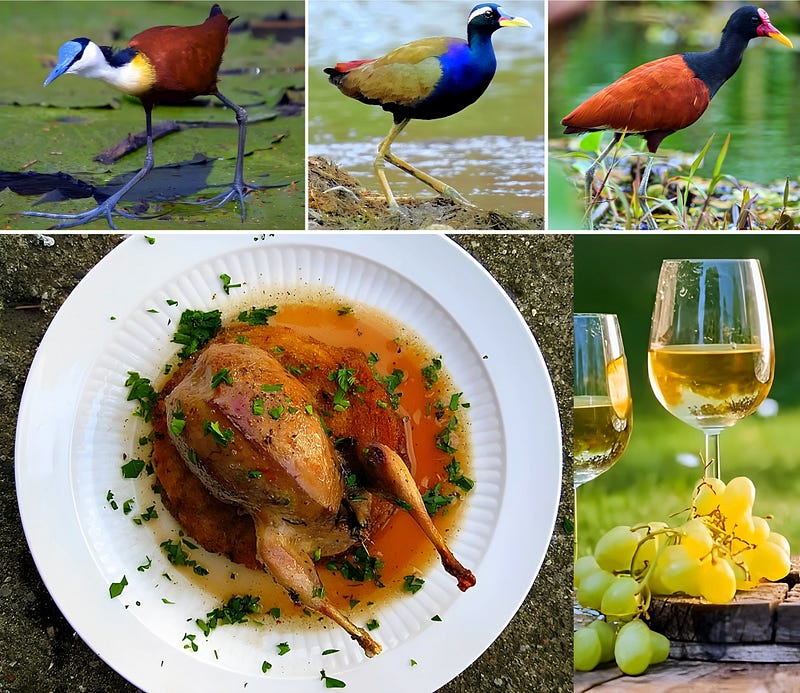
Jacanas belong to the family Jacanidae, a small but widespread group within the order Charadriiformes, which also includes plovers and sandpipers. The family comprises eight recognized species, each adapted to tropical and subtropical wetlands across Africa, Asia, the Americas, and Australasia. Among the best known are the African jacana (Actophilornis africanus), with its chestnut plumage and lemon-gold neck shield; the bronze-winged jacana (Metopidius indicus), native to South and Southeast Asia; and the wattled jacana (Jacana jacana), which ranges from Panama to Argentina. While none of these species are known for culinary use today, historical accounts suggest indigenous communities occasionally collected their eggs, particularly during lean seasons.
Biology
At first glance, the jacana’s body is modest in size — averaging about 20 cm in length, or roughly 8 in — but its toes tell another story entirely. These can stretch up to 10 cm, or about 4 in, each, creating a splayed platform ideal for distributing weight on floating vegetation. The bird’s body is lightweight, with hollow bones and a streamlined shape that aids in rapid movement over unstable surfaces. Its breeding system is one of the most unusual in the avian world: jacanas are polyandrous, with females defending territories and courting multiple males, while the males incubate eggs and care for the young. Chicks, covered in down from the moment of hatching, can run, swim, and even dive within hours, often hiding underwater with only their bills above the surface to avoid predators.
Ecology
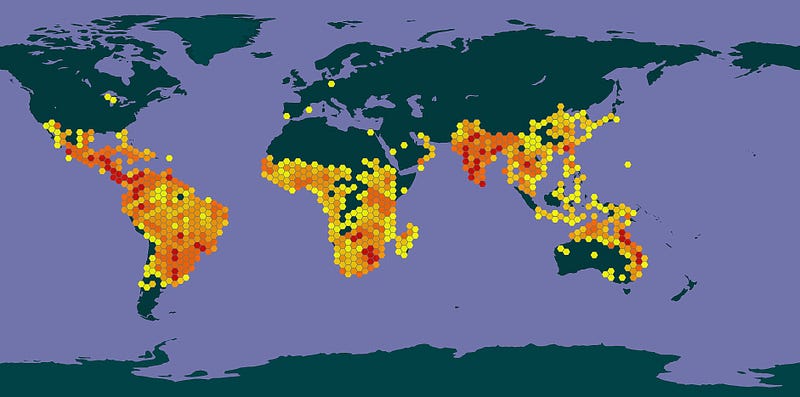
Jacanas thrive in freshwater wetlands — lakes, ponds, and slow-moving rivers — where aquatic vegetation is abundant. They play a key ecological role as both predator and prey. Feeding primarily on insects, mollusks, and plant matter, they help regulate aquatic invertebrate populations while also dispersing plant seeds. In turn, they are hunted by snakes, raptors, and large fish. Their distribution spans from the equatorial Amazon to the rice paddies of Southeast Asia, and from the Nile floodplains to the mangroves of northern Australia. As wetland habitats face threats from drainage, pollution, and climate change, jacanas serve as an indicator species for ecosystem health, their presence signaling a thriving, balanced aquatic environment.
Uses
Direct economic uses of jacanas are rare in modern contexts, but their ecological services indirectly benefit humans. By maintaining invertebrate balance, they contribute to healthier aquatic plants, which support fish populations essential to local fisheries. In certain ecotourism markets — such as birdwatching tours in Botswana, Kerala, and Costa Rica — the jacana’s remarkable appearance and behavior are a draw for travelers, generating income for conservation-focused communities. Sustainable wetland management not only protects jacanas but also safeguards water filtration, flood control, and biodiversity that humans rely upon.
Culinary Aspects
Jacanas are not commonly eaten due to a combination of factors, including their small size, preference for wetland habitats, and the fact that they are not considered a desirable game bird in most regions. While not explicitly prohibited in any religious or cultural texts, their small size and the difficulty of hunting them in their natural habitat make them an impractical food source.
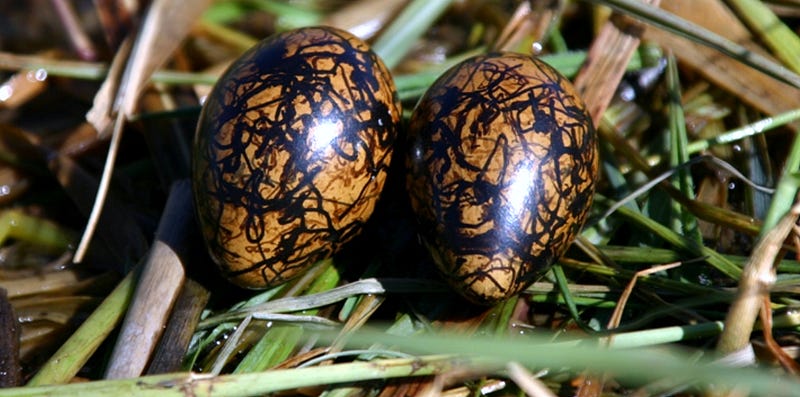
While jacanas themselves are not part of contemporary cuisine, their eggs have been documented as a traditional food source among some wetland-dwelling peoples in Africa and South America, generally boiled or roasted. Descriptions liken the flavor to that of domestic chicken eggs, though with a slightly denser yolk and more mineral-forward taste, owing to their aquatic diet. Given their ecological value and relatively small clutch sizes — typically 3 to 4 eggs — it is neither sustainable nor ethical to harvest them today. Nonetheless, their historical role in subsistence diets illustrates the deep connection between wetland biodiversity and human survival.
Wine Pairings
If one were to imagine a historically inspired meal featuring jacana eggs — something not encouraged for modern sustainability reasons — pairing would demand a wine that complements the richer yolk without overpowering its delicacy. A crisp Sauvignon Blanc from Marlborough, New Zealand, with notes of citrus and cut grass, could echo the wetland freshness of the bird’s habitat. Alternatively, a lightly oaked Chardonnay from Burgundy would offer a creamy counterpoint to the egg’s texture. Such pairings, though now hypothetical, highlight how culinary heritage often mirrors the environments from which it springs.
Conclusion
The jacana is more than a curiosity of nature — it is a living bridge between the worlds of air, water, and earth. Its improbable anatomy, reversed gender roles, and deep-rooted ties to wetland ecology remind us that life adapts in ways that challenge our assumptions. Protecting jacanas means protecting the water gardens they dance upon, ensuring that these “lily trotters” continue to stride lightly across the planet’s most delicate habitats.