Dunlin: The Shape-Shifting Sandpiper of the Tides
Introduction
Introduction
Along the shifting edges of estuaries and tidal flats, few birds embody the restless rhythm of migration like the Dunlin (Calidris alpina). This small sandpiper, with its sweeping flocks and rapid wingbeats, is more than a seasonal traveler — it is a marker of ecological health, a participant in centuries of culinary tradition, and a living testament to the fragility of coastal habitats. Its story threads through science, culture, and sustainability, showing how a single species can connect wetlands from Alaska to West Africa.
Taxonomy
The Dunlin belongs to the family Scolopacidae, order Charadriiformes. Its scientific name is Calidris alpina, and taxonomists recognize up to nine subspecies, each adapted to specific breeding regions across the Arctic and sub-Arctic. These include C. a. arctica from Greenland, C. a. schinzii from Britain and Scandinavia, and C. a. pacifica from Alaska.
Common names reflect their global range. In English, it is “Dunlin,” derived from the Old English “dun,” meaning dark or dusky. In French, it is “Bécasseau variable,” highlighting its plumage variation. German birders call it “Alpenstrandläufer,” meaning “Alpine beach runner.” In Russian, it is “Кулик-чернозобик” (Kulik-chernozobik, black-throated sandpiper). In Arabic-speaking North Africa, it is referred to as “طائر الدونلين” (Tair al-Dunlin). Each vernacular name carries a sense of the bird’s adaptability and its cultural visibility among shorelines where people have long gathered food.
Biology
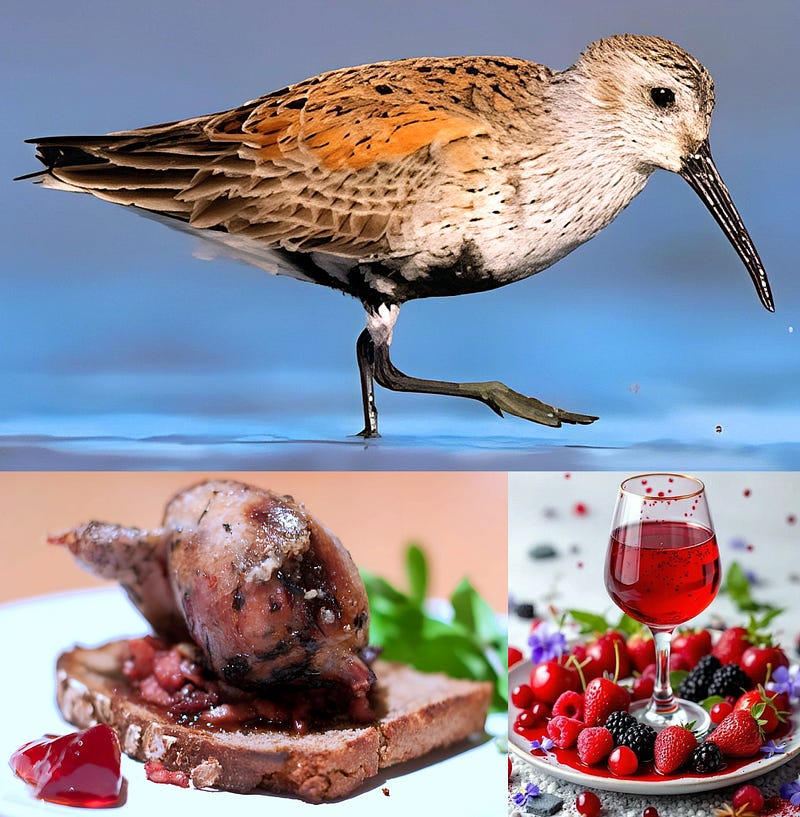
The Dunlin is a compact bird, measuring about 17–21 cm (6.7–8.3 in) in length, with a wingspan of 32–36 cm (12.6–14.2 in) and weighing 40–60 g (1.4–2.1 oz). Its most distinctive feature is the black belly patch that appears in breeding plumage, contrasting with rufous tones along the back. Outside breeding season, its feathers fade to soft gray and white, blending into coastal mudflats.
It nests in tundra habitats, laying 3–4 eggs in shallow ground scrapes lined with grasses. Both parents share incubation. Chicks hatch precocial, able to feed within hours, relying on dense insect hatches during the brief Arctic summer. Migratory endurance defines its life cycle — birds from Alaska may travel over 10,000 km (6,200 miles) to wintering grounds in Southeast Asia, while European populations cross the Mediterranean to Africa.

Ecology
Dunlins are key players in intertidal ecosystems. They probe mudflats with slender bills, extracting worms, crustaceans, and mollusks, and in doing so, redistribute nutrients through sediment. Their presence signals intact wetland function, and their absence can indicate ecological stress.
They form dense flocks numbering in the thousands, executing aerial murmurations that protect against predators such as peregrine falcons. Conservation challenges are mounting: loss of wetlands to coastal development, rising seas, and climate shifts that alter insect emergence threaten breeding success. The International Union for Conservation of Nature lists the Dunlin as “Least Concern,” but regional declines are steep in Western Europe and East Asia.
Uses
Historically, Dunlins were consumed in Europe and northern Asia, especially during migration periods when flocks were abundant. The edible parts include breast and leg meat, yielding approximately 120 kcal per 100 g (3.5 oz). Nutritional breakdown shows high protein content, moderate fat, and trace minerals like iron and selenium. Meat is lean but slightly gamy, requiring stewing or roasting for palatability. Traditional preparation in northern Scandinavia included slow cooking with berries and herbs to balance the strong flavor.
Seasonality aligns with migration — spring and autumn. Yields per hectare were never systematically measured, but hunters in 19th-century Britain reported taking dozens in a single outing, underscoring the once-abundant flocks. No significant anti-nutrients or toxins are reported, though improper handling risks microbial spoilage. Commercial-scale harvesting has vanished due to conservation ethics and protective laws.
Beyond food, Dunlins are culturally significant. Inuit oral traditions noted their arrival as a seasonal marker. Feathers were sometimes used in small-scale crafts, though not extensively traded. Today, Dunlins hold economic value primarily through ecotourism, with birdwatchers traveling globally to witness their synchronized flocks.
Culinary Aspects
The meat of Dunlin, when historically consumed, was described as dark, dense, and carrying a saline undertone reflective of its coastal diet. The taste profile combined gaminess with briny notes, while the aroma leaned earthy and faintly metallic. Texture was firm, sometimes bordering on dry if overcooked. Slow braising produced the best balance, allowing connective tissue to soften.
The flavor balance was simple but intense, with little aftertaste when paired with acidic sauces. Visual presentation was modest — small, dark cuts of meat, often incorporated into pies or stews with wild herbs. Though no longer common on tables, the cultural memory of its taste remains in the archives of northern European gastronomy.
Wine Pairings
If one were to reconstruct historical dishes of Dunlin today, thoughtful wine pairings would elevate the experience. A Loire Valley Cabernet Franc offers earthy aromatics and bright acidity to cut through gaminess, echoing the bird’s tundra origins. A Jura Savagnin, with oxidative nutty tones, would match well with berry-based reductions once used in Scandinavian preparations. For a bolder option, a Mencía from Galicia provides floral high notes and light tannins that frame the saline edge of the meat. Each pairing emphasizes harmony between lean protein and regional wine character, offering a culinary bridge across time and geography.
Conclusion
The Dunlin is more than a migratory shorebird. It is an ecological engineer, a cultural marker, and a species that once fed communities living along northern coasts. Its shifting plumage mirrors the transformations of the habitats it relies upon, habitats now under threat. Protecting this bird means protecting tidal flats, estuaries, and the intricate web of life they sustain. To watch a flock of Dunlins twist across the sky is to glimpse the resilience of migration itself, a spectacle worth preserving for generations ahead.