Elder Wonders: The Story of Sambucus
Elder embodies the tension between danger and nourishment, folklore and medicine, wildness and tradition. As foraging grows, its berries remind us that respecting nature’s dualities is essential to sustaining both rural heritage and the ecosystems that shaped it.
Introduction
Few plants embody the intertwining of myth, medicine, and the kitchen table as vividly as the elderberry, known to botanists as Sambucus. Across centuries, cultures from Northern Europe to North America have revered this hardy shrub for its fruit, flowers, and the lore that clings to its branches. From ancient protective charms to modern syrups touted for immune support, elder has been both a companion and a curiosity. Yet beyond the legends lies a plant family of striking ecological importance, culinary versatility, and a delicate balance between toxicity and nourishment.
Taxonomy
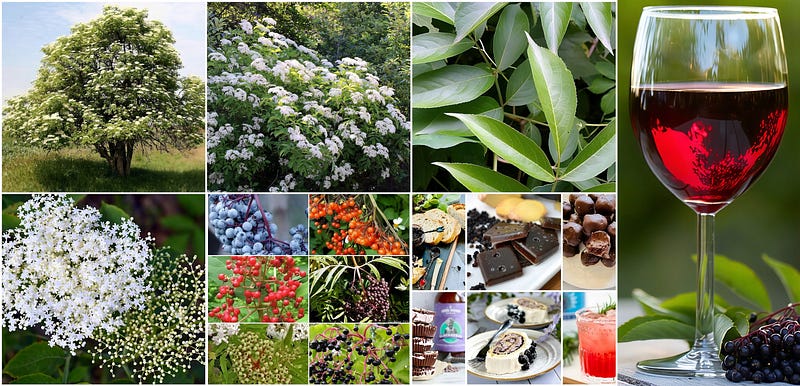
The genus Sambucus belongs to the family Adoxaceae, which also includes viburnums. It comprises roughly 25 species of shrubs and small trees. The most prominent species include Sambucus nigra, or European elder, long cultivated in Britain, Germany, and Scandinavia, and Sambucus canadensis, the American elder, common in the eastern United States. Other notable varieties include the red-berried elder, Sambucus racemosa, often admired for its ornamental appeal but less valued in the kitchen. Common names range from “elderberry” to the poetic “elder tree,” with flowers referred to as “elderflower” in culinary and medicinal circles.

Biology
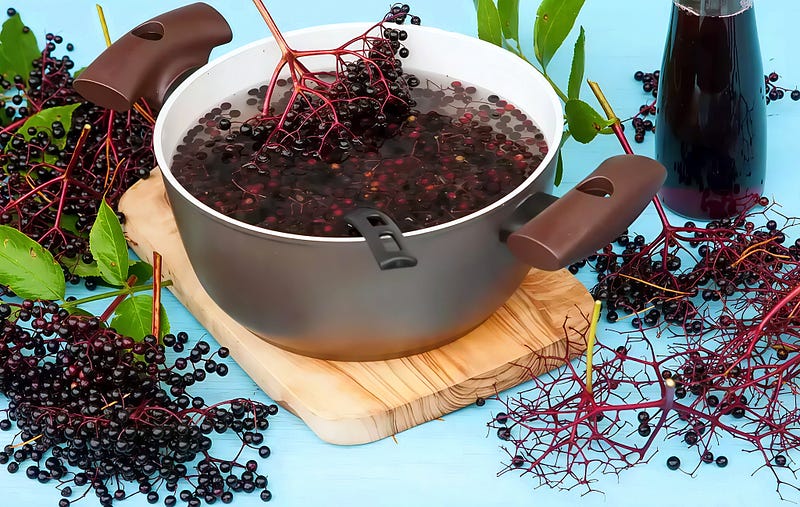
Elder plants are fast-growing deciduous shrubs, often reaching 20 ft (about 6 m) in height, with compound leaves that emit a musky scent when crushed. Their umbrella-like clusters of small white or cream-colored flowers bloom in late spring, followed by drupes — tiny berries that range in color from deep purple to red, depending on the species. These berries, rich in anthocyanins and vitamin C, are notorious for their dual nature: raw, they can induce nausea due to cyanogenic glycosides, but once cooked, they transform into safe, tangy treasures. Elder thrives in disturbed soils and hedgerows, its flexible stems once hollowed to make whistles and pipes, a feature that inspired its Greek name, sambuca.
Ecology
Elders occupy a valuable ecological niche. They grow along streams, in meadows, and at forest edges, stabilizing soils and offering nectar to pollinators. Birds, particularly thrushes and waxwings, feast on elderberries, dispersing seeds across landscapes. Their dense foliage shelters small mammals and insects, making them integral to hedgerow biodiversity in Europe and North America. However, elders can be opportunistic, sometimes spreading aggressively in disturbed environments. Conservationists recognize its role as both a stabilizer and a natural food source, though careful management ensures it does not dominate fragile habitats.
Uses
Elder’s reputation has shifted from folklore to commercial value. Extracts of elderberry appear in syrups, lozenges, and supplements, marketed as natural immune boosters. The elderflower industry has grown rapidly, with blossoms distilled into cordials, syrups, and even perfumes. Sustainable harvesting practices are critical — cutting flower heads sparingly ensures that both wildlife and humans benefit from the plant. Markets in Europe and North America have seen rising demand, with elderflower beverages becoming staples in both artisanal and mainstream production.

Culinary Aspects
The culinary world embraces both flowers and fruit. Elderflowers are celebrated for their honeyed, musky fragrance, steeped into syrups or lightly fried as fritters. The berries, once cooked, yield a tart, wine-dark flavor that enriches jams, jellies, and pies. Traditional recipes abound: English elderflower cordial, Scandinavian elderberry soup, and American elderberry pie. Nutritionally, cooked berries provide antioxidants, vitamin A, vitamin C, and dietary fiber, supporting health while delivering robust flavor. Their transformation from bitter danger to sweet sustenance highlights the ingenuity of culinary tradition.
Wine Pairings
Elderberries themselves ferment into rustic wines, historically brewed in cottage kitchens. Elderberry wine, deep and tannic, pairs well with roast game such as venison or duck, its acidity cutting through rich meat. Dishes featuring elderflower — like a summer tart or panna cotta — pair beautifully with sparkling wines such as Prosecco or Champagne, which amplify the floral delicacy. For elderberry jams or sauces served with cheese, a bold red like Cabernet Sauvignon, or even a port, complements the fruit’s tangy bite.
Conclusion
The story of Sambucus is one of resilience, duality, and cultural resonance. It is a plant that straddles the worlds of danger and delight, folklore and pharmacology, kitchen and hedgerow. As interest in sustainable foraging and traditional foodways grows, elder reminds us that the natural world offers both caution and reward — if we are wise enough to approach with respect. The elderberry, long an emblem of rural life, now stands at the crossroads of tradition and innovation, offering lessons in how we might savor and steward the wild abundance around us.