Emerald Fire: The Science, Culture, and Culinary Magic of True Wasabi
Introduction In the global imagination, wasabi is often a neon-green paste squeezed beside sushi rolls, its searing rush clearing sinuses…
Introduction
In the global imagination, wasabi is often a neon-green paste squeezed beside sushi rolls, its searing rush clearing sinuses in a single breath. Yet that familiar condiment, more often than not, is a clever impersonator made from horseradish, mustard powder, and food coloring. The real thing — Eutrema japonicum — is an entirely different experience: gentler, more aromatic, fleeting in its pungency, and breathtaking in its rarity. Grown in shaded, running mountain streams of Japan, true wasabi is a triumph of patience and craft, a botanical jewel that marries science, tradition, and gastronomy in perfect harmony.
Taxonomy
Eutrema japonicum, sometimes referred to by its older classification Wasabia japonica, belongs to the Brassicaceae family — the same botanical lineage that gave the world cabbage, mustard, and horseradish. Within its native range, it is known simply as “wasabi” or “hon-wasabi,” meaning “true wasabi.” Two principal cultivars dominate commercial production: ‘Daruma’ and ‘Mazuma.’ Both share the signature sinus-prickling compounds called isothiocyanates, yet they differ subtly in aroma and flavor complexity.
Biology
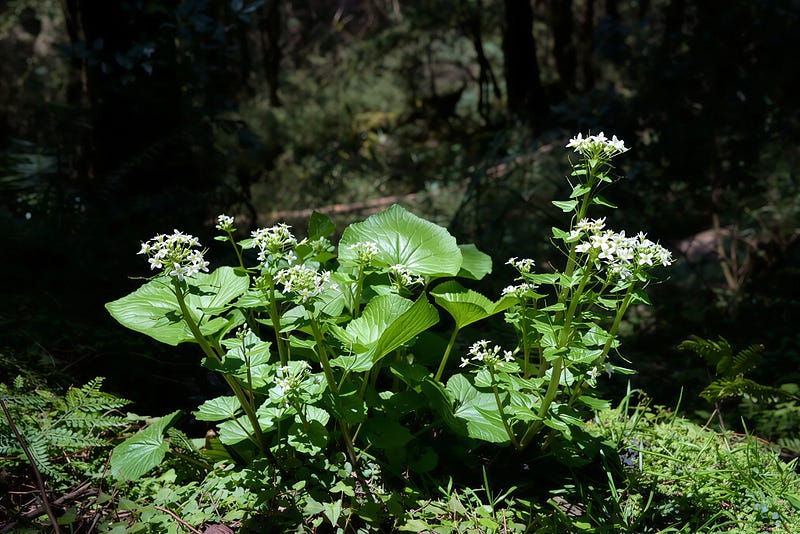
Botanically, wasabi is a perennial herb that rarely grows taller than 20 inches (about 50.8 cm). Its most prized part is not a root but a rhizome — an above-ground stem thickened with the plant’s defense chemistry. Broad, heart-shaped leaves grow on long petioles, forming a low rosette, while delicate white flowers appear in spring, signaling maturity. The plant’s isothiocyanates are volatile, breaking down quickly once grated, which explains why freshly prepared wasabi paste begins to lose its sharpness within 15 minutes. Wasabi’s life cycle is slow: under optimal conditions, the rhizome takes 18 to 24 months to reach marketable size, with the best quality specimens weighing between 4 and 6 ounces (113 to 170 g).
Ecology
True wasabi is an ecological specialist. It thrives in cool, humid environments with constant access to fresh, flowing water. Japan’s mountainous regions in Shizuoka, Nagano, and Iwate provide the perfect combination of shade, mineral-rich streams, and temperatures hovering between 46°F and 68°F (about 8°C to 20°C). This dependence on pristine aquatic habitats makes wasabi cultivation a balancing act between human demand and environmental preservation. Traditional cultivation in “sawa” beds — gravel-lined channels fed by spring water — not only sustains the plant but supports a miniature ecosystem of aquatic invertebrates and mosses.
Uses
The economic value of true wasabi is staggering, with fresh rhizomes commanding hundreds of dollars per pound. This premium pricing reflects both the agricultural difficulty and the plant’s cultural prestige. Japan remains its primary producer, though small-scale farms in the Pacific Northwest, Taiwan, and New Zealand have emerged to meet global demand. Sustainability hinges on responsible water use, habitat protection, and the maintenance of heirloom cultivars resistant to disease.

Culinary Aspects
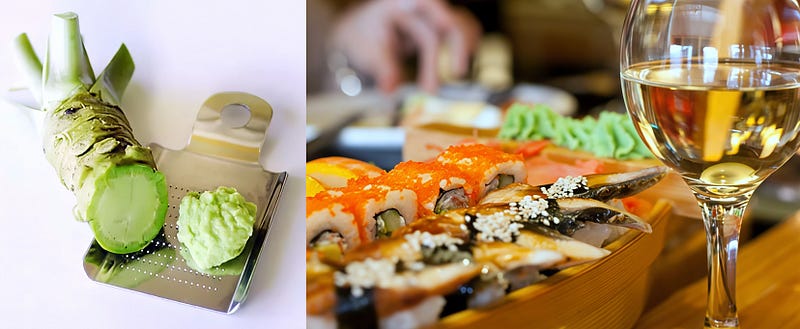
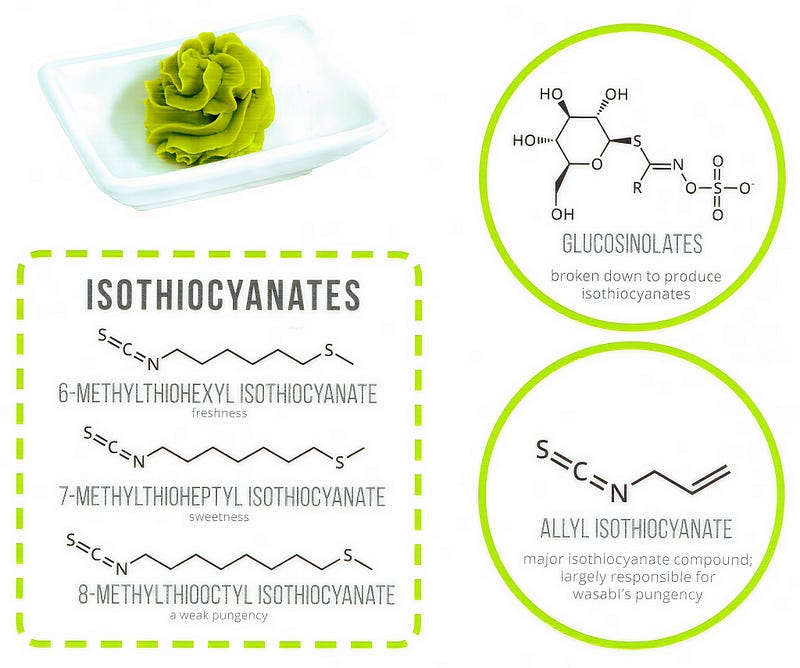
Fresh wasabi is a study in ephemerality. Grated on a sharkskin or fine metal oroshigane grater, the rhizome releases a cloud of green paste that is simultaneously sweet, vegetal, and peppery. Unlike horseradish’s blunt force, wasabi’s heat blooms gently, peaks, and fades, leaving a lingering sweetness on the tongue. In Japanese cuisine, it is paired with sashimi to complement — not overpower — delicate fish. Beyond sushi, it graces soba noodles, tempura, and even wagyu beef, where its clean, herbal spice cuts through rich fat. Nutritionally, wasabi contains glucosinolates with potential anti-inflammatory and antimicrobial properties, and its isothiocyanates are being studied for their role in cardiovascular and digestive health.
Wine Pairings
Pairing wine with wasabi requires an understanding of its volatile heat and fresh herbal notes. Dry Rieslings, with their crisp acidity and slight petrol undertones, harmonize beautifully with sashimi dressed in fresh wasabi. A grassy, mineral-driven Sauvignon Blanc from New Zealand echoes the plant’s verdant profile. For richer dishes like wagyu, a chilled Junmai Ginjo sake or even a sparkling brut offers a palate-cleansing counterpoint. The key is to match freshness with freshness, allowing wasabi’s character to shine without being muted or overwhelmed.
Conclusion
True wasabi is a reminder that authenticity often hides in plain sight, obscured by convenience and imitation. To taste it fresh is to experience not just a flavor but an agricultural heritage that values patience, purity, and respect for the environment. As global interest grows, the challenge lies in meeting demand without sacrificing the ecosystems and traditions that make Eutrema japonicum so extraordinary. In that way, wasabi is not just a condiment — it is a lesson in how the rarest flavors come from the most carefully tended roots.