Fragrance of the Valley: Exploring Kashmiri Masala
Introduction
Introduction
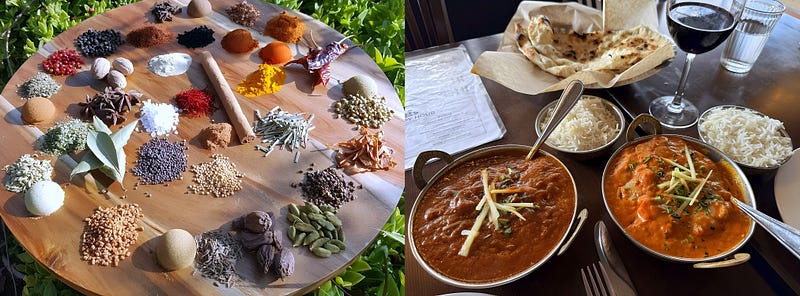
High in the Himalayan valleys, where saffron blooms in purple fields and snow-fed rivers whisper ancient tales, Kashmiri masala was born. More than just a spice blend, it is the edible soul of Kashmir, a region where trade routes once carried silk, gems, and seasonings across empires. Kashmiri masala is not a single recipe but a tradition — an evolving harmony of local saffron, dried ginger, fennel, Kashmiri red chili, cardamom, cinnamon, and cloves. Each pinch of this mix tells a story of geography, culture, and survival. To understand it fully, we must treat it as both a botanical mosaic and a cultural artifact.
Taxonomy
Kashmiri masala is not a plant but a composite of species, each with its own scientific identity. The fiery crimson glow comes from Capsicum annuum, known as the Kashmiri chili, famed for its color rather than heat. Fennel (Foeniculum vulgare) provides its cooling sweetness, while dried ginger (Zingiber officinale) anchors it with warmth. Saffron, the world’s most expensive spice, derives from the delicate stigma of Crocus sativus. Cardamom (Elettaria cardamomum), cinnamon (Cinnamomum verum), and clove (Syzygium aromaticum) round out the blend. Though the proportions vary, these species form the backbone of what is recognized as Kashmiri masala.
Biology
Each spice carries biological marvels. The Kashmiri chili thrives in valleys at altitudes above 1,500 m (approximately 4,900 ft), where cool nights intensify its pigment. Fennel, a perennial herb, flowers into umbels that attract bees and promote biodiversity. Ginger, harvested after eight months of growth, is a rhizome that regenerates year after year. Saffron crocus, demanding delicate hand-harvesting, blooms briefly in autumn, each flower yielding only three stigmas, which dry to become the costly threads we know. This biological diversity ensures that Kashmiri masala is both potent and fragile, its existence dependent on precise climatic and ecological balance.
Ecology
The production of Kashmiri masala is tied directly to the land. Saffron fields in Pampore, often called the “saffron town of Kashmir,” require well-drained, loamy soil and irrigation from melted snow. Chili plants depend on stable monsoon patterns, while fennel and ginger thrive in smallholder plots that support rural families. Climate change now threatens this balance. A temperature rise of just 2°C (about 3.6°F) reduces saffron yields, while erratic rainfall disrupts chili harvests. Sustainable farming — crop rotation, organic soil management, and water conservation — is increasingly vital to preserve the ecology behind the masala.
Uses
Kashmiri masala’s economic importance extends beyond the kitchen. Saffron commands up to 500,000 Indian rupees per kilogram (about 6,000 USD per 2.2 lb), making it one of the world’s most valuable agricultural products. Kashmiri chili powder, prized for its hue, is exported worldwide to restaurants and spice merchants. Local cooperatives sustain farming communities by selling masala blends that embody regional identity. However, adulteration — mixing cheaper dyes or synthetic substitutes — remains a challenge. Ethical sourcing and certification are therefore essential to sustain both farmers and the integrity of the product.
Culinary Aspects
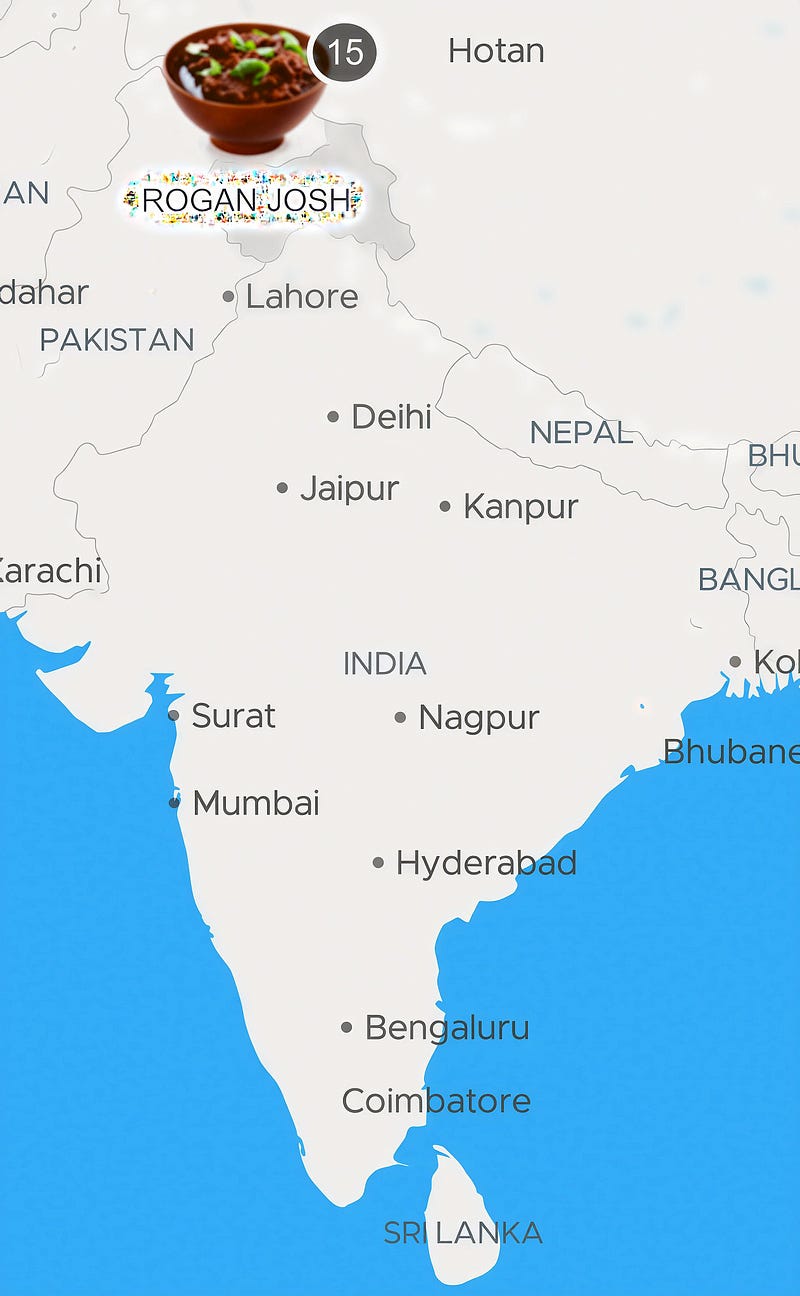
In Kashmiri cuisine, masala is not about searing heat but layered depth. The Kashmiri chili imparts a scarlet sheen to rogan josh, the famed lamb stew simmered in yogurt and spice. Fennel and dried ginger perfume yakhni, a delicate mutton broth. Saffron threads dissolve into kahwa, the traditional green tea, imparting a golden color and subtle aroma. Nutritionally, Kashmiri masala offers antioxidants, digestive aids, and anti-inflammatory compounds. When cooking, a teaspoon or two — about 4 to 6 g, equivalent to 0.14 to 0.21 oz — is enough to transform a dish.
Wine Pairings
Pairing wine with Kashmiri masala requires sensitivity. Rogan Josh, with its yogurt base and chili-bright color, marries beautifully with a medium-bodied Shiraz, whose peppery undertones echo the spice. A Gewürztraminer, with floral sweetness, enhances saffron’s subtle notes in kahwa or rice dishes. For vegetarian stews spiced with fennel and ginger, a dry Riesling balances the herbal lift and richness. The interplay of wine and masala is not about dominance but dialogue — flavors meeting midway across cultures.
Conclusion
Kashmiri masala is not just a seasoning; it is Kashmir’s story distilled into edible form. Its ingredients trace centuries of trade and adaptation, its cultivation reflects ecological fragility, and its flavors bind communities together across tables. To sprinkle Kashmiri masala on a dish is to engage with a history as layered as its spices, a reminder that food is never merely sustenance but culture, memory, and resilience. As climate change and globalization reshape the valleys, preserving this masala is as much about protecting biodiversity as it is about honoring tradition.