Frances Tiafoe: The Distracted Champion — How External Factors Are Limiting His Tennis Potential
The world of professional tennis demands absolute dedication, singular focus, and an unwavering commitment to continuous improvement…
The world of professional tennis demands absolute dedication, singular focus, and an unwavering commitment to continuous improvement. While Frances Tiafoe possesses undeniable talent and has achieved considerable success in his career, a concerning pattern has emerged that suggests he is not fully committed to maximizing his potential. Despite his infectious charisma and inspiring backstory, Tiafoe’s development has plateaued due to the distracting influences of personal relationships, financial security, and off-court ventures that have collectively diminished his competitive edge. This essay will argue that Tiafoe’s inconsistent performances against lower-ranked opponents, his growing portfolio of non-tennis engagements, and his contentment with relative success demonstrate a lack of seriousness about achieving the highest levels of professional tennis.
Inconsistent Performance Patterns Against Lesser Opposition
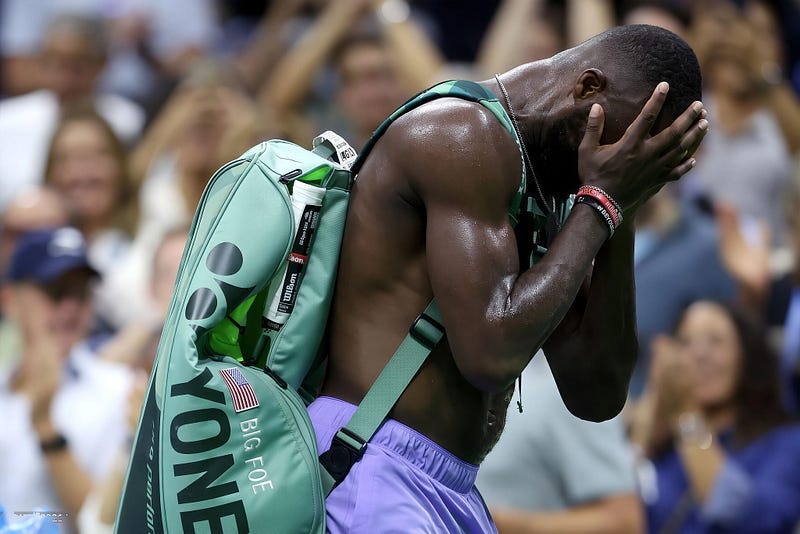
Frances Tiafoe’s professional record reveals a disturbing tendency to underperform against opponents he should routinely defeat. Despite being ranked among the world’s top 20 players, Tiafoe has suffered embarrassing defeats that betray a lack of mental preparation and focus. At the 2025 US Open, Tiafoe crashed out in the third round to German qualifier Jan-Lennard Struff, who was ranked 144th in the world at the time. This was not merely an upset but a straight-sets demolition (6–4, 6–3, 7–6) that exposed Tiafoe’s inadequate preparation. Following the match, Tiafoe confessed, “I don’t know how to recover from this, to be honest with you. I haven’t been this down in a very, very long time… It’s going to be hard to swallow how I played today and being out of the US Open this early”. This admission reveals a fragile mentality rather than the resilience expected of a player aspiring to win Grand Slam titles.
What makes Tiafoe’s loss to Struff particularly concerning is that it wasn’t an isolated incident. Struff had already defeated another top player, Holger Rune (seed №11), in the previous round, indicating that Tiafoe had ample opportunity to develop a strategic plan. The pattern of underperformance suggests that Tiafoe either underestimates lower-ranked opponents or fails to maintain the physical and mental conditioning required to consistently compete at the highest level. Unlike true champions who approach every match with intensity and focus, Tiafoe appears to selectively apply himself primarily in high-profile matches against elite opponents, while demonstrating a lackluster approach to early-round matches that he considers beneath him. This inconsistency fundamentally undermines his development as a professional who should be capable of bringing his best tennis to every match, regardless of the opponent.
Notable Tiafoe Losses to Lower-Ranked Players (2025 Season):
A clear example was his third-round exit at the 2025 US Open to Jan-Lennard Struff (ranked 144th), a straight-sets loss (6–4, 6–3, 7–6). This disappointing performance was preceded by a loss at the Cincinnati Open to another lower-ranked opponent, which was part of a poor hard-court season swing. Furthermore, this continued a pattern established earlier in the season of multiple losses to players ranked outside the top 50, highlighting a significant issue with consistency.
Proliferation of Off-Court Distractions
Tiafoe’s tennis development has been increasingly compromised by his growing portfolio of business ventures and celebrity engagements that divert attention from his primary profession. Unlike players like Novak Djokovic or Rafael Nadal, who maintain Spartan focus on tennis during the competitive season, Tiafoe has embraced the lifestyle of a celebrity-entertainer. In the days preceding the 2025 US Open, rather than focusing exclusively on his preparation, Tiafoe co-hosted a culinary event with Michelin-starred chef Daniel Boulud to introduce “Poulet à la Tiafoe,” a reimagined peanut butter stew, and a mocktail called the “Big Foe Fizz”. While athlete branding is common, the timing and nature of these activities — immediately before a major tournament — suggest misplaced priorities.
Tiafoe’s Forbes recognition as one of tennis’s highest-paid players in 2025 further illustrates this problematic dynamic. He notably stands as “the only player on the list who hasn’t won or reached a Grand Slam final,” indicating that his financial success has diverged from competitive achievement. This financial comfort zone may have created a subconscious contentment that undermines the hunger required to win major titles. The USTA Foundation’s initiative to develop “Community Impact Hubs” has also positioned Tiafoe as a philanthropic figurehead, requiring significant time and energy that might otherwise be directed toward his training regimen. While using one’s platform for social good is admirable, the extent of these commitments during the peak competitive years of his career suggests that Tiafoe is distracted by branding opportunities rather than singularly focused on winning championships.
Personal Relationships and Comfort Zone
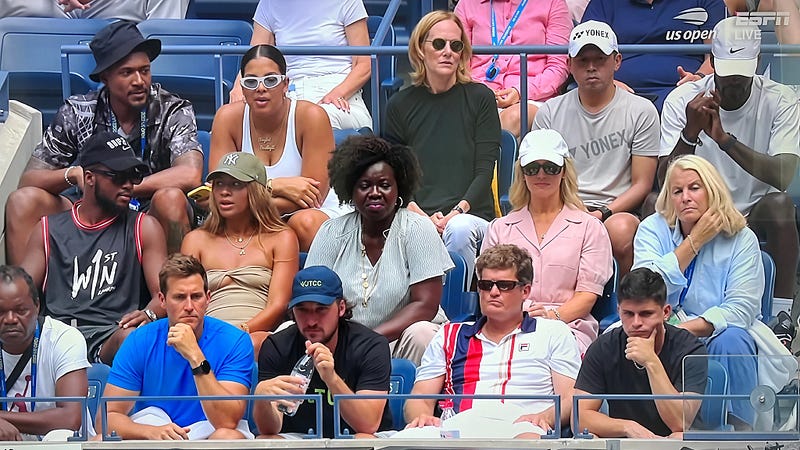
The influence of Tiafoe’s personal relationships has created an insulated environment that may shield him from the constructive criticism necessary for growth. His longtime girlfriend, Ayan Broomfield, has transitioned from being a support element to an active participant in his touring life, with reports indicating that since 2022, she “began traveling with the American star nearly full-time”. While personal support is valuable, the domestication of his touring life may have diminished the competitive fire that often drives athletes to improve. Broomfield herself acknowledges the challenges of tour life, noting: “When I played, I took losses very hard. I would allow them to linger… It would take me a long time to recover from a long, tough match”. This attitude toward losses appears to have influenced Tiafoe’s approach rather than fostering the short memory champions need.
Broomfield has developed her own ambitious initiatives, including her foundation and efforts to increase diversity in tennis, which inevitably create competing priorities within Tiafoe’s inner circle. Her public advocacy, while commendable, adds to the spectacle of celebrity surrounding Tiafoe rather than reinforcing his competitive identity. Additionally, Tiafoe’s family narrative, while inspiring, has become so deeply integrated into his public persona that it may unconsciously limit his growth beyond the “against-all-odds” storyline. His description of himself as someone who “shouldn’t be here” and who “overcame some incredible odds”, while true, risks fostering a mentality that celebrates mere participation rather than fueling a relentless pursuit of winning. This psychological framework may explain why Tiafoe seems content with breakthrough performances rather than driven to consistently produce them.
Financial Security and Diminished Motivation
Tiafoe’s financial success has created a comfort buffer that reduces the urgency required to maximize his potential. His place on the Forbes list of highest-paid tennis players provides him with financial security, irrespective of competitive results. This economic reality fundamentally alters the psychological pressure that typically drives athletes to improve. Where players from more privileged backgrounds might feel compelled to win to justify their investment, Tiafoe has already achieved financial transcendence beyond his upbringing, potentially reducing his motivation to push through the pain barrier required to win majors. The perception that he has already “made it” financially may subconsciously diminish the hunger that characterized his early career.
This dynamic is particularly evident when examining Tiafoe’s record in crucial moments. Despite his talent and occasional breakthrough victories, he has consistently failed to advance past the semifinal stage in Grand Slam tournaments. His inability to convert opportunities into finals appearances suggests a lack of that extra gear that champions access when it matters most. After his US Open loss, Tiafoe’s despairing comment — “I don’t know how to recover from this” — reveals a player who lacks the mental fortitude to bounce back from disappointment. This psychological fragility is inconsistent with the mindset of players who dominate the sport. Financial security should theoretically free an athlete to perform without pressure, but in Tiafoe’s case, it appears to have created a sense of contentment that undermines his competitive edge.
Psychological Barriers and Contentment With Mediocrity
At his core, Tiafoe exhibits a psychological framework that seems too accepting of respectable results rather than driven toward excellence. His public statements often emphasize inspiration and enjoyment over victory and domination. He frequently quotes rapper Nipsey Hussle: “The highest human act is to inspire”, and has stated that “I want to pay it forward”. While noble, this prioritization of inspiration over winning creates a value system where impact outweighs achievement. Tiafoe seems more focused on being “an example to the next generation” than on doing whatever it takes to win major championships. This mindset directly impacts his training focus, match preparation, and in-game decision-making.
Tiafoe’s upbringing, while incredibly inspirational, may have unconsciously established a ceiling of achievement in his psychological framework. His reflection that “we realised that we ain’t rich or living the high life, but we are definitely still blessed”, while demonstrating admirable perspective, may also indicate a contentment with having escaped his circumstances rather than a burning desire to dominate the sport. This gratitude-based mindset, while personally healthy, may be competitively limiting when it comes to the ruthless pursuit of greatness that characterizes champions like Djokovic, Nadal, and Federer. Tiafoe appears to play not to lose rather than to win, avoiding risk rather than embracing the aggressive mentality required to break through to the highest level. His satisfaction with being a top-20 player who occasionally upsets elite opponents, rather than a relentless pursuer of number one, demonstrates this psychological barrier to achieving his full potential.
Conclusion: A Talent Distracted
Frances Tiafoe represents one of modern tennis’s most compelling figures — a player with undeniable charisma, a powerful backstory, and considerable talent. However, the evidence suggests that his development has been hampered by multiple distractions that have prevented him from achieving the consistency and mental fortitude required of Grand Slam champions. His losses to lower-ranked players reveal inadequate preparation and focus; his expanding off-court ventures demonstrate misplaced priorities; his personal relationships have created a comfort zone that shields him from necessary criticism; his financial security has diminished his competitive hunger; and his psychological framework prioritizes inspiration over domination. Collectively, these factors have created a player who seems content with breakthrough performances rather than driven to consistently compete for titles.
For Tiafoe to actualize his potential and silence critics, he would need to dramatically reorient his priorities toward tennis excellence. This would require minimizing off-circuit distractions during the season, surrounding himself with voices that challenge rather than comfort him, rediscovering the hunger that propelled his rise, and adopting the ruthless mentality of champions. The raw ability is unquestionably present, but until Tiafoe makes tennis his absolute priority above branding, philanthropy, and even inspiration, he will remain what he is today: a tremendously talented player whose achievements fall well short of his potential. The narrative of inspiration that surrounds Tiafoe, while powerful, should not obscure the competitive realities of a career that has plateaued due to distractions rather than physical limitations. In the ruthless world of professional tennis, where margins between success and failure are infinitesimal, Tiafoe’s divided focus has cost him the greatness that once seemed inevitable.