From Crown to Constitution: America’s Two-Century Struggle for Authority
The story of America’s legal and political transformation is one of struggle, defiance, and reinvention. Between 1600 and 1800, the…
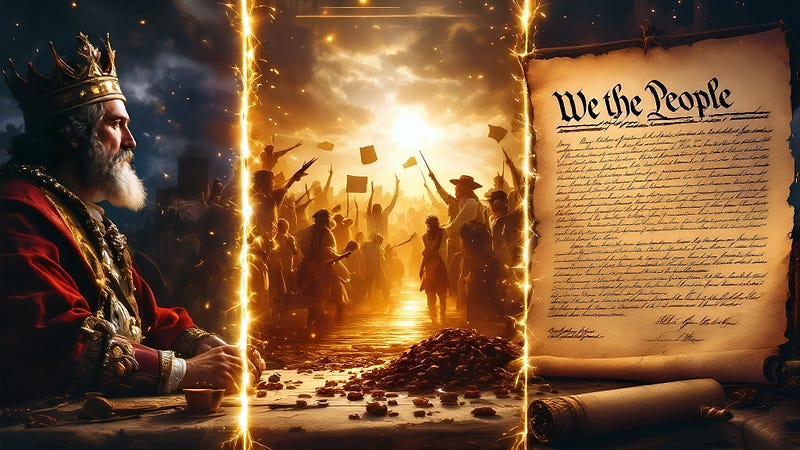
The story of America’s legal and political transformation is one of struggle, defiance, and reinvention. Between 1600 and 1800, the colonies of North America evolved from subjects of a monarchy to citizens of a republic. Authority was contested at every step — between king and colonists, governors and assemblies, federalists and states’ rights advocates. What emerged was not just a new nation, but a new concept of law itself: that sovereignty belongs to the people, not a distant crown.
The Colonial Era (1600–1763): Law Under British Rule
The first English settlers carried more than goods and ambitions across the Atlantic — they carried law. English common law provided the foundation of colonial justice, emphasizing precedent and local courts. Royal charters defined governance, while local assemblies like Virginia’s House of Burgesses asserted their legislative role.
But authority was never absolute. In Puritan New England, religious leaders imposed biblical codes that blurred the line between church and state. In the South, brutal slave codes enshrined control over enslaved Africans. Even within white settler society, tensions festered — Bacon’s Rebellion in 1676 exposed resentment against colonial elites, while the Salem Witch Trials of 1692 revealed the perils of fear-based justice.
The British monarchy ruled in name, but in practice, town meetings, assemblies, and local courts exercised surprising autonomy. Yet when Britain sought to enforce tighter control through the Navigation Acts, the colonies began to taste the bitterness of imperial constraint.
The Road to Revolution (1763–1776): Taxation and Resistance

The French and Indian War left Britain victorious but deeply in debt. To replenish the treasury, Parliament passed a series of taxes — the Stamp Act, the Townshend Acts — without colonial representation. To colonists, this violated the oldest principle of English liberty: no taxation without representation.
Resistance quickly escalated. The Sons of Liberty orchestrated direct action, from pamphlets to the Boston Tea Party. Committees of Correspondence built a network of colonial defiance. By 1774, the First Continental Congress was convening laws independent of Britain’s authority.
When Jefferson drafted the Declaration of Independence in 1776, he drew upon John Locke’s natural rights philosophy: that governments exist to protect life, liberty, and property. Britain, the document charged, had betrayed this trust. Revolution was not only justified — it was required.
The Revolutionary and Post-Revolutionary Period (1776–1800): Building a New Order
Independence was a victory, but it created a vacuum of authority. The Articles of Confederation left the new nation fragile, with states clinging to power and the federal government unable to tax or enforce laws.
The Constitutional Convention of 1787 marked a decisive turn. The U.S. Constitution established a federal system, carefully balancing state and national authority, and introduced checks and balances to prevent tyranny. The Bill of Rights, ratified in 1791, safeguarded liberties against government intrusion, codifying freedoms that monarchies had long denied.
Still, disputes over power persisted. The Whiskey Rebellion of 1794 tested whether the new federal government could enforce its laws — it could. The Alien and Sedition Acts of 1798, however, provoked outrage, as critics accused the federal government of overstepping and strangling dissent.
The young republic was still learning how to wield authority without betraying its founding ideals.
Conclusion: From Monarchy to Self-Government
In just two centuries, America transformed authority from royal decree to constitutional democracy. Law shifted from serving the crown to serving the people, though imperfectly and often unevenly applied. What remains remarkable is the audacity of the transformation: a society that once bowed to monarchy forged a republic where legitimacy rests on consent, not birthright.
For modern readers, this history offers a reminder: authority is never fixed. It is debated, reshaped, and tested in each generation. America’s founding struggle was not merely against Britain — it was against the very idea that power is permanent. The lesson endures: sovereignty is fragile, but it belongs to those willing to claim it.