George Washington and the Spark of Global Conflict: Reexamining the Origins of the Seven Years’ War
It was the volley fired by a young Virginian in the backwoods of America that set the world on fire. — Horace Walpole, April 6, 1775
It was the volley fired by a young Virginian in the backwoods of America that set the world on fire. — Horace Walpole, April 6, 1775
The image of George Washington as the stoic commander-in-chief of the Continental Army and the first President of the United States is indelibly etched into the historical consciousness. This narrative, however, often overshadows an earlier, and in its own right, profoundly consequential chapter of his military career. Decades before the American Revolution, a young and ambitious Lieutenant Colonel Washington, a fervent British provincial officer, found himself in the wilderness of the Ohio Valley, where his actions precipitated a diplomatic firestorm that escalated into a global war. While historians traditionally recognize the Seven Years’ War as the first truly world war, a compelling scholarly argument reframes it as “World War Zero,” ignited by a skirmish led by the future father of the United States. This analysis will delve into the historical background of the conflict, examine the biases in its interpretation, present competing perspectives on Washington’s responsibility, and explore the profound implications of this early global confrontation on the shaping of the modern world.
Historical Background and Foundational Principles
The mid-eighteenth century in North America was characterized by a fierce imperial rivalry between Britain and France, with both powers laying claim to the vast and strategically vital Ohio River Valley.
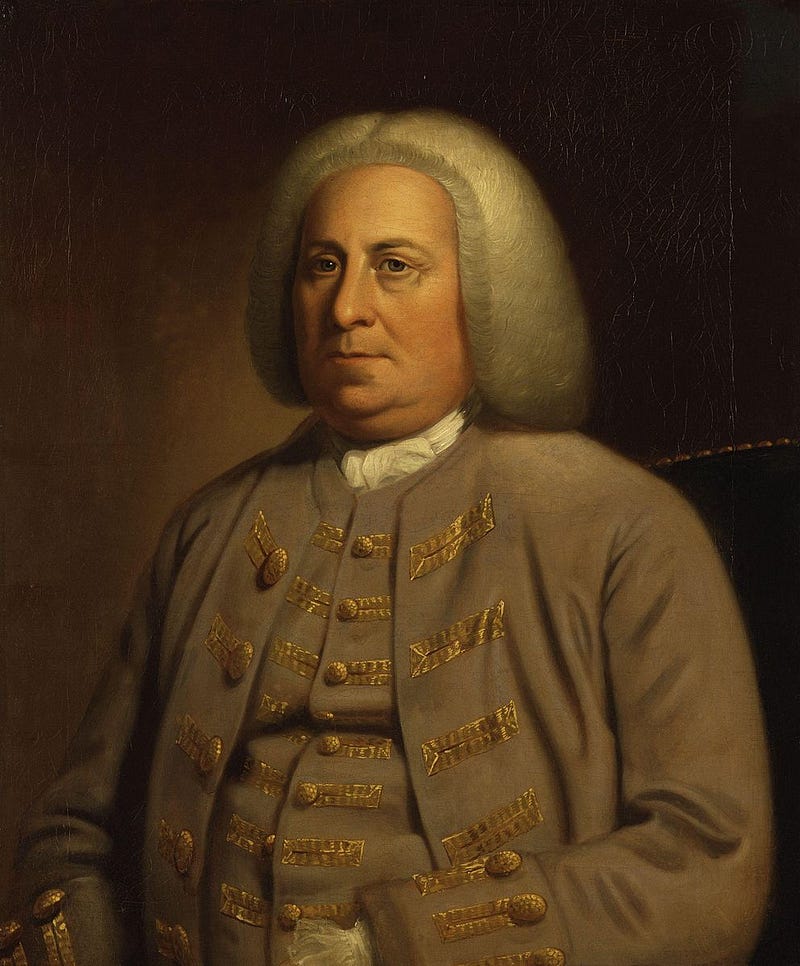
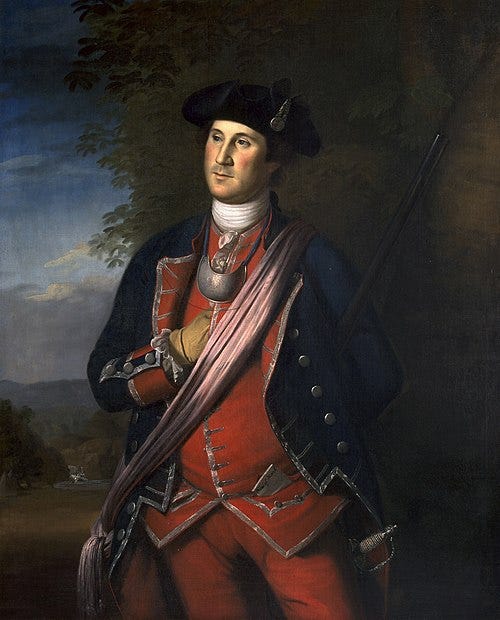
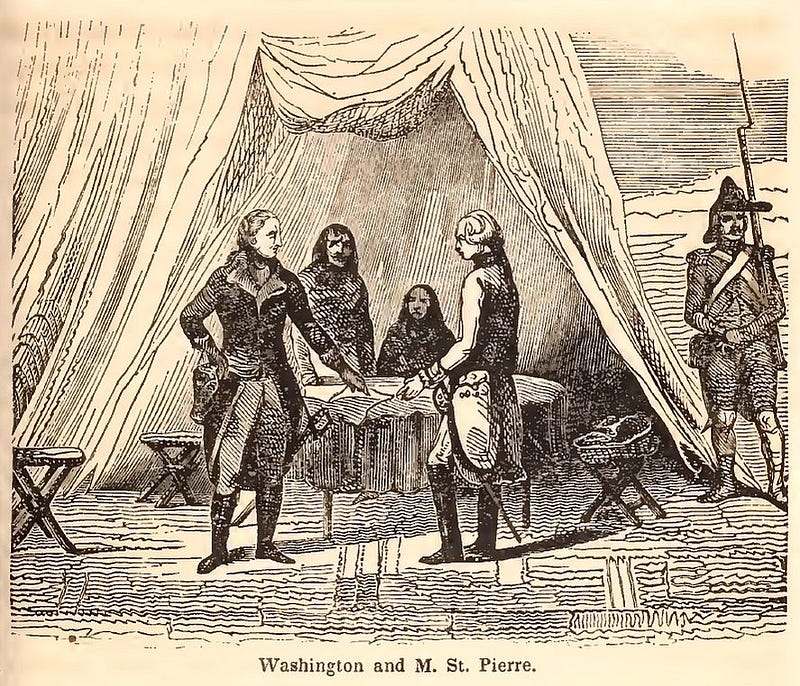
In 1753, Virginia’s Lieutenant Governor, Robert Dinwiddie, dispatched a twenty-one-year-old Major George Washington on a diplomatic mission to demand the French withdraw from the region. The French refusal set the stage for a military confrontation. The following year, now a Lieutenant Colonel, Washington was ordered to return to the frontier with a force of Virginia militiamen to reinforce a British fort at the forks of the Ohio.
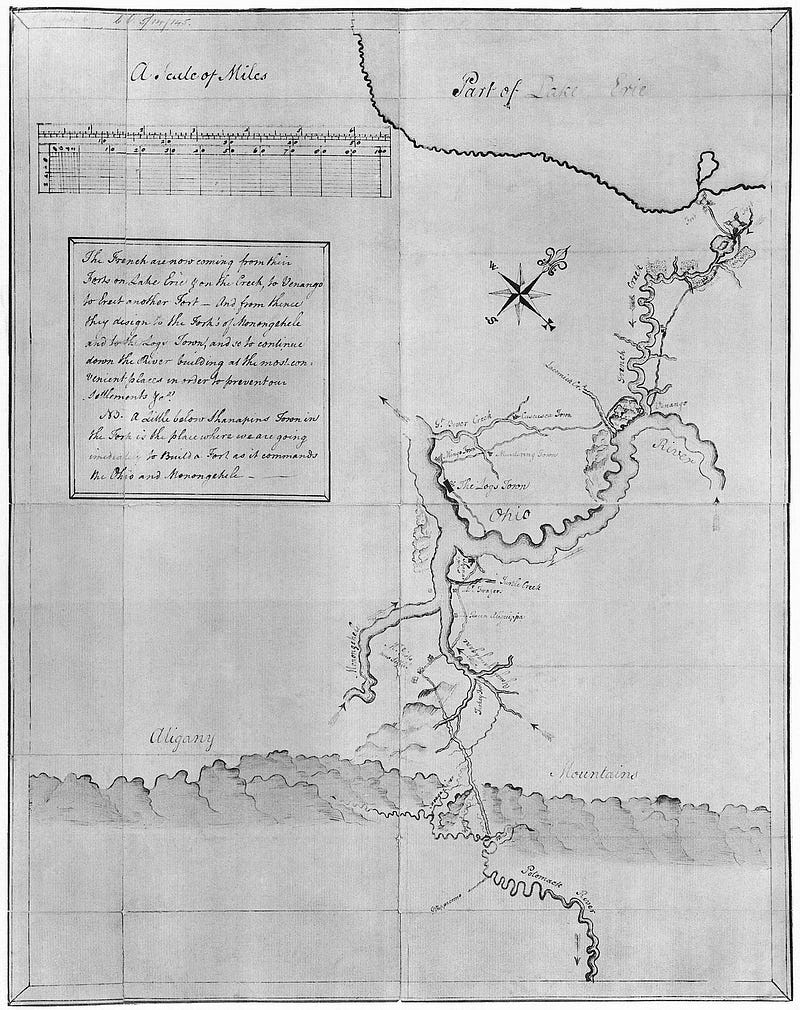
He discovered the French had already seized the site and begun constructing Fort Duquesne.
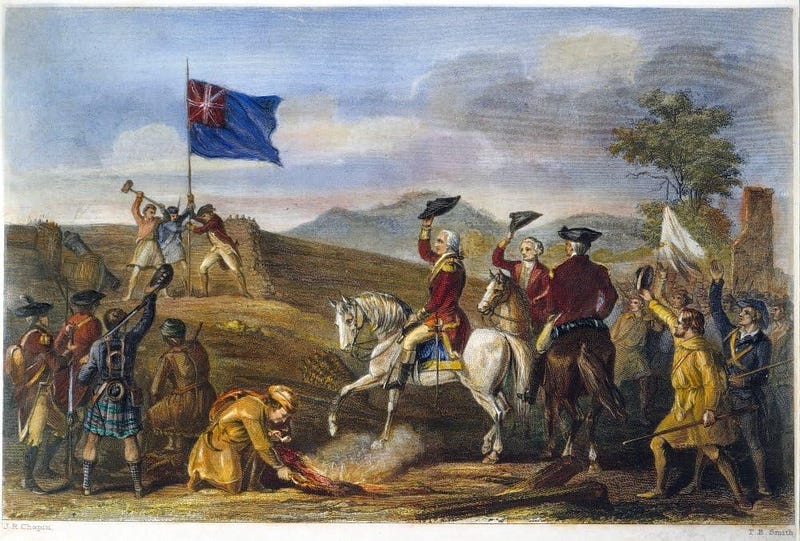
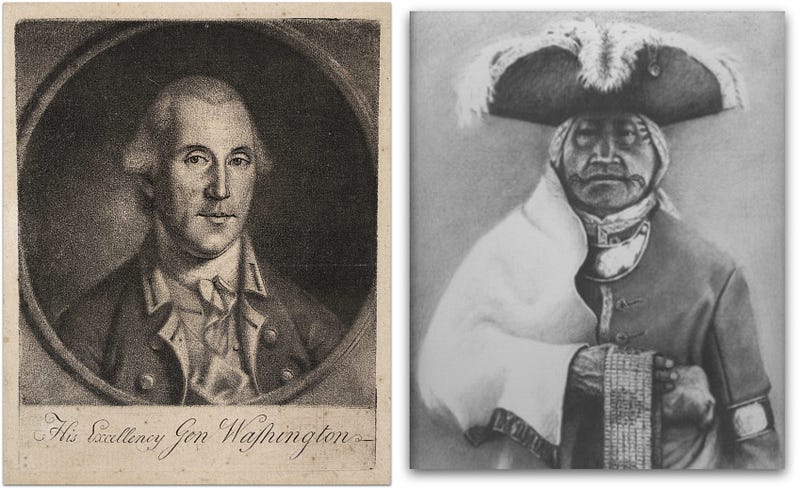
Washington advanced and established his own defensive position at Great Meadows, which he aptly named Fort Necessity. Intelligence soon arrived from his Native American ally, the Seneca chief Tanaghrisson, known as the Half King, that a French party was camped nearby. In the pre-dawn hours of May 28, 1754, Washington and his men, accompanied by the Half King and his warriors, surrounded the French encampment at a place now known as Jumonville Glen.
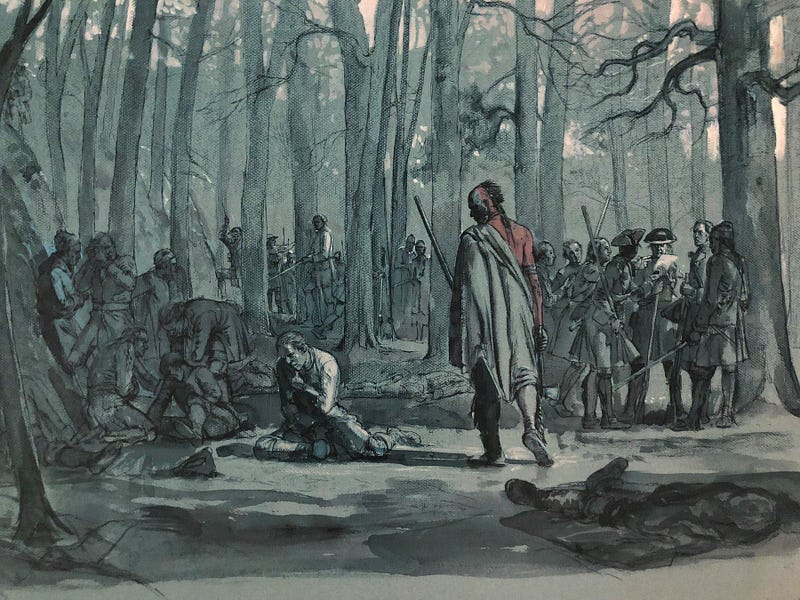
The ensuing encounter was short, chaotic, and fateful. In the midst of a sudden firefight, the French commander, Ensign Joseph Coulon de Villiers de Jumonville, was wounded and called for a ceasefire. As he attempted to convey that his mission was a diplomatic one, carrying a summons for the British to depart, the Half King intervened. In a brutal act that horrified Washington, Tanaghrisson killed Jumonville, an event that transformed a military skirmish into a potent political atrocity. The fallout was swift. A larger French force subsequently surrounded and besieged Fort Necessity, forcing Washington to surrender on July 3. Critically, in the surrender document — which Washington later claimed he could not properly read due to a poor translation — he allegedly admitted to the “assassination” of Jumonville. This provided the French with a decisive propaganda victory and the casus belli to justify a massive military response, setting the continent on a path to war. As the contemporary British figure Horace Walpole succinctly noted, “A volley fired by a young Virginian in the backwoods of America set the world on fire.”
Underlying Assumptions and Inconsistencies
The interpretation of the Jumonville Glen incident as the spark for a world war rests upon several assumptions that require critical examination. A primary assumption is that Washington, as the commanding officer, bore ultimate responsibility for the encounter and its grisly outcome. This perspective often carries an implicit bias, viewing the event through the lens of hindsight and Washington’s subsequent legendary status, which can lead to an overestimation of his individual agency—the narrative risks simplifying a complex web of frontier tensions into a single actor’s decisions. A more nuanced analysis must challenge this by considering the profound role of the Half King. Tanaghrisson was not merely a passive ally following Washington’s lead; he was a political actor with a clear agenda of his own. Having staked his reputation on an alliance with the British, his position was severely weakened by the presence of the French. The killing of Jumonville can be seen as a deliberate attempt to sabotage any potential parley between Washington and the French, thereby forcing the British colonists into a conflict from which he believed they could not retreat. This suggests that Washington was, to a significant degree, a pawn in a much larger indigenous geopolitical struggle. Furthermore, an inconsistency lies in the portrayal of the conflict’s inevitability. Labeling it “World War Zero” implies an inherent global logic, yet the European powers were already poised for war over continental ambitions. The North American theater, while increasingly important, was one of several flashpoints. The incident in the Pennsylvania backcountry was the catalyst, but the underlying cause was the systemic and enduring rivalry between expanding empires. The bias in the “Washington started the war” thesis is its tendency to isolate a single event from this broader context of multi-continental imperial competition.
Competing Perspectives and Counterarguments
The notion that George Washington single-handedly started the Seven Years’ War is, unsurprisingly, a subject of vigorous debate among historians. The competing perspectives highlight the complexity of attributing the origins of a global conflict to one individual’s actions in a remote frontier skirmish. The proactive interpretation, as previously outlined, positions Washington as the central figure whose aggressive leadership and miscalculations provided the tinder for a war that was waiting to ignite. This view emphasizes the chain of causality: Washington’s ambush, the death of Jumonville under dubious circumstances, the coerced confession at Fort Necessity, and the subsequent French exploitation of these events to justify open warfare. From this vantage point, Washington’s own youthful zeal is evident in his written words; following the skirmish, he wrote to his brother, “I can with truth assure you, I heard Bulletts whistle and believe me there was something charming in the sound,” a statement that reflects a naivety about the grave consequences his actions would unleash. The counterargument, a more systemic perspective, contends that the war was an inevitable outcome of clashing imperial designs. Proponents of this view argue that the Ohio Valley was merely one front in a worldwide struggle for hegemony. Even without the Jumonville Glen incident, another provocation — perhaps on the high seas, in Europe, or in another colonial territory — would have inevitably triggered hostilities. From this standpoint, Washington was a minor actor on a stage set by powerful European monarchies and their global economic and strategic interests. His actions were a symptom, not the cause, of the deep-seated tensions between Britain and France. This perspective does not absolve Washington of his tactical errors but situates those errors within a vast, impersonal historical process that was already in motion, making the concept of a “World War Zero” stemming from his command a dramatic but ultimately reductive historical framing.
Broader Implications and Meanings
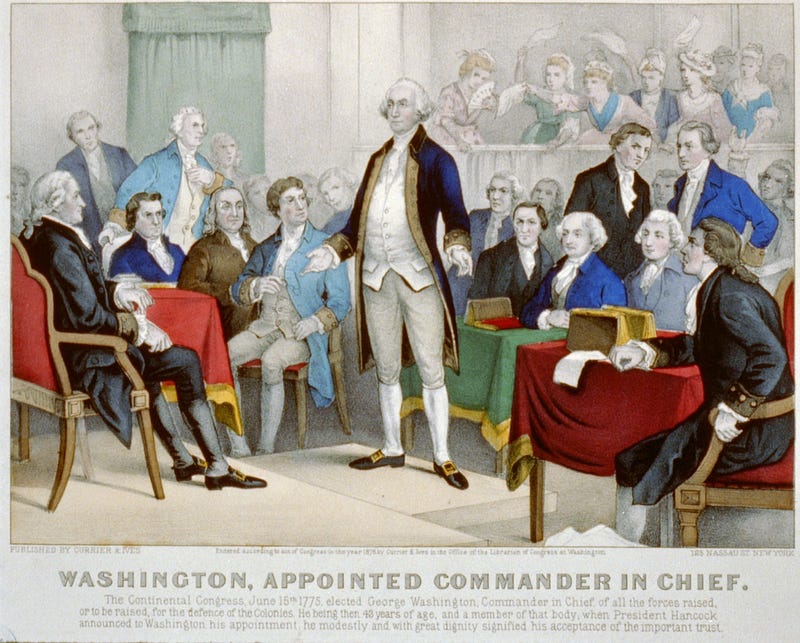
The Seven Years’ War, irrespective of its precise spark, had ramifications that fundamentally reshaped the second half of the eighteenth century and laid the groundwork for the modern world. The most direct consequence was the dramatic reorganization of the global imperial map. The Treaty of Paris in 1763, which concluded the war, saw France cede most of its North American possessions to Great Britain, which emerged as the world’s dominant colonial power. However, this victory came at a tremendous cost, plunging the British government deep into debt. In an effort to manage this debt and finance the administration of its newly acquired territories, London imposed a series of taxes on the American colonists, including the Stamp Act and the Townshend Acts. These measures, seen as unjust by the colonists who lacked representation in Parliament, directly fueled the colonial discontent that would erupt into the American Revolution. Thus, the war that Washington inadvertently helped to begin created the precise financial and political conditions that, two decades later, would allow him to lead a war for American independence. Furthermore, the experience was profoundly formative for Washington himself. His service in the Virginia Regiment provided him with invaluable, if often painful, lessons in command, logistics, and the challenges of coalition warfare alongside British regulars. The war also exposed him to the potentials and perils of westward expansion, a concern that would occupy him throughout his political life. His ultimate commitment was to American union, a guiding star that shaped his presidency as he worked to weld individual states into a strong, viable nation. The war that began in the Ohio Valley not only defined the geopolitical landscape of a continent but also forged the military and political leaders who would ultimately secure that continent’s independence.
Real-World Applications and Enduring Legacy
The lessons from this pivotal episode extend beyond the eighteenth century, offering enduring insights into the nature of military doctrine, the interpretation of historical events, and the complex legacy of foundational figures. The very struggle to assign a definitive name to the conflict — be it the French and Indian War, the Seven Years’ War, or the provocative “World War Zero” — demonstrates how the framing of history influences our understanding of its scale and significance. This process of doctrinal and historical definition is not a purely academic exercise; as seen in later military challenges, such as the U.S. Army’s decades-long effort to develop a coherent doctrine for information operations, the way an institution conceptualizes a threat determines its organizational response. The story of Jumonville Glen serves as a timeless case study in the “fog of war,” where poor intelligence, linguistic barriers, and the unpredictable actions of allies can lead to strategic outcomes far beyond the intentions of the actors on the ground. Finally, this event is an inextricable part of the complex tapestry of George Washington’s legacy. He is rightly celebrated as the “Indispensable Man” for his role in both winning independence and inventing a new nation, a leader who cultivated respect for the office of the presidency and set a precedent for the peaceful transfer of power. Yet, his early career reminds us that his path was not one of infallible genius but of ambition, miscalculation, and learning through adversity. His actions in 1754 underscore that history is often driven by flawed individuals operating under immense pressure, whose moments of failure can, through a complex chain of events, paradoxically set the stage for their greatest achievements and permanently alter the course of world history.