Ghosts, Gullibility, and the Science-Impaired: A Paranormal Reality Check
Introduction For as long as we’ve gathered around firelight or huddled in dimly lit rooms, we’ve whispered tales of spirits roaming the…
Introduction
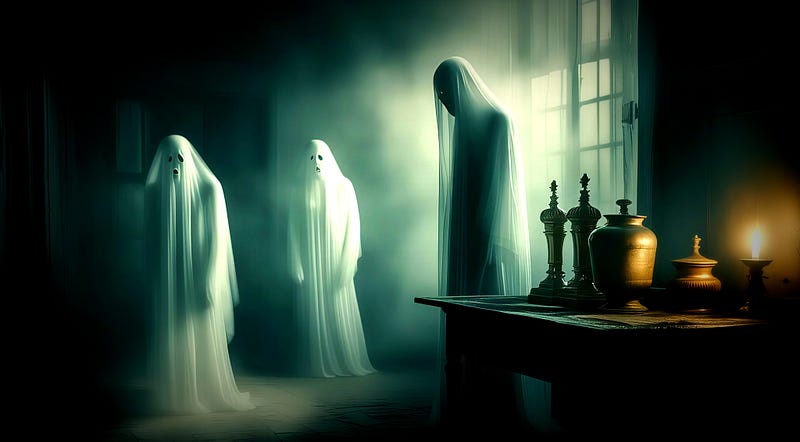
For as long as we’ve gathered around firelight or huddled in dimly lit rooms, we’ve whispered tales of spirits roaming the night. Ghosts drift through folklore from Tokyo to Transylvania, echoing our deepest fears and our longing for connection with those who’ve passed on. But strip away the candlelight and mystery, and a more rational truth emerges: ghosts are not spectral beings but reflections of our minds and environments. Let’s step into the dark with clear eyes and see what science, culture, and psychology reveal.
The Mind’s Trickery: Why We See What Isn’t There
Our brains are pattern-finding machines, built to connect dots — even when no picture exists. That face in the curtain? Pareidolia. Those whispers in static? Auditory pareidolia. We’re wired to impose order on randomness, especially in low light or stressful situations. Sleep paralysis adds another layer of eeriness, pinning us in place while our half-waking minds conjure shadowy visitors. These are not encounters with the afterlife but with our neurological quirks.
Haunted by Science: Natural Forces Behind Supernatural Claims
Step into any so-called haunted house with an EMF meter, and you’ll find fluctuating electromagnetic fields caused by faulty wiring or nearby appliances. Those fields can influence the brain’s temporal lobe, sparking feelings of dread or unseen presences. Add infrasound — those low-frequency vibrations that can cause dizziness, unease, or even visions at the edge of perception — and suddenly a “haunting” has a very earthly explanation. Technology doesn’t confirm ghosts; it often exposes them as artifacts of our surroundings.
Culture Writes the Ghost Story
Ghosts aren’t universal — they’re cultural. In Japan, restless yūrei linger in white burial kimonos, while in Mexico, ancestors return as gentle guides during Día de los Muertos. These variations reveal something profound: ghost stories adapt to our fears, values, and rituals. They’re mirrors of our societies, not windows into another realm. Victorian England’s fascination with phantoms reflected high mortality rates and spiritualist trends, not evidence of another world.
Philosophy Demands Proof, Not Whispers
Philosophers urge us to favor simpler explanations over elaborate, unproven ones. When faced with creaking floors and flickering lights, which is simpler — an invisible specter or shifting wood and faulty wiring? Extraordinary claims demand extraordinary evidence, and after centuries of stories and investigations, no replicable, verifiable proof of ghosts has emerged. Believing without evidence isn’t curiosity — it’s surrendering to superstition.
Debunking Paranormal Phenomena Beyond Ghosts
Ghosts are only one thread in the tapestry of the paranormal. Psychic readings, poltergeists, cryptids — they all lean on the same psychological scaffolding: confirmation bias, apophenia, and suggestibility. Carbon monoxide leaks have explained entire chapters of “haunted” history, and toxic mold has fooled many into thinking they’ve crossed paths with the supernatural. Even the most chilling viral videos often crumble under scrutiny, revealing fishing lines, clever editing, or outright hoaxes.
Conclusion
When we examine the shadows through the lens of science and reason, we discover not spirits but stories — crafted by our minds, our cultures, and our environments. Ghosts, far from being evidence of an afterlife, are testaments to our creativity, our fears, and our longing for meaning in the unknown. So next time you feel a chill in the dark, embrace the mystery but keep your wits about you. True wonder lies not in superstition but in our relentless pursuit of truth.