Guardians of the Meadow Sky: The Lapwing’s Dance Between Tradition and Tomorrow
Introduction In the low, wind-swept fields of Europe, a flicker of black and white wings breaks against the horizon. The lapwing, Vanellus…
Introduction
In the low, wind-swept fields of Europe, a flicker of black and white wings breaks against the horizon. The lapwing, Vanellus vanellus, is both sentinel and spectacle — its tumbling flight a signature of spring, its sharp cry a warning to intruders. Once a familiar sight to farmers and foragers, this bird’s story is one of elegance in motion, deep cultural ties, and an increasingly fragile place in our shared landscape. Today, the lapwing must navigate a world of shrinking wetlands and changing human priorities, even as its legacy remains etched into the rhythms of rural life.
Taxonomy
The lapwing belongs to the family Charadriidae, a group of shorebirds with a global distribution, and is the most widespread member of the genus Vanellus. Its scientific name, Vanellus vanellus, is a Latin echo of its call — a repeated “vee-an” in the dusk and dawn. Common names vary with geography: in Britain, it is the Northern Lapwing; in Ireland, the Peewit; across parts of Eastern Europe, the Green Plover. Unlike many game birds, there are no recognized subspecies, though regional populations exhibit subtle variations in plumage intensity and body size.
Biology
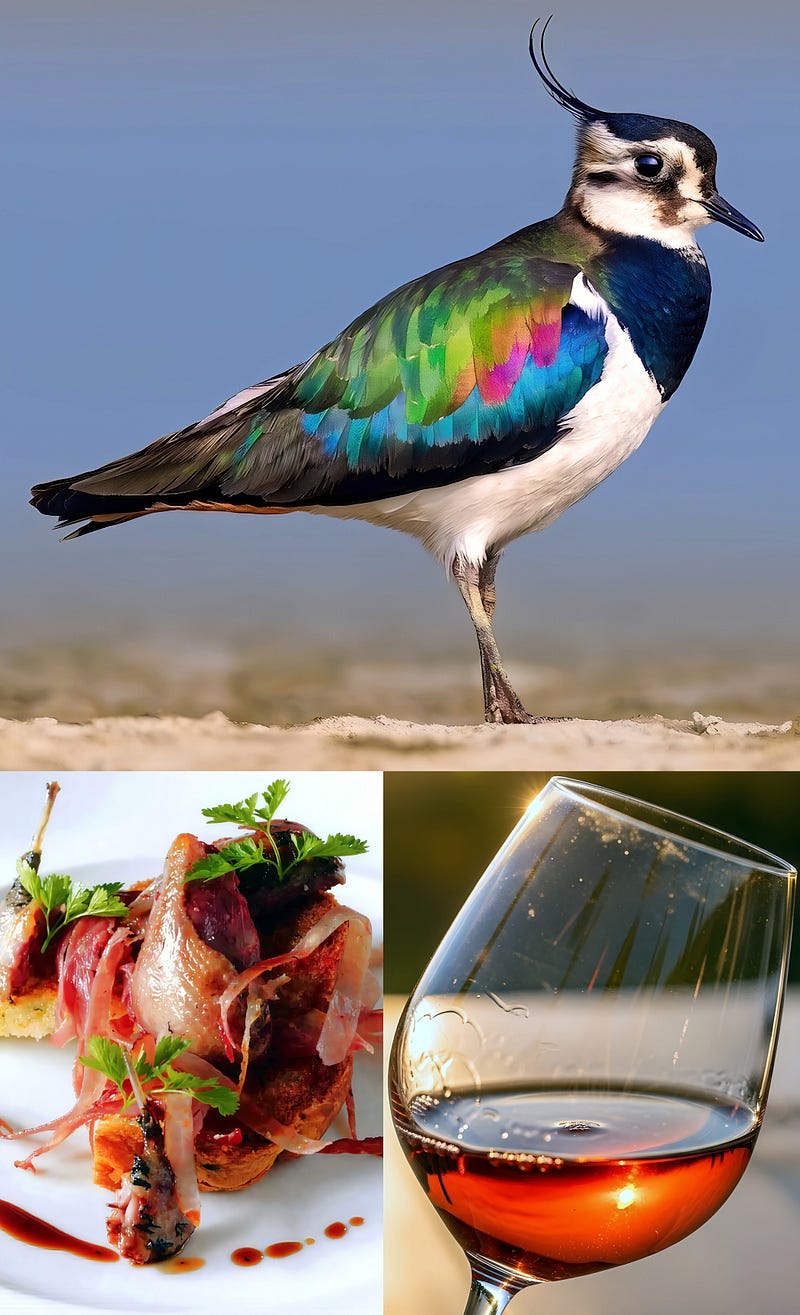
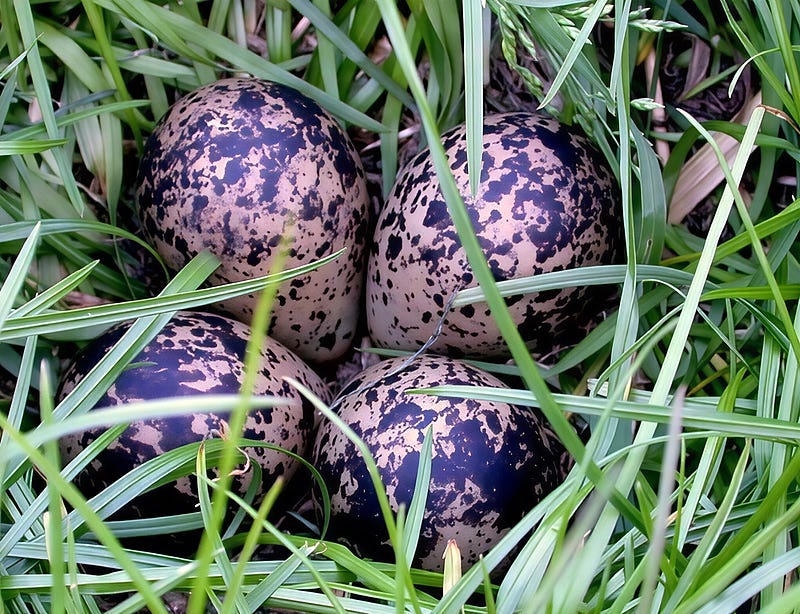
The lapwing is a bird of striking contrast — an iridescent green back catching the sun, offset by a crisp white belly and a distinctive wispy crest that can reach about 2.5 in (6.35 cm) in length. Adults measure around 12 in (30.5 cm) from bill to tail, with a wingspan of up to 34 in (86.36 cm). Adapted to open landscapes, they perform elaborate aerial displays during courtship, rolling and diving in arcs that dazzle the eye. Nesting is a ground-level affair, the clutch typically containing four speckled eggs, each about 1.7 in (4.32 cm) long. Both parents share incubation duties over roughly 28 days, and chicks are precocial, walking and feeding within hours of hatching.
Ecology
Lapwings are creatures of grassland, floodplain, and wet pasture, thriving in environments where shallow water meets open soil. Historically abundant across Europe and Asia, they migrate in winter toward milder climates, some traveling over 2,000 miles (3,218 km) to reach North Africa or the Middle East. Their ecological role is tied to pest control, feeding on beetles, grubs, and larvae that would otherwise harm crops. Yet this beneficial relationship has not spared them from decline. Mechanized agriculture, drainage of wetlands, and pesticide use have all contributed to steep population drops, prompting conservation efforts that range from agri-environment subsidies to protected nesting zones.

Uses
In centuries past, lapwing eggs were a prized delicacy in parts of Europe, especially the Netherlands and England. Collected in spring and sold in markets, they fetched high prices for their rich, slightly gamey flavor. By the mid-20th century, unsustainable harvesting and habitat loss forced strict protection measures, and today, commercial collection is banned in most countries. While direct economic value has faded, the bird retains symbolic importance in regional festivals and folklore, where it often represents vigilance and resilience. In conservation economics, the lapwing now plays a role as a “flagship species,” used to secure funding and public interest in wetland preservation.
Culinary Aspects
Historically, lapwing eggs were boiled or poached, their deep yellow yolks lending a creamy texture to early spring feasts. Descriptions from 19th-century cookbooks praise them for a delicacy between that of a hen’s egg and a duck’s. The meat of the bird itself, though edible, was less esteemed — lean, dark, and with a slightly metallic undertone from its invertebrate-heavy diet. With modern legal protections, lapwing now belongs to the realm of culinary history, its flavors surviving only in archival notes and the rare, permitted egg harvests for cultural heritage in places like Friesland.
Wine Pairings
Were one to recreate a historic lapwing egg dish under lawful and sustainable conditions, pairing would call for subtlety to honor the egg’s richness without overwhelming it. A crisp Chablis, with its flinty minerality, would mirror the clean taste of a fresh-laid egg from the marshlands. Alternatively, a dry Champagne — served well-chilled at 46°F (7.8°C) — would lend a celebratory brightness befitting such a rare treat. In the imagined pairing for the meat, a light-bodied Pinot Noir would soften any gamey notes while complementing earthy side dishes.
Conclusion
The lapwing’s story is a mirror for the wider relationship between humanity and the wild. Once taken for granted as both neighbor and resource, it is now a species whose survival depends on deliberate care. Its tumbling flight over a spring meadow is more than a display — it is a reminder that beauty and utility can coexist, and that the traditions of the past can inform a more sustainable future. The challenge lies in ensuring that the lapwing remains a living part of our fields and skies, rather than a memory preserved only in old recipes and fading photographs.