Hard Lessons from the Yugoslav Wars: Ethnic Conflict, Diplomacy, and Peacebuilding
I saw how a young boy of about ten was killed by Serbs in Dutch uniform. This happened in front of my own eyes. The mother sat on the…

I saw how a young boy of about ten was killed by Serbs in Dutch uniform. This happened in front of my own eyes. The mother sat on the ground and her young son sat beside her. The young boy was placed on his mother’s lap. The young boy was killed. His head was cut off. The body remained on the lap of the mother. The Serbian soldier placed the head of the young boy on his knife and showed it to everyone. … I saw how a pregnant woman was slaughtered. There were Serbs who stabbed her in the stomach, cut her open and took two small children out of her stomach and then beat them to death on the ground. I saw this with my own eyes.

Historical Background and Context
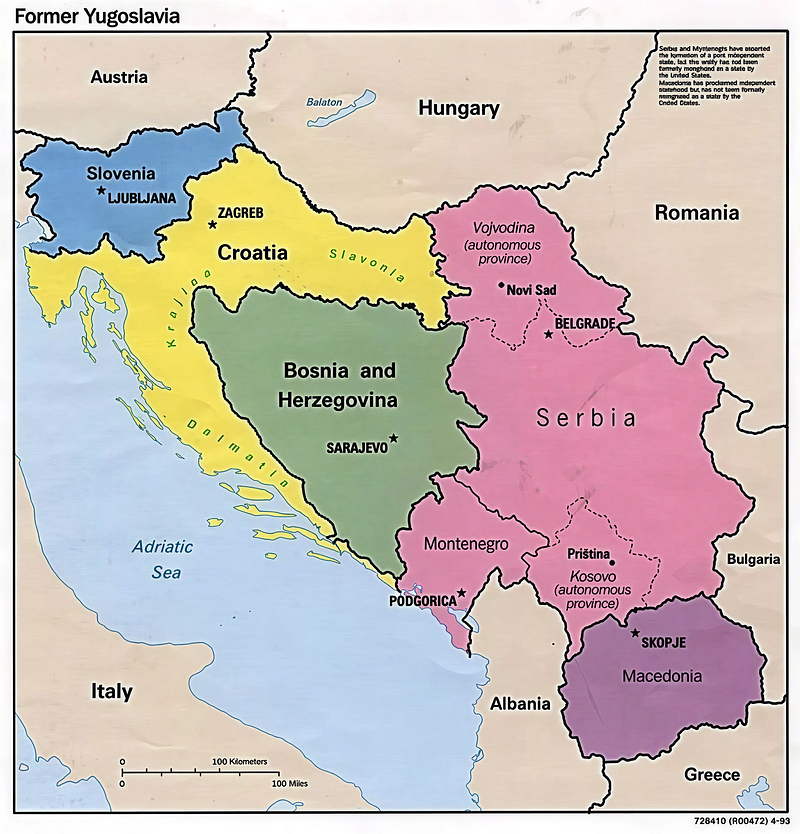
The Socialist Federal Republic of Yugoslavia consisted of six republics (Slovenia, Croatia, Bosnia and Herzegovina, Serbia, Montenegro, Macedonia) and two autonomous provinces (Kosovo and Vojvodina) within Serbia. This multi-ethnic federation, straddling the Eastern and Western spheres, began to unravel as the Cold War drew to a close. Long-suppressed nationalisms and historical grievances resurfaced amid economic crisis and the power vacuum after President Josip Broz Tito died in 1980. By 1991, the federal government had weakened while republican leaders like Slobodan Milošević in Serbia harnessed militant nationalism, eroding the common Yugoslav identity and fueling ethnic mistrust.
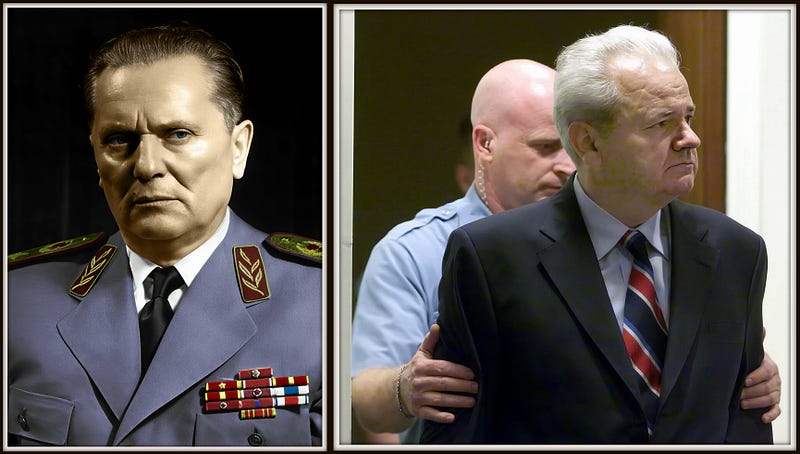
The breakup ignited a series of interrelated wars between 1991 and 1999, marking Europe’s bloodiest conflicts since World War II. Slovenia’s secession in 1991 led to a brief Ten-Day War. Far more violent was Croatia’s war (1991–95), where the Yugoslav Army and local Serb militias seized a third of Croatia’s territory, expelling Croats and other non-Serbs in a campaign of “ethnic cleansing”. Croatia eventually fought back and reclaimed its lands by 1995, but not before entire cities like Vukovar were destroyed and hundreds of thousands were displaced. The most devastating was the war in Bosnia and Herzegovina (1992–95), a ethnically diverse republic with Bosniak (Muslim), Serb, and Croat populations. Bosnian Serb forces, backed by Serbia, and Bosnian Croat forces, backed by Croatia, each carved out swaths of territory, aiming to partition the republic. The Bosnian war became a three-sided conflict marked by atrocities against civilians: an estimated 100,000 people were killed, and over 2 million (more than half the population) were driven from their homes. Detention camps for civilians and systematic campaigns of terror, including mass rape and forcible expulsion, were used by all factions, though the Serb forces’ organized ethnic cleansing was the most extensive. In July 1995, the world witnessed the Srebrenica massacre — over 8,000 Bosniak men and boys were executed by Bosnian Serb troops in a U.N.-declared “safe area,” a genocidal crime occurring in full view of a paralyzed international peacekeeping force.
The international community was caught unprepared by the scale of violence accompanying Yugoslavia’s collapse. Early on, European powers and the United Nations attempted diplomacy and deployed peacekeepers, but with mandates ill-suited to active war zones. An arms embargo was imposed on all Yugoslav parties, a decision that, in hindsight, disastrously handicapped the Bosnian government’s ability to defend its people while Serb forces, inheriting the Yugoslav Army’s arsenal, pressed their advantage. The European Union, newly tasked with crisis management on the continent, struggled to respond cohesively. Initial EC/EU mediation efforts (such as the 1992 Lisbon agreement and subsequent Vance-Owen plan) faltered amid divisions among major EU states and a lack of enforcement power. The United States, emerging from the Gulf War and the Cold War’s end, was at first reluctant to become entangled in the “Balkan mess,” deferring to Europeans during the Bush Sr. and early Clinton years. This hesitation reflected a broader post-Cold War uncertainty: Yugoslavia’s crisis lay in a geopolitical gray zone — important, but perceived as less strategic than Central Europe — and many Western policymakers hoped the bloodshed could be resolved without major U.S. intervention.
By 1995, however, the continuing carnage and the failure of U.N. peacekeepers to halt atrocities had become an international embarrassment and moral outrage. NATO ultimately intervened with air strikes against Bosnian Serb forces, and U.S. diplomacy under Richard Holbrooke forged the Dayton Peace Accords that November, ending the Bosnian war. In 1999, a separate conflict in the Serbian province of Kosovo — where Serb forces’ brutal campaign against ethnic Albanians prompted fears of another Bosnia — led NATO to launch an air war against Serbia. The Kosovo intervention, conducted without U.N. Security Council authorization, showed how deeply the lessons of the earlier Balkan failures had been absorbed by Western leaders by decade’s end. The Yugoslav wars thus came to a close with outside military involvement, massive humanitarian devastation, and the beginnings of an equally challenging post-conflict reconstruction across the former Yugoslav republics.
Underlying Assumptions and Misconceptions
The Yugoslav wars exposed and confounded many underlying assumptions about ethnic conflict and international crisis management. One early misconception was the notion that these conflicts were simply the inevitable eruption of “ancient ethnic hatreds.” This primordialist narrative — popularized by writers like Robert Kaplan in his book Balkan Ghosts — portrayed the Balkan peoples as trapped in age-old tribal animosities, effectively implying that brutal violence was a natural, inescapable outgrowth of cultural history. Such a view ignored the modern political drivers of the conflict. In reality, the collapse of Yugoslavia was not a spontaneous combustion of ancient grudges but a product of contemporary triggers: the power ambitions of nationalist elites, the vacuum left by a failing communist state, and calculated propaganda that weaponized historical memories. Analysts note that genocide and ethnic cleansing in the 1990s Balkans were planned and organized by political and military leaders using state machinery — not an unstoppable frenzy of the masses. The “ancient hatreds” myth thus dangerously deflected responsibility from perpetrators like Milošević or Karadžić, instead blaming ordinary people’s supposedly primeval passions. This bias had policy consequences: if a war is believed to be driven by timeless ethnic feuds, outsiders may wrongly conclude there is little they can do to halt it. Indeed, it has been argued that such fatalism contributed to Western inaction early in the Bosnian genocide, as some leaders felt intervention was futile against a conflict “going on for centuries,”.
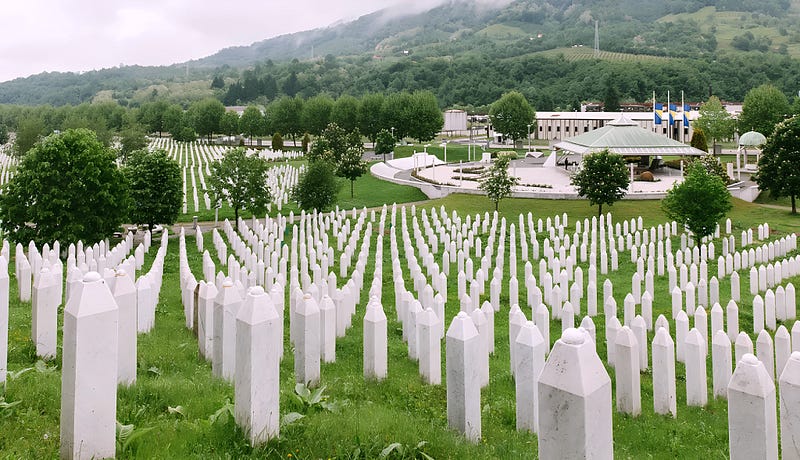
The massacre at Srebrenica in July 1995 tragically underscored how flawed assumptions and hesitation by international actors could enable atrocity. U.N. commanders on the ground assumed that the presence of lightly armed peacekeepers and a declared “safe area” would deter aggression, an expectation proven fatally false when Bosnian Serb forces overran the enclave. The United Nations had imposed an arms embargo, thinking it would dampen the conflict, but this ostensibly neutral measure only exacerbated the imbalance: the Bosnian Serb side, equipped by the Yugoslav army, faced little resistance from an isolated Bosnian government whose weapon supplies were cut off. In hindsight, the embargo and the half-measures of U.N. peacekeeping reflected an inconsistency in international response — a reluctance to take sides or use force, even when confronted with clear aggression and genocide. Biases also colored external perceptions: early in the war, some major European powers (notably Britain and France) treated all sides as equally culpable and resisted interventions that would “take sides” against Serb forces. This posture, influenced by what one historian calls “Balkanist” prejudice (viewing the region as inherently violent and obstinate), led to peace plans that effectively rewarded ethnic cleansers in the name of neutrality. The inherent moral ambiguity of such an approach became apparent as the conflict wore on.
The Yugoslav wars thus challenged prevailing assumptions about peacekeeping and diplomacy. International institutions had assumed that impartial mediation and lightly armed peacekeepers could contain a complex ethnic war — a stance born from the U.N.’s traditional peacekeeping principles, which expected a ceasefire and consent of all parties. Bosnia revealed the limits of this model. U.N. Protection Force (UNPROFOR) was deployed while war raged and genocide was in the offing; its ambiguous mandate talked tough (authorizing “all necessary measures”) but in practice restricted force to self-defense, leaving peacekeepers paralyzed in the face of mass violence. This contradiction between mandate and means was rooted in an assumption that the U.N. could maintain neutrality and avoid escalation. In reality, the lack of political will and consensus among the great powers doomed the mission from the start. The “safe areas” like Srebrenica, declared without providing sufficient troops or authority to truly protect civilians, became tragic symbols of miscalculation. After the war, U.N. officials themselves conceded that they had “failed in [their] responsibilities to protect” innocent civilians at Srebrenica, a failure that would “forever weigh on the collective conscience” of the international community. In sum, the Balkan experience shattered the illusion that peacekeeping can be effective in a live war without robust engagement, and that diplomatic neutrality is always the safest course. It forced a re-examination of the biases that had led outsiders to underestimate both the evil of ethnic cleansing and their own capacity to prevent it.
Competing Perspectives and Debates
The crises in the former Yugoslavia generated fierce debates and competing perspectives on how to interpret the conflict and how the world should respond. One major debate centered on the very nature of the war: was it a clear case of aggression and genocide by one party, or a messy civil war with “no good guys”? As reports of concentration camps and mass killings emerged from Bosnia in 1992, some policymakers — especially the so-called liberal interventionists in the U.S. like Madeleine Albright — argued that the conflict was a straightforward tale of victim versus aggressor, likening Bosnia’s Muslims to hapless victims and the Serb nationalists to clear perpetrators of brutality. This perspective held that moral clarity required forceful intervention against the aggressors to stop ethnic cleansing. However, others, including realist-minded officials and some European governments, cautioned that the reality was more complex. They pointed out that atrocities were committed by all sides to some degree, and they viewed the Bosnian war as a multipartite civil war born of a security dilemma, where each ethnic community feared domination by the others. Advocates of this more cynical view noted, for example, that Bosniak forces, despite being primarily on the defensive, engaged in occasional offensives and acts that violated ceasefires — gambles aimed at drawing Western intervention on their behalf. This “plague on all houses” perspective fed a policy of hesitation and evenhandedness, epitomized by the U.N.’s and Europe’s early stance of arms embargoes and sanctions on all parties equally. Critics argue that this policy, influenced by the belief that “all sides were guilty,” resulted in de facto appeasement of the strongest aggressors. The divergence in these narratives — one emphasizing the need to resist evil, the other warning against taking sides in an ethnic quagmire — led to two very different prescriptions for action.
Within international diplomacy, especially in Washington, this split manifested as a struggle between interventionists and pragmatists. By 1993–94, Albright and others urged a NATO military response to “refuse to ratify the results of ethnic cleansing,” arguing that accepting partition or watching passively was morally unacceptable. They pushed for lifting the arms embargo on Bosnia and conducting air strikes to halt Serb offensives. Opposing them were skeptics at the Pentagon and in European capitals who stressed the risks: they argued that military intervention, especially without a broad coalition, could lead to a Vietnam-like quagmire or necessitate a long-term occupation of Bosnia. Many of these realists instead supported a partition-based solution — effectively acknowledging ethnic separation on the ground. By mid-1995, after years of indecision, the gruesome Srebrenica genocide finally tipped the balance in favor of the interventionists’ view in the U.S., compelling President Clinton to launch decisive NATO air strikes and take the lead on brokering peace. Yet the peace that emerged reflected a compromise between these competing philosophies. The U.S.-sponsored Dayton Accords preserved Bosnia as a single state in name, but also granted sweeping autonomy to ethnically defined entities (the Serb Republic and the Croat-Bosniak Federation). In essence, Dayton enshrined a de facto ethnic partition — a solution closer to the realist vision — albeit tempered by the interventionists’ insistence on not formally dismembering the country.
The Dayton Peace Agreement itself quickly became a subject of debate. Was it a triumph of diplomacy or a flawed peace? On one hand, diplomats praised Dayton as a necessary pragmatic settlement. They point out that the agreement stopped the killing and has kept a general peace in Bosnia ever since late 1995, something that years of U.N. resolutions had failed to achieve. The pact’s architects argue that only by engaging the very “warlords” responsible for the violence — Milošević, Croatian President Franjo Tuđman, and Bosnia’s Alija Izetbegović — and by making painful compromises (like effectively accepting ethnically homogenized territories) could a deal be struck.
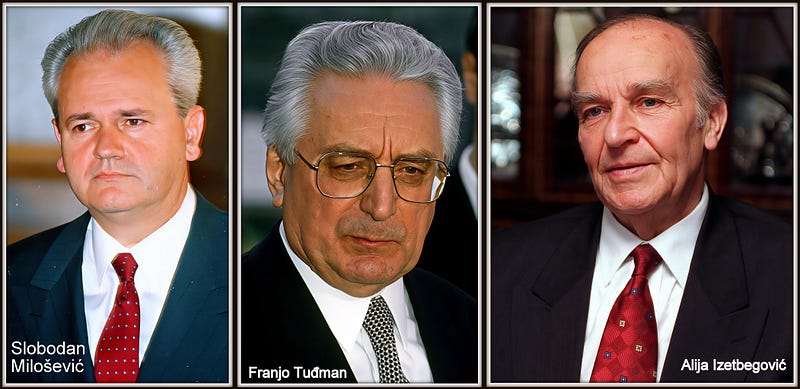
Indeed, the inclusion of Milošević and Tuđman at Dayton was seen as crucial, as these leaders could enforce the agreement on their Bosnian proxies; Western negotiators believed that isolating or ignoring them would have made peace unattainable. From this perspective, Dayton exemplified realpolitik diplomacy: it traded justice and idealistic notions of multi-ethnic reintegration in the short term for the more urgent goal of ending a war. On the other hand, many observers (including outraged Bosnian victims and some human rights advocates) lambasted Dayton as a bitterly flawed peace. They argue that the accords rewarded ethnic cleansing: the Serb nationalists, who had carried out mass atrocities and genocide, were legitimized with 49% of Bosnia’s territory as an official Serb entity (Republika Srpska).
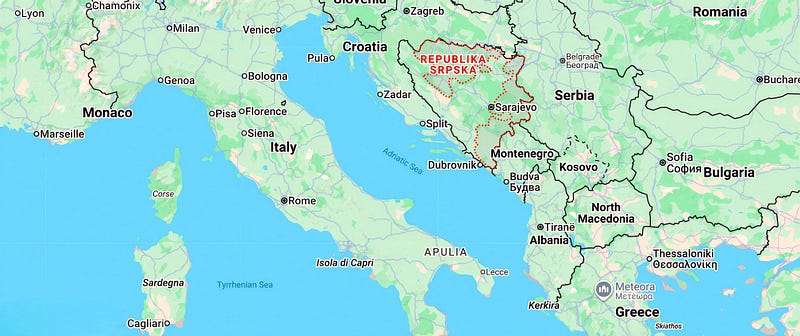
The country’s new constitution, embedded in the Dayton agreement, was called “unworkable” and “racist” by critics, as it was built on rigid ethnic quotas and even barred minorities like Jews and Roma from high office (an artifact of defining political representation only in terms of the three major ethnic groups). Rather than foster reconciliation, this structure arguably froze in place the very divisions the war had cemented, creating a dysfunctional governance that has hampered Bosnia’s development and perpetuated ethnic polarization. Those of this view often describe Dayton as a “bad peace” — a necessary stop to war, perhaps, but one that fell short of justice and planted the seeds for political stagnation. The contrast between these perspectives underscores a central dilemma in conflict resolution: Should peace agreements prioritize moral and democratic principles, or accept illiberal realities to halt bloodshed? The former Yugoslavia provided examples of both approaches, and the mixed results continue to inform debates on international intervention.
Another layer of competing interpretations involves the causes of the conflict itself, tying back to academic theories of ethnic violence. Primordialist thinkers initially seized on the Yugoslav wars as proof that ethnic groups with deep historical feuds would inevitably fight once authoritarian regimes (like Tito’s) lifted the lid. In contrast, constructivist and instrumentalist theorists countered that the Balkans violence was not a spontaneous eruption of ancient animosity but rather constructed and activated by political actors under particular conditions. The constructivist camp has largely been vindicated in scholarly circles: ample evidence shows how leaders like Milošević deliberately whipped up nationalist fervor through media propaganda and myths of past injustice, effectively manufacturing hatred to serve their quest for power. This aligns with the view that ethnic identities are fluid and politicized, not fixed — had different leadership or incentives prevailed, Yugoslavia’s breakup might have occurred with far less bloodshed, as happened in other multi-ethnic communist states (e.g., Czechoslovakia’s peaceful split). Yet, the primordial vs. constructivist debate still surfaces in policy discussions. Those inclined to primordialism may be quicker to assert that some ethnic conflicts (whether in the Balkans, the Middle East, or Africa) are intractable and rooted in culture, whereas those in the constructivist camp emphasize conflict prevention by addressing political and economic triggers. The Yugoslav case, rich with evidence of deliberate incitement and strategic brutality, has become a touchstone for arguing that even intense ethnic wars are not inevitable fates but contingent on human decisions. This lesson stands as a rebuke to fatalism: the horror that consumed the Balkans in the 1990s was not the result of ancient forces beyond anyone’s control — it was the product of choices, miscalculations, and willful cruelty in the late 20th century. How one interprets that history continues to shape one’s stance on when and how the international community should intervene in ethnic conflicts elsewhere.
Broader Implications and Significance
The legacy of the Yugoslav wars has profoundly influenced international relations, peacekeeping doctrine, and our understanding of how to manage ethnic conflicts. One immediate implication was a sober recognition that the post-Cold War international system, for all its optimism about a “new world order,” was ill-prepared to prevent mass atrocities in intra-state conflicts. Bosnia, alongside the almost simultaneous genocide in Rwanda, forced the U.N. and world powers to confront the bitter failure of their traditional peacekeeping and diplomacy mechanisms. In the aftermath, U.N. officials and independent commissions produced scathing assessments of how and why they had failed. The U.N. publicly acknowledged that its mission in Bosnia had been “unsuccessful,” highlighting that peacekeepers on the ground cannot succeed “where there is no peace to keep”. One takeaway is that peacekeeping operations cannot substitute for genuine political will. The Bosnian experience showed that if major powers lack consensus or commitment, merely sending blue-helmeted troops with unclear mandates can do more harm than good, creating an illusion of protection where none actually exists. This lesson has since been incorporated into U.N. doctrine: there is greater caution now about deploying peacekeepers into active conflicts, and more emphasis on robust mandates when civilian protection is at stake. The concept of “responsibility to protect” (R2P) emerged in the early 2000s directly as a normative answer to the failures in Bosnia and Rwanda. In 2005, U.N. member states formally embraced the principle that the international community has a responsibility to intervene (diplomatically or, if necessary, militarily) to prevent genocide and mass atrocities when a state is unwilling or unable to protect its own citizens. Srebrenica is frequently cited in U.N. debates as the cautionary tale of what R2P is meant to prevent. However, the implementation of this principle has been halting and controversial, as seen in later crises like Syria — indicating that while norms may shift, geopolitical realities (rivalries among great powers, concerns over sovereignty) continue to impede decisive action, much as they did during the Yugoslav wars.
Another broad impact of the Yugoslav wars has been on the development of international justice and institutions. The horrific crimes committed — genocide, systematic rape, ethnic cleansing — led to the creation of the International Criminal Tribunal for the former Yugoslavia (ICTY) in 1993. This tribunal became a pioneering experiment in holding individuals, even heads of state, accountable for atrocities. Over its decades of work, the ICTY delivered a powerful message that even high-ranking military and political leaders could face justice for crimes against humanity. It also broke new legal ground: the ICTY’s jurisprudence established rape as a crime against humanity and developed the doctrine of “joint criminal enterprise” to prosecute leaders who orchestrated violence from afar. The tribunal’s success in convicting figures like Ratko Mladić and Radovan Karadži was historically significant — it revived the Nuremberg legacy in a post–Cold War setting and paved the way for the International Criminal Court’s establishment in 2002.
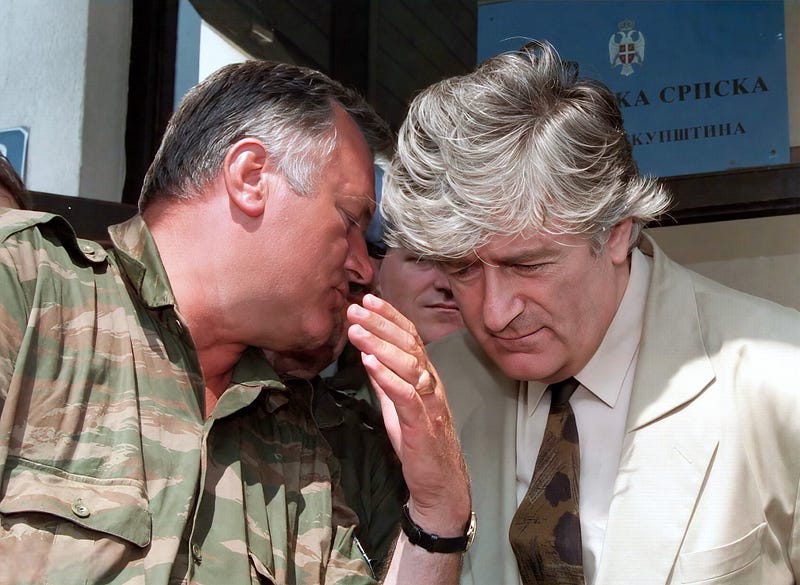
The broader implication is that accountability became an integral part of peacebuilding. No longer would peace agreements uniformly ignore justice; in Bosnia’s case, the pursuit of war criminals by the ICTY went hand-in-hand with the peace implementation (though not without controversy, as some argued it complicated reconciliation). The presence of international justice mechanisms has since become more common in conflict resolution worldwide (tribunals for Rwanda, Sierra Leone, Cambodia, and so on), reflecting a lesson from Yugoslavia that enduring peace requires addressing atrocities, not sweeping them under the rug.
The Yugoslav conflicts also influenced how scholars and practitioners think about power-sharing and state-building in multi-ethnic societies. The Dayton Accord’s solution for Bosnia — a highly decentralized, consociational state structure dividing power among ethnic groups — has been both criticized and cautiously studied as a model. It demonstrated that while embedding ethnicity into a constitutional framework can entrench sectarian divisions (Bosnia’s governance has indeed been hamstrung by ethnic vetoes and parallel institutions), it may be a “necessary derogation from classical liberalism” in the immediate post-conflict period. In other words, the Bosnian peace process taught international mediators to be pragmatic: expecting instant harmony and reintegration of antagonistic communities is naive. It’s not ideal, but in fragile post-war situations, ethnic power-sharing might be the only way to prevent renewed conflict. Instead, interim arrangements often must formally recognize group identities (through quotas, autonomous regions, and similar mechanisms) to reassure former warring parties. Bosnia showed how difficult it is to revive a war-torn economy and civil society in a climate where nationalist political parties and war criminals remain influential. One lesson drawn is the importance of removing or neutralizing extremist actors early — NATO-led forces in Bosnia eventually arrested key indicted war criminals only years later, by which time much damage to interethnic trust had been done. Experts observing Bosnia concluded that arresting those most responsible for violence sooner would have bolstered moderate, multi-ethnic political forces and given the peace a better chance. This insight has informed peacebuilding elsewhere: for instance, international peace agreements now often include lustration or power-sharing clauses that exclude individuals with blood on their hands, to prevent them from undermining the recovery.
The wars in the Balkans also had a significant impact on international diplomacy and regional institutions. The European Union, chastened by its early failures in the 1990s Balkans, took on a more assertive role in the post-conflict era. The EU crafted the Stability Pact for South Eastern Europe and the Stabilization and Association Process as frameworks to anchor Balkan countries to a European future.
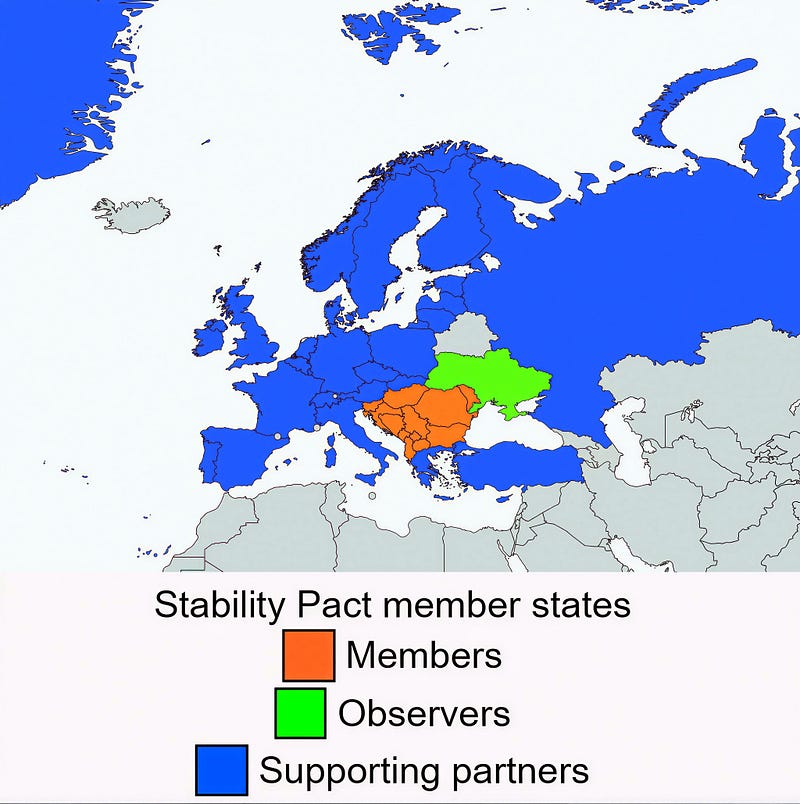
The prospect of EU membership was used as leverage to induce reforms, regional cooperation, and respect for minority rights — essentially making EU integration a tool of peacebuilding. This strategy was a direct response to the lesson that long-term stability required more than just ending the war; it required a positive vision to reunite and develop these fractured societies. For a while, this strategy saw notable successes: Croatia, for example, reformed and eventually joined the EU in 2013; even Bosnia and other states undertook significant democratic and economic changes under EU guidance in the 2000s. NATO too expanded its security umbrella, deploying missions (IFOR/SFOR) that kept the peace in Bosnia and later KFOR in Kosovo, and even admitting some former Yugoslav republics as members. The broader implication is that integrating war-torn regions into wider frameworks (EU, NATO, U.N. partnerships) can be a powerful way to lock in peace. However, the Bosnian case has also shown the limits of external influence. By the mid-2000s, as the EU’s own momentum stalled and the U.S. shifted focus to other global challenges, Bosnia’s progress toward a functional multi-ethnic state slowed and then gridlocked. Rising ethnic nationalism made a comeback once the carrot of rapid EU accession faded and great power attention waned. This warns that the international commitment to such post-conflict societies must be sustained longer than perhaps anticipated; the “external anchor” of peace needs to hold until domestic political cultures truly reconcile. The re-emergence of tension in Bosnia and nearby Kosovo in recent years, amid geopolitical competition (with Russia, for instance, supporting Serb separatist sentiments), underscores that the job of peacebuilding is generational, not something achieved in a few conference rooms in the 1990s. In summary, the significance of the Yugoslav wars lies not only in the sorrowful events themselves but in the way they became a turning point for international norms and strategies — from how we justify intervention, to how we design peace agreements, to how we involve international institutions in rebuilding shattered states.
Real-World Applications and Ongoing Lessons
In the decades since the Yugoslav wars, policymakers and conflict resolution experts have repeatedly applied — or misapplied — the lessons gleaned from that tumultuous chapter. The Balkan conflicts now serve as a touchstone for precedent-based insights in ethnic conflict management and international diplomacy, with both positive and cautionary examples. One clear application has been in the realm of humanitarian intervention. The mantra “No more Srebrenicas” has reverberated in discussions about subsequent crises. For instance, when civil war in Syria escalated in the 2010s with mass atrocities against civilians, many drew analogies to Bosnia. They debated establishing “safe zones” or conducting military strikes against the Assad regime, explicitly invoking Bosnia’s lessons — both the shame of international paralysis in the face of slaughter, and the eventual success of late intervention in stopping a genocidal campaign. In 2013, after a chemical weapons attack near Damascus, U.S. officials compared the situation to Srebrenica’s massacre and argued that American credibility was at stake if it did not enforce international norms. At the same time, skeptics of intervention in Syria cited the messiness of the Bosnian aftermath and the Iraq war to warn that military action could lead to a quagmire or unintended consequences. This reflects a dual legacy of Yugoslavia: it strengthened the moral and political case for intervention to stop ethnic cleansing (contributing to frameworks like R2P), but it also provided a case study in how hard post-intervention nation-building can be. The NATO intervention in Libya in 2011 to protect civilians was partly justified by R2P principles forged from Bosnia and Rwanda’s failures. Yet Libya’s chaos after Muammar Gaddafi’s fall has been a reminder that ending a war is not the same as building a peace — a nuance well known from Bosnia’s protracted and ongoing state-building struggles. Current conflicts in places like Yemen and Myanmar similarly evoke Bosnia’s specter: the international community’s continued “limitations in deterring mass atrocities” show that the structural problems exposed in the 1990s (lack of great power consensus, conflicts of interest) are still with us. Bosnia’s lesson that indecision and half-measures can be deadly remains painfully relevant, as world powers wrangle over how to respond to today’s humanitarian catastrophes.
Another domain of application is post-conflict reconstruction and state stabilization, where the Bosnia experience has been explicitly used as a template (for better or worse). In the early 2000s, as the United States and its allies engaged in large-scale nation-building efforts in Afghanistan and Iraq, analysts looked to the Balkans for guidance. Bosnia’s internationally supervised institutions, multi-ethnic power-sharing, and heavy presence of foreign advisors and peacekeepers were, in some respects, replicated in Kosovo, and even echoed in the international approach to Iraq. The idea of installing a powerful international overseer (akin to Bosnia’s High Representative) or using ethnic quotas in governance was floated in Iraq to manage divisions between Shias, Sunnis, and Kurds. In fact, prominent think tanks heralded Bosnia as a model that could inform Iraq’s reconstruction — for example, the Brookings Institution noted Bosnia’s transition as a potential template for other war-torn countries. Certain lessons carried over: the importance of disarming militias and integrating them into a national army*, the need to return refugees to break the cycle of ethnic segregation, and the value of economic incentives and institution-building to give former enemies a stake in a common state.
*Disarming militias and integrating them into a national army requires a blend of negotiation, legal reform, and institutional restructuring. Governments often pursue this through disarmament agreements and DDR programs — disarmament, demobilization, and reintegration — while simultaneously reforming the security sector to absorb vetted fighters into formal forces. Electoral laws may be amended to bar armed groups from political participation unless they disarm, creating incentives for transition. The process faces persistent challenges, including fighters’ loyalty to militia leaders, hidden weapons caches, political resistance, and foreign influence. In Iraq, for example, Iran-backed militias have recently signaled willingness to disarm under U.S. pressure, while the government pushes for full state control of weapons and reforms that would exclude armed factions from the 2025 elections. Successful integration depends on avoiding dual militaries and ensuring transparency, oversight, and long-term political inclusion.
Bosnia’s relative success in the late 1990s in achieving hundreds of thousands of refugee returns and holding elections under supervision showed that even deeply scarred societies can make tangible progress with sufficient international support. This bolstered an optimistic view that multi-ethnic coexistence could be rebuilt even after ethnic war — a view put into practice in international policies in the Balkans and beyond.
However, the mixed outcomes in Bosnia have also served as cautionary tales. International administrators in Kosovo, and later planners in interventions like the UN mission in South Sudan, studied Bosnia’s intricate constitutional design and learned how too much institutionalized ethnicity can paralyze governance. The fact that Bosnia decades later remains in a kind of frozen political deadlock — with ethnic nationalist rhetoric on the rise — warns that peacebuilding is not only about initial treaties and elections, but about sustaining momentum and civic trust long after the foreign troops depart. Consequently, in more recent peace negotiations [for example, efforts to resolve sectarian strife (violent conflict between religious or ethnic groups, often fueled by political power struggles, discrimination, and foreign influence. It destabilizes societies and is hard to resolve without inclusive governance and dismantling armed sectarian networks.)], there is a tension between using consociational formulas (apportioning power by group, as Dayton did) and striving for more fluid, cross-cutting political identities in countries like Lebanon or in proposals for a post-war political order in Syria. The Balkans teach that each approach has costs: ignoring group identities can make an agreement impossible, but cementing them can hinder long-term nation-building. Policymakers today draw on that knowledge, attempting hybrid models — e.g., power-sharing governments with sunset clauses, or autonomy arrangements coupled with strong incentives for reintegration — trying to capture the best of both worlds.
The Yugoslav wars have also directly influenced institutional designs in international diplomacy. One legacy is the use of ad hoc contact groups and peace envoys to tackle protracted conflicts. The Contact Group (US, UK, France, Germany, Italy, Russia) that coordinated Balkans policy in the mid-90s has inspired similar formats (like the “Quartet” for the Middle East). The shuttle diplomacy Holbrooke employed — coercing and cajoling parties in secluded negotiations — became a textbook case of high-stakes mediation. Envoys dealing with conflicts from Darfur to Ukraine have taken a page from the Dayton playbook by seeking to lock conflict leaders in intensive talks, sometimes under threat of force or sanctions, until a peace accord is hammered out. The lesson applied is that determined diplomacy backed by military leverage can succeed where gentler diplomacy fails. Yet, the limits of transplanting the Dayton method are evident: not all conflicts have a single air campaign or a pair of exhausted warlords ready to deal. Syria, for example, defied multiple envoys’ efforts despite many attempts at Holbrooke-style mediation, in part because the fragmented nature of the Syrian opposition and the regional proxy war dynamics did not mirror the more centralized combatant structure of Bosnia. Thus, while the Yugoslav wars have enriched the toolkit of conflict resolution (from robust peacekeeping models to war crimes tribunals to power-sharing blueprints), practitioners have learned to adapt those tools to context rather than copy blindly.
Finally, the wars’ aftermath continues to inform fragile state stabilization strategies. Bosnia and its neighbors, now two decades removed from war, illustrate the importance of long-term engagement. International donors and organizations have applied lessons from the Balkans in places like sub-Saharan Africa and Southeast Asia by emphasizing reconciliation processes, such as truth commissions or inter-ethnic dialogue programs, acknowledging how critical societal healing is. The peacebuilding process in Bosnia itself offers success stories that have been promoted as models: for example, the integration of former combatants into a single national army under NATO supervision by 2005 stands out as a landmark achievement in unifying a country’s security sector after civil war. This model — creating unified security institutions from disparate militias — has been attempted in countries like Liberia and the Ivory Coast with reference to the Bosnian case. Bosnia’s experience also highlighted the synergy of security and development: NATO troops ensured basic security, which allowed civil programs (like rebuilding half a million destroyed homes and returning property to pre-war owners) to take root. Peacebuilders in later conflicts have cited this when advocating for robust peacekeeping missions that not only separate warring parties but also actively assist in reconstruction and refugee return. Conversely, the stagnation and renewed tensions in the Balkans in the late 2010s — as international attention drifted — have been a sober reminder that “post-conflict” is a misleading term. The lesson for practitioners is to maintain mechanisms for conflict prevention and dialogue even decades after a formal peace, and to be wary of prematurely declaring mission accomplished. International overseers in Bosnia (like the Office of the High Representative) remain in place to this day, a unique situation that shows both the difficulty of nurturing self-sustaining governance and the lingering international responsibility toward a fragile peace. The Office of the High Representative (OHR) still operates in Bosnia as of 2025, enforcing the Dayton Peace Agreement. Despite ongoing efforts, especially from Republika Srpska leaders (Milorad Dodik, Radovan Višković, Anton Kasipović, Srebrenka Golić, Dragan Lukač) and their domestic institutional allies, including the National Assembly of Republika Srpska (SNSD-led coalition), Republika Srpska executive ministries, and security apparatus:
Foreign Strategic Allies:
- Government of Serbia (bilateral coordination, political support)
- Russian Federation (diplomatic backing, opposition to Western oversight)
Oppositional Targets:
- Office of the High Representative (OHR)
- Dayton Peace Agreement enforcement mechanisms
- Western-backed judicial and electoral reforms
Operational Alignment:
- Anti-Dayton rhetoric, sovereignty claims, resistance to international intervention
- Coordination with Serb nationalist networks and media platforms
International actors continue to defend their role as essential for stability and EU accession. In current peace operations, whether in the Sahel or in Asia, officials often debate exit strategies and benchmarks for ending international presence; the Balkan precedent suggests that patience and conditionality are key — pulling out support too soon or without clear local capacity can risk undoing hard-won gains.
In conclusion, the Yugoslav wars of the 1990s have served as a grim but invaluable masterclass for international relations scholars and policymakers. From the ashes of Yugoslavia emerged hard-earned wisdom on the perils of unchecked ethnic nationalism, the necessity for early and united diplomatic action, and the complex trade-offs required in peace agreements. These lessons have indelibly shaped the approaches to ethnic conflict and diplomacy in our current era. The challenge moving forward is to remember and apply them wisely — to recognize warning signs of mass violence early, to overcome biases that hinder effective response, and to commit to the long, unglamorous work of building peace long after the TV cameras leave. The world’s response to new crises will determine whether the refrain “Never again,” so often uttered after Srebrenica, truly becomes more than an aspiration. By studying the successes and failures in the former Yugoslavia, today’s leaders and practitioners gain a roadmap of what to emulate and what to avoid when facing the ethnic conflicts and fragile states of the present and future. The cemeteries of the Balkans, the courtrooms of The Hague, and the still-tense halls of Bosnian politics all stand as reminders that peace — though painfully achieved in the 1990s — is a continuous process of learning and adaptation, one in which the lessons of history remain our best guide.