Is Homosexuality a Brain Disorder?
Two historical reviews describe how major psychiatric manuals once classified homosexuality as a mental disorder and then removed it — the…
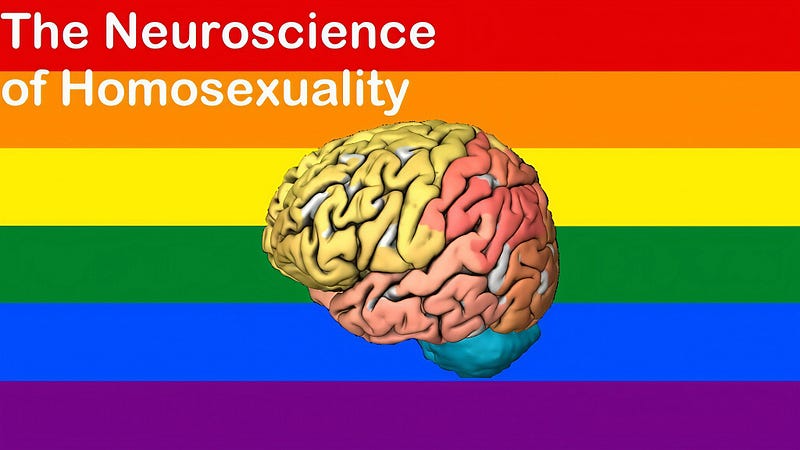
Two historical reviews describe how major psychiatric manuals once classified homosexuality as a mental disorder and then removed it — the Diagnostic and Statistical Manual of Mental Disorders in 1973 and the International Classification of Diseases in 1992 — based on policy shifts rather than new neurobiological evidence. A critical review of neuroanatomical studies, which examined the suprachiasmatic nucleus, the third interstitial nucleus of the anterior hypothalamus, and the anterior commissure, finds no credible evidence of structural brain differences between homosexual and heterosexual men due to conceptual and methodological flaws. In contrast, a theoretical paper asserts that homosexuality is a prevalent, acquired medical disorder, a claim that rests on clinical opinion rather than empirical data. Collectively, the studies do not provide primary empirical support for the claim that homosexuality is a brain disorder.
A search was conducted across more than 126 million academic papers in the Semantic Scholar corpus. The 50 papers most relevant to the query were retrieved for further analysis.
One study critiqued the scientific evidence used for the declassification of homosexuality as a mental disorder. One study asserted that homosexuality is a prevalent, acquired medical disorder. Two studies documented or reiterated the historical trajectory of classification and declassification in psychiatric manuals. One study critiqued neuroanatomical studies and found no evidence for structural brain differences between homosexual and heterosexual men.
Two brief reviews provide historical accounts of the classification of homosexuality as a mental disorder in major psychiatric nosologies, specifically the Diagnostic and Statistical Manual of Mental Disorders and the International Classification of Diseases. These reviews document the initial classification of homosexuality as a mental disorder, its removal from the Diagnostic and Statistical Manual of Mental Disorders in 1973 following a vote by the American Psychiatric Association, and its eventual removal from the International Classification of Diseases in 1992. Neither review addresses the scientific or empirical basis for these changes, nor do they engage with the question of whether homosexuality is a brain disorder. Both focus on the shifting institutional and diagnostic landscape, highlighting the role of professional consensus and policy decisions in shaping psychiatric classification.
One critical review examines the neuroanatomical literature that has investigated structural brain differences between homosexual and heterosexual men. The review focuses on three brain regions: the suprachiasmatic nucleus, the third interstitial nucleus of the anterior hypothalamus, and the anterior commissure. The review finds that the available studies suffer from significant conceptual and methodological flaws. Based on this assessment, the review concludes that there is no credible evidence to support the hypothesis that male homosexuals’ brains are structurally different from those of male heterosexuals. This conclusion is limited by the quality and scope of the available studies, as identified by the review.
One critical review evaluates the scientific evidence cited by the American Psychiatric Association and the American Psychological Association in support of the declassification of homosexuality as a mental disorder. The review argues that much of this evidence is irrelevant, outdated, or methodologically flawed, and questions the credibility of these organizations’ positions. The review does not present new empirical evidence regarding whether homosexuality is a brain disorder; its critique is directed at the quality of the evidence used to support the claim that it is not a disorder.
One theoretical/conceptual paper asserts that homosexuality is a medical disorder, acquired through early life experiences and faulty gender identity. This position is based on theoretical and clinical opinion rather than empirical data, and reflects the prevailing psychiatric views of the era before the declassification of homosexuality as a mental disorder.
None of the included studies presents empirical evidence supporting the hypothesis that homosexuality is a brain disorder. The two historical reviews document the process of declassification in psychiatric manuals but do not address etiology or neurobiology. The only review of neuroanatomical evidence finds no support for structural brain differences between homosexual and heterosexual men, based on the available studies, which are themselves limited by methodological flaws. Theoretical and institutional critiques reflect ongoing debates about the quality of evidence and the role of professional organizations, but do not provide new empirical data. The overall quality of evidence in this review is limited by the absence of primary empirical studies and the reliance on reviews, theoretical papers, and historical accounts.