Mamdani Cannot Have Netanyahu Arrested if He Comes to New York
He’s going to behave. He’ll behave; he better behave; otherwise, he’s going to have big problems. — President Trump
He’s going to behave. He’ll behave; he better behave; otherwise, he’s going to have big problems. — President Trump
The question of whether international law is grounded in reality addresses the foundation of our global order. Unlike a system ruled by a supreme world government and its own police force, international law depends on a fragile consensus among self-interested nations. Its core consists of written treaties, customary practices developed from consistent state behavior, and the often unseen pressure from diplomatic and economic consequences. For the most part, this system functions smoothly behind the scenes — it enables global trade, regulates the skies and seas, and provides a shared framework for diplomacy. The widespread, largely unnoticed compliance by nations demonstrates that international law has practical effects. However, its effectiveness has clear limits. When a major power’s national interest clashes with the immunity of a sitting head of state, the stability of this system often gives way to the realities of power.
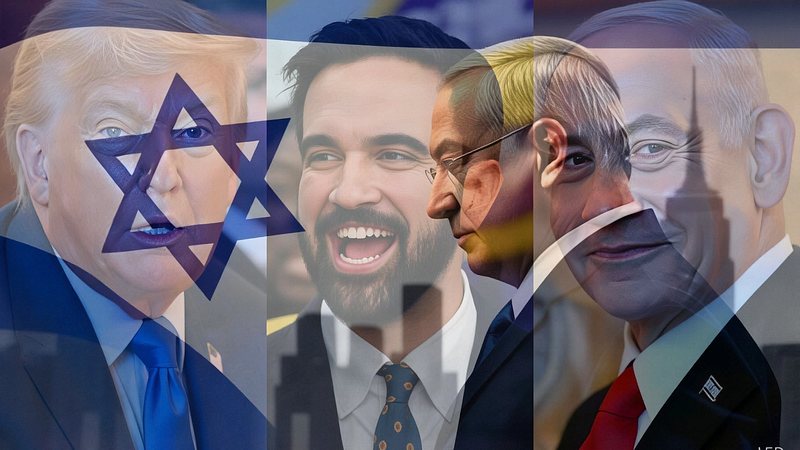
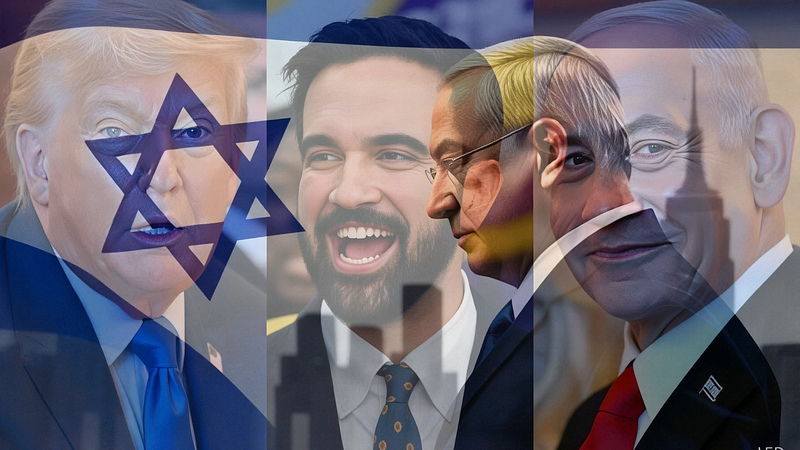
This fundamental tension is thrown into sharp relief by the theoretical case of Israeli Prime Minister Benjamin Netanyahu visiting New York while subject to an International Criminal Court arrest warrant. A local official, such as Mayor-elect Zohran Mamdani, could, with great conviction, declare his intention to arrest the visiting leader. However, this political statement would disintegrate against the hardened walls of legal and political reality. The journey from declaration to handcuffs is a path blocked by insurmountable legal gatekeepers.
The first and most formidable gatekeeper is the principle of head-of-state immunity. This is not a mere formality but a cornerstone of the international system, designed to allow sovereign states to interact without fear that their leaders will be subjected to political prosecution abroad. A sitting head of government is widely recognized under international law as enjoying absolute immunity from the jurisdiction of foreign national courts. To violate this is to invite chaos into diplomatic relations, a risk no nation, including the United States, is willing to take.
The second gatekeeper is the position of the United States itself. America is not a party to the Rome Statute that created the International Criminal Court. It views the Court’s jurisdiction over the citizens of non-party states as an infringement on its own sovereignty. Therefore, the U.S. feels no legal obligation to enforce an ICC warrant on its soil. In fact, it has actively opposed such efforts, with past administrations issuing executive orders to sanction ICC officials involved in investigating American or allied personnel. The idea that the U.S. federal government would allow a city mayor to execute an arrest that it fundamentally opposes is inconceivable.
Finally, local authorities have no real power in high-level international matters. The U.S. Constitution gives the federal government control over foreign affairs. If Mayor Mamdani ordered the NYPD to arrest Prime Minister Netanyahu, this would be far outside their lawful powers. Local police enforce only local and state laws; they cannot act on behalf of international tribunals. Federal agencies like the FBI respond only to federal warrants and official extradition requests, not to city orders. Instead of carrying out an arrest, federal authorities would likely intervene to protect the Prime Minister and ensure his diplomatic freedom of movement.
Thus, the defiant promise to arrest a world leader unravels upon inspection. It reveals a painful truth about the current state of international law: it can pronounce judgment, but it often lacks the physical force to execute it against those shielded by sovereignty. The system possesses real, normative power that shapes state behavior and isolates violators, but its enforcement remains decentralized, political, and subject to veto power by powerful nations. It is a reality of influence rather than command, of slow-burning legitimacy rather than immediate coercion. The spectacle of a leader moving freely despite an international warrant is not a sign that the law is meaningless, but rather a stark demonstration of its limits — a testament to the fact that in the clash between justice and sovereignty, sovereignty still holds the sharper sword.