Milorad Dodik: Nationalism, Defiance, and Historical Revisionism
Milorad Dodik stands as one of the most consequential and controversial figures in the modern history of the Western Balkans. His political…
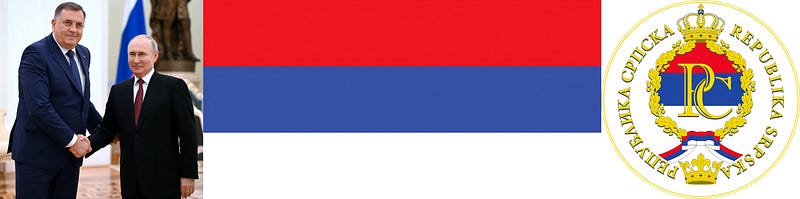
Milorad Dodik stands as one of the most consequential and controversial figures in the modern history of the Western Balkans. His political journey from a Western-backed moderate to a firebrand nationalist illustrates a profound ideological transformation. Dodik’s intellectual contributions are not found in scholarly books but in his political rhetoric and actions, which are built upon a foundation of Serb nationalism, a deep-seated defiance of Western institutions, and a revisionist historical narrative. His impact stems from his ability to articulate and operationalize a vision for Republika Srpska that challenges the very foundations of the Bosnian state.
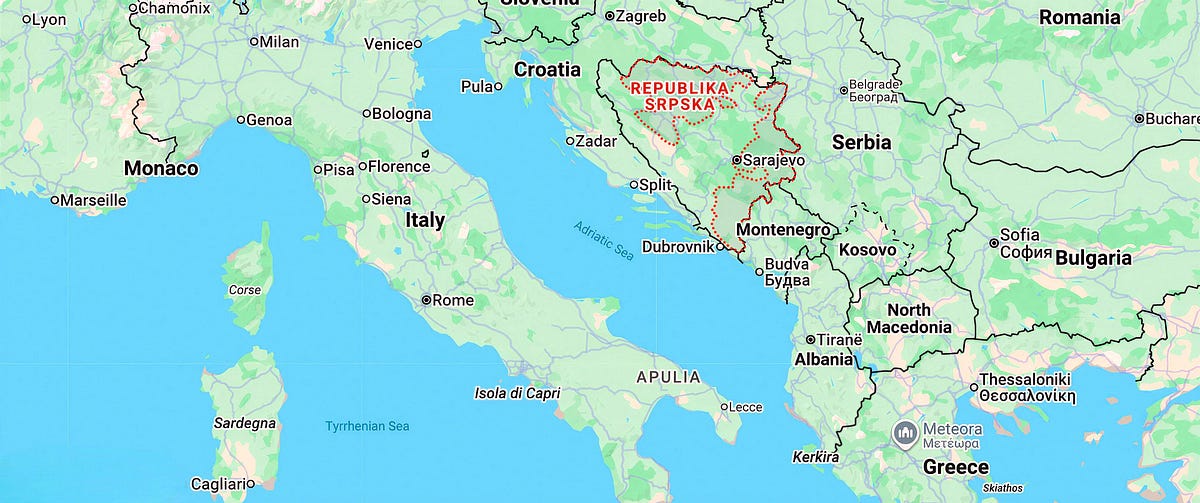
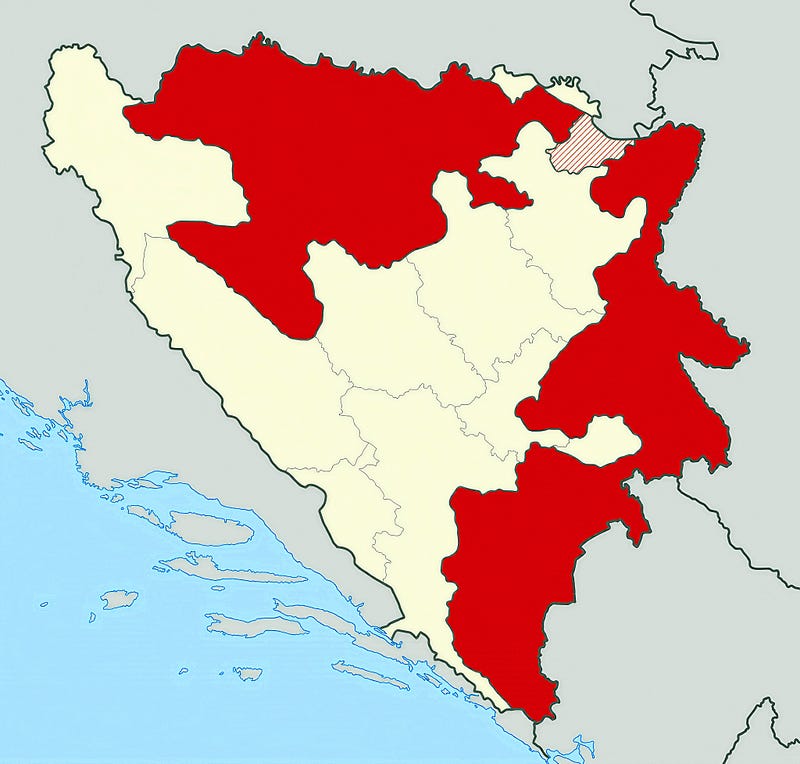
Writings and Key Themes
Unlike a traditional intellectual, Dodik’s “major works” are his political speeches, public statements, and the legislative agenda he champions. The central theme permeating all his output is the protection and advancement of Republika Srpska and the Serbian people within Bosnia and Herzegovina. His rhetoric consistently frames him as an unyielding defender resisting external pressures and what he characterizes as Western interventionist policies. Key motifs include the assertion of Republika Srpska’s autonomy, the challenge to the legitimacy of international oversight like the Office of the High Representative, and the promotion of a historical narrative that celebrates Serb identity and victimhood. His language is often combative, portraying political struggles as existential battles for survival against foreign powers and other ethnic groups.
Central Arguments and Theories
Dodik’s central argument is that the state of Bosnia and Herzegovina, as constituted by the Dayton Peace Agreement, is an unfair imposition that undermines the rights of Serbs. He advocates for a radical decentralization where Republika Srpska would hold near-total sovereignty, retaining the right to self-determination and even secession. A notable and recurring feature of his discourse is the propagation of conspiracy theories. He has alleged, for instance, that USAID operates undercover to interfere in Bosnia’s internal affairs, a claim dismissed by the United States as a “wild conspiracy theory.” He frequently argues that international courts and diplomats exhibit a systemic anti-Serb bias, framing their judgments and decisions not as applications of law but as politically motivated attacks. This narrative of a coordinated external threat is a cornerstone of his political strategy.
Psychological and Philosophical Underpinnings
While a formal psychological analysis is beyond reach, his methods suggest a pragmatic and instrumental approach to power. His political strategy appears less driven by a fixed ideological dogma and more by tactics that consolidate his authority. A consistent pattern is the creation of external enemies — be it the West, Bosniak political leaders, or the High Representative — to foster internal unity and divert attention from domestic issues. This strategy of perpetual confrontation indicates a belief in the political utility of conflict and polarization. His sudden shifts, such as initially being supported by the West before turning sharply against it, point to a highly adaptable and opportunistic political style rather than a deeply held philosophical system.
Political Ideas and Ideology
Dodik’s political ideology is a blend of ethnic nationalism and separatism. His core political project is the strengthening of Republika Srpska at the expense of the central Bosnian state. This has involved concrete steps such as passing laws to strip state-level institutions of their authority and drafting a new constitution for the entity that claims the right to form a confederation with Serbia and re-establish its own army. His ideology is also explicitly illiberal. He has moved to silence dissent by proposing legislation inspired by Russia’s “foreign agent” laws to target civil society organizations. His political evolution is stark; initially hailed as a “breath of fresh air” by Western leaders for his reformist stance, he has since embraced a form of nationalism that includes denying international facts. He has repeatedly questioned the genocide in Srebrenica, often citing arbitrary, lower victim counts, which scholars identify as a deliberate tactic of genocide denial. This denial is not merely a historical position but an active political tool to dismantle the moral and legal framework of the post-war state.
Core Beliefs and Values
At the heart of Dodik’s belief system is the primacy of the Serbian nation. His actions are justified by a conviction that the collective rights and territory of the Serbs in Bosnia must be protected from any perceived encroachment. This aligns with his deep-seated social conservatism and valorization of traditional values, which he reinforces through alliances with religious figures like Patriarch Kirill of Moscow, emphasizing shared spiritual ties between the Serbian and Russian peoples. A fundamental value is sovereignty, though defined strictly for the Serb entity rather than the Bosnian state. This translates into a profound aversion to what he sees as foreign diktat, making defiance of the international community a core principle. Ultimately, his career demonstrates a belief in the power of ethnic solidarity as the primary legitimate source of political organization, standing in direct opposition to the multi-ethnic, unified vision of Bosnia and Herzegovina favored by many in the international community.
A Landmark Conviction and Its Defiant Aftermath
In a significant legal and political development, Milorad Dodik was convicted and sentenced for openly defying the authority of Bosnia and Herzegovina’s international overseer, a verdict that directly resulted in his removal from the presidency of Republika Srpska but has done little to curb his political activities. The conviction stems from his refusal to comply with decisions made by the High Representative, Christian Schmidt, who had blocked two laws passed by the Republika Srpska authorities that sought to prevent the enforcement of state-level court rulings within the entity. In February 2025, a court in Sarajevo found him guilty and sentenced him to one year in prison, with the appeals court upholding the verdict later. Crucially, the sentence included a six-year ban on holding any political office.
Following the upheld verdict, Bosnia’s Central Election Commission formally revoked Dodik’s mandate as president of Republika Srpska in early August 2025, as the law mandates the removal of an official sentenced to more than six months in prison. This action triggered the requirement for early elections to be called in the entity within 90 days. Subsequently, in a hearing on August 12, 2025, the state court accepted a proposal from Dodik’s defense to convert the one-year prison term into a fine of approximately 18,660 euros (approximately $21,739.57 USD); however, the six-year ban on holding public office was explicitly upheld.
Dodik’s response to these events has been characteristically defiant. He dismissed the legal proceedings as “more bullshit from Sarajevo” and vowed that “surrender is not an option,” insisting he would continue his duties. His legal team has announced plans to appeal the decisions to the Constitutional Court of Bosnia and Herzegovina and potentially to the European Court of Human Rights. Furthermore, Dodik and his allies have discussed challenging the verdict through a referendum in Republika Srpska, signaling a continued strategy of confrontation with state-level institutions.
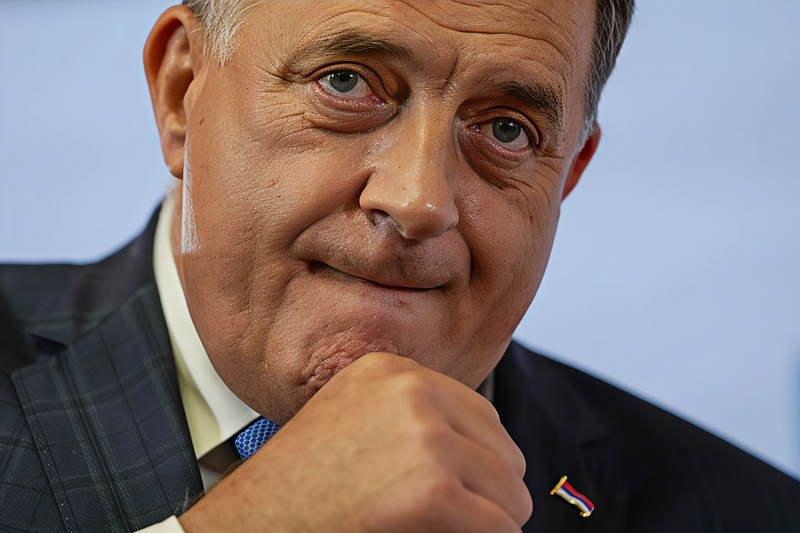
A Danger to the Fragile “Peace” in Former Yugoslavia
The political project of Milorad Dodik represents a persistent and calculated danger to the precarious stability established by the Dayton Peace Agreement. His career is a case study in how to systematically dismantle a post-conflict state from within while operating just within the boundaries of what avoids immediate international military intervention. The peace he challenges is a specific one, often placed in quotation marks by critics, as it denotes a frozen conflict rather than a genuine reconciliation. This peace is maintained by a complex constitutional framework that Dodik has mastered, using the very rights granted to Republika Srpska by the accord to paralyze the central government and push the country toward a de facto partition. His strategy is not one of sudden, explosive violence but of a slow, grinding erosion of state institutions, a process that scholars often identify as a primary pathway to state failure.
This danger manifests not through accidental provocations but through a consistent pattern of legal and political defiance. He has openly challenged the authority of the international High Representative and the Constitutional Court of Bosnia and Herzegovina, actions for which he was ultimately convicted and sentenced to a ban from political office. Furthermore, he has pursued the creation of separate institutions for Republika Srpska, including moves to re-establish its own army, a direct echo of the forces that committed atrocities during the war of the 1990s. These steps are accompanied by a relentless campaign of historical revisionism, most notably the denial of the Srebrenica genocide, which serves to poison inter-ethnic relations and invalidate the legal and moral foundations of the post-war order. His power to destabilize is amplified by his alliance with Russia, which provides him with political cover and reinforces his narrative of resisting Western pressure. The danger Dodik poses is therefore multifaceted, combining institutional sabotage, escalatory nationalism, and external patronage to keep Bosnia and Herzegovina in a perpetual state of crisis, ensuring that the fragile peace remains just that — profoundly fragile.