Moses as Myth: How Archaeology and Scholarship Debunk the Exodus Narrative
The question of Moses’ historical existence remains one of the most contentious issues in biblical archaeology and scholarship. Despite his…
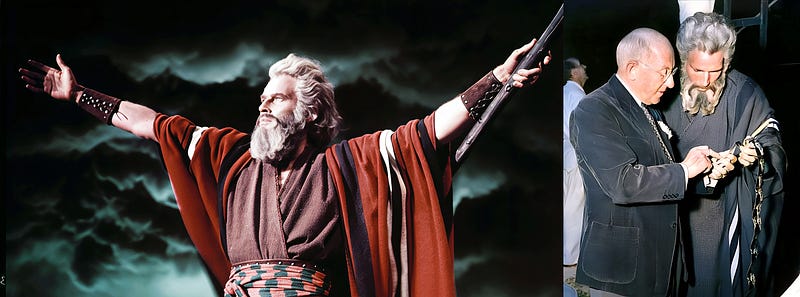
The question of Moses’ historical existence remains one of the most contentious issues in biblical archaeology and scholarship. Despite his central role in the foundational narratives of Judaism, Christianity, and Islam, a rigorous examination of the available evidence — archaeological, textual, and historical — reveals a profound lack of support for Moses as a historical figure. The biblical account of the Exodus, which features Moses as the divinely appointed leader liberating the Israelites from Egyptian bondage, fails to align with the empirical data gleaned from decades of excavations and critical textual analysis. This report synthesizes findings from archaeology, Egyptology, and modern biblical criticism to argue that Moses is likely a composite literary construct, reflecting theological and political agendas of later periods rather than historical events.
The Archaeological Silence and Historical Anachronisms
Archaeological investigations in the Sinai Peninsula and the Nile Delta have yielded no evidence of a mass migration of Israelites during the Late Bronze Age, the period traditionally associated with the Exodus. Extensive surveys and excavations along proposed routes have failed to uncover any traces of encampments, artifacts, or remains that could be linked to a large group wandering for forty years. The absence of such evidence is particularly striking given the arid conditions of the Sinai, which are conducive to the preservation of material culture. Furthermore, Egyptian records from the purported time of the Exodus make no mention of the plagues, the destruction of Pharaoh’s army, or the presence of Israelite slaves. Egyptian inscriptions typically celebrated military victories and monumental achievements while ignoring defeats or embarrassments, but the complete silence on an event of such magnitude remains telling. The first external reference to Israel appears only on the Merneptah Stele from around 1208 BCE, which mentions a people called Israel already residing in Canaan, not escaping from Egypt.
The biblical narrative itself contains historical anachronisms that undermine its reliability. The description of Israelites building the store cities of Pithom and Raamses places the Exodus narrative in the 13th century BCE, during the reign of Ramesses II. However, the name Raamses is used anachronistically in the biblical text, as the city was known by that name only from the 13th century onward. This suggests that the story was written or heavily edited centuries after the events it purports to describe. Additionally, camels are mentioned as being used by the Patriarchs, despite archaeological evidence indicating that camels were not domesticated for transport in the Levant until well after the Bronze Age. These anachronisms point to a later composition date for the Exodus narrative, reflecting the political and social context of the authors rather than historical reality.
The Mythological and Literary Origins of Moses
The figure of Moses shares striking similarities with mythological and legendary figures from other ancient Near Eastern cultures. The story of his birth and abandonment in a basket on the Nile mirrors the earlier legend of Sargon of Akkad, a Mesopotamian king who was also placed in a river as an infant and rescued. This common literary motif, known as the “exposed child,” was used to signify the destined greatness of a hero. The name Moses itself is derived from the Egyptian root “ms,” meaning “son,” commonly found in names like Thutmose (son of Thoth). While the biblical text provides a Hebrew etymology for his name, claiming it means “drawn out” of the water, this is likely a folk etymology designed to Hebrewize an Egyptian name. This adaptation suggests a conscious effort to appropriate a foreign cultural element into Israelite tradition.
The core narrative of the Exodus — oppression, liberation, and covenant — bears the hallmarks of a foundational myth rather than history. Such stories often serve to define a people’s identity and values. For ancient Israel, the Exodus story provided a powerful origin myth that emphasized their unique relationship with Yahweh and justified their claim to the land of Canaan. The complete absence of the Exodus from Egyptian records, coupled with the lack of archaeological evidence in the Sinai, supports the conclusion that the story is a theological construct rather than a historical account. The narrative function of Moses as a lawgiver and mediator further aligns with literary conventions, where legendary figures are credited with establishing the foundational laws and institutions of a society.
The Development of the Moses Tradition in the Biblical Text
Critical scholarship of the Hebrew Bible has long recognized that the Pentateuch is a composite work, woven together from multiple sources over centuries. The Documentary Hypothesis identifies four primary sources — J, E, D, and P — each with distinct theological perspectives and historical contexts. The Moses narrative shows signs of this layered composition, with different sources emphasizing different aspects of his character and role. For example, the Elohist source portrays Moses as a prophet who communicates with God through dreams, while the Priestly source emphasizes his role in establishing ritual and law. This literary development indicates that the figure of Moses was shaped and expanded over time to meet the evolving needs of the Israelite community.
The portrayal of Moses in the Bible also reflects the political and religious struggles of later periods. During the Babylonian Exile and the subsequent Persian period, Jewish leaders sought to consolidate their identity and legal traditions. Attributing the entire Law to Moses provided it with ancient authority and legitimacy. The narrative of liberation from Egyptian oppression would have resonated deeply with exiles hoping for their own return to the promised land. Thus, the Exodus story and its hero Moses can be understood as ideological tools, crafted to inspire and unify a community facing existential threats. The convergence of these literary and historical factors makes it highly unlikely that Moses was a single historical individual.
The Theological and Cultural Legacy of a Mythical Moses
Despite the lack of historical evidence, the figure of Moses has exerted an unparalleled influence on Western civilization. The story of the Exodus has inspired countless liberation movements, from the Puritan revolution to the African American struggle for freedom. This enduring power lies not in its historical accuracy but in its profound moral and theological themes. The narrative of overcoming oppression, the covenant between God and people, and the pursuit of justice continue to resonate across cultures and epochs. Acknowledging the mythical nature of Moses does not diminish this legacy; rather, it allows for a deeper appreciation of the story’s symbolic and ethical dimensions.
Within religious traditions, Moses remains a central figure of faith, regardless of historical debates. For believers, the truth of the Exodus is not contingent on archaeological proof but on its spiritual significance. However, from a scholarly perspective, the evidence points overwhelmingly to the conclusion that Moses is a literary and theological construct. This understanding invites a more nuanced engagement with the biblical text, one that explores its rich layers of meaning without the constraints of historical literalism. The quest for the historical Moses, while ultimately unproductive, has enriched our understanding of the ancient world and the powerful stories that shaped it.