
Neurobiological Developmental Criminology
Neurobiological developmental criminology represents a groundbreaking interdisciplinary field that merges neuroscience, psychology, and…

Neurobiological developmental criminology represents a groundbreaking interdisciplinary field that merges neuroscience, psychology, and criminology to understand how brain development influences criminal behavior across the lifespan. This emerging discipline challenges traditional criminological theories by providing biological evidence for why some individuals develop persistent antisocial behaviors while others desist from criminal activity during development.
The field emerged from recognition that criminal behavior often has neurobiological underpinnings that interact with environmental and genetic factors throughout critical developmental periods. Unlike traditional criminology, which focuses primarily on social and environmental causes, neurobiological developmental criminology examines how brain structure and function differences contribute to antisocial behavior trajectories from childhood through early adulthood.
Theoretical Foundations
Central to this field is Moffitt’s developmental taxonomy theory, which distinguishes between different trajectories of antisocial behavior based on their neurobiological profiles. Life-course persistent offenders typically demonstrate early neurodevelopmental problems that manifest as structural and functional brain abnormalities, particularly in regions governing executive control and emotion regulation. These individuals show persistent antisocial behavior from childhood through adulthood, characterized by smaller cortical surface area and reduced thickness in frontal and temporal brain regions associated with decision-making and social cognition.
In contrast, adolescence-limited offenders exhibit relatively normal brain development but engage in temporary delinquent behavior during adolescence due to social and developmental factors rather than fundamental neurobiological deficits. Recent research has also identified childhood-limited trajectories, where individuals show early conduct problems but desist by adolescence, suggesting more complex developmental pathways than originally theorized.
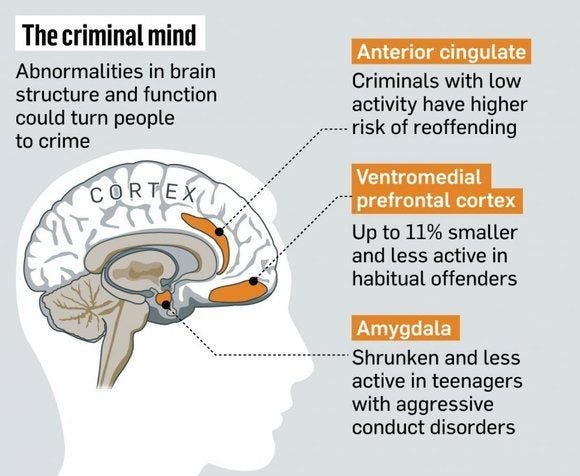
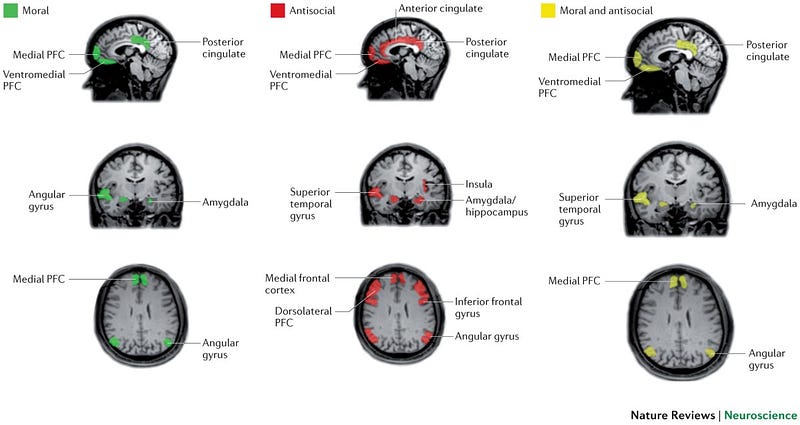
The neuromoral theory proposes that criminal behavior results from impairments in a distributed brain network involved in moral decision-making. This circuit includes the prefrontal cortex, anterior cingulate, amygdala, insula, and temporoparietal junction. Damage or dysfunction in these interconnected regions can compromise moral reasoning, empathy, and behavioral control, increasing the likelihood of persistent antisocial behavior.
Brain Structure and Function in Criminal Behavior
Neuroimaging studies consistently reveal that individuals with persistent antisocial behavior show structural and functional abnormalities in key brain regions. The prefrontal cortex, responsible for executive functions like impulse control, planning, and moral reasoning, frequently shows reduced volume and activity in criminal populations. Meta-analyses demonstrate that the orbitofrontal cortex, anterior cingulate, and dorsolateral prefrontal cortex are particularly affected.
The amygdala, crucial for emotional processing and threat detection, shows complex patterns of dysfunction in antisocial individuals. Some research indicates hypoactivity during fear processing, particularly in individuals with high callous-unemotional traits, while other studies suggest hyperreactivity to certain stimuli. These contradictory findings may reflect the heterogeneity within antisocial populations and the importance of considering different subtypes of criminal behavior.
Reward processing circuits, including the striatum, also show abnormalities in persistent offenders. Reduced activity in the ventral striatum during reward anticipation may contribute to poor decision-making and difficulty learning from positive consequences. This dysfunction can impair the ability to weigh risks and benefits appropriately, leading to continued engagement in antisocial behavior despite negative outcomes.
Developmental Trajectories and Neural Maturation
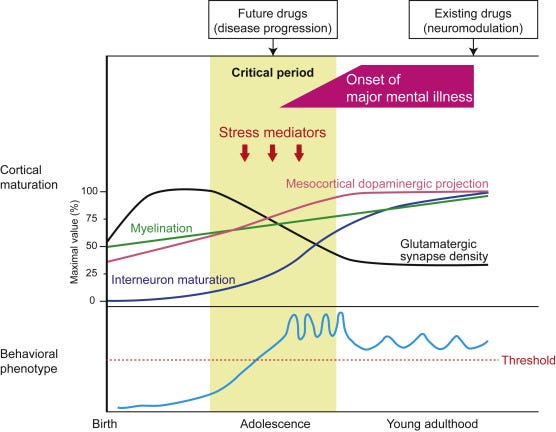
The prolonged development of the prefrontal cortex, which may not fully mature until the mid-twenties, has profound implications for understanding criminal behavior across the lifespan. During adolescence, the imbalance between early-maturing limbic systems and later-developing prefrontal control regions creates a neurobiological vulnerability to risk-taking and poor decision-making.
Early-onset persistent offenders show evidence of neurodevelopmental problems from childhood, including attention deficits, hyperactivity, and conduct problems that correspond to observable brain differences. These individuals often have thinner cortex and smaller surface area in regions associated with executive function and emotion regulation, differences that may predate their antisocial behavior or result from genetic and environmental risk factors.
Desistant individuals, who show antisocial behavior early but cease by early adulthood, demonstrate more effortful information processing and enhanced prefrontal engagement during social feedback tasks. This suggests that some individuals may develop compensatory mechanisms that allow them to overcome early neurobiological vulnerabilities.
Environmental and Genetic Interactions
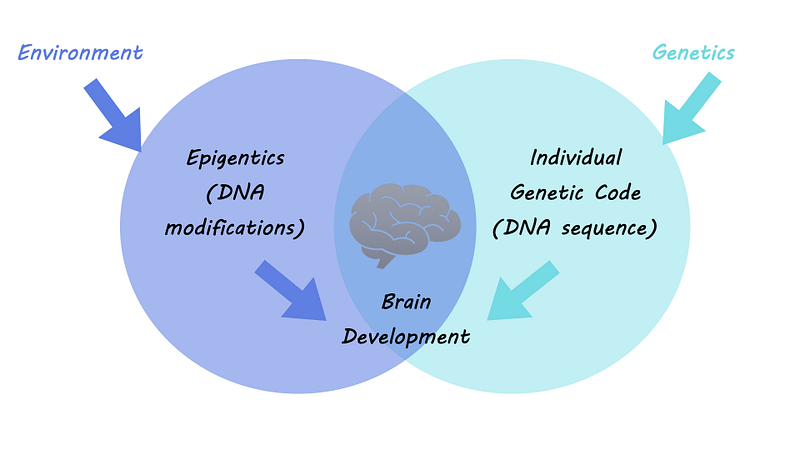
Neurobiological developmental criminology emphasizes that brain development occurs within complex ecological contexts. Gene-environment interactions play crucial roles, with certain genetic variants affecting neurotransmitter systems, moderating sensitivity to environmental adversity. For example, variations in genes affecting dopamine and serotonin function can influence how individuals respond to stress and social challenges.
Early adverse experiences, including prenatal complications, childhood maltreatment, and exposure to toxins, can disrupt normal brain development and increase risk for antisocial behavior. These environmental factors interact with genetic vulnerabilities to shape neural circuits involved in emotion regulation, impulse control, and social cognition.
The concept of the “embedded brain” emphasizes that brain development cannot be understood in isolation from social and environmental contexts. This perspective recognizes that neurobiological risk factors must be considered alongside family, peer, school, and community influences that shape behavioral outcomes.
Implications for Justice and Intervention
The neurobiological perspective has significant implications for criminal justice policy and practice. Understanding that adolescent brains are still developing has influenced juvenile justice reforms, with courts recognizing reduced culpability for young offenders. Supreme Court decisions like Roper v. Simmons have incorporated neuroscientific evidence about adolescent brain development in determining appropriate sentences for juvenile offenders.
Early identification of neurobiological risk factors offers opportunities for targeted interventions before antisocial behavior patterns become entrenched. Neurocognitive training programs targeting executive function, emotion regulation, and social information processing show promise for reducing criminal behavior trajectories.
However, the field also raises important ethical questions about the use of biological markers to predict criminal behavior. Concerns include potential stigmatization, privacy issues, and the risk of biological determinism that ignores the importance of environmental factors and individual agency.
Future Directions and Challenges
Neurobiological developmental criminology continues to evolve as neuroimaging techniques become more sophisticated and longitudinal studies provide deeper insights into developmental processes. Future research priorities include a better understanding of individual differences within antisocial populations, the role of protective factors in promoting resilience, and the development of more effective interventions based on neurobiological findings.
The field faces challenges in translating research findings into practical applications while maintaining ethical standards. Integrating neurobiological evidence into legal and clinical decision-making requires careful consideration of the limitations of current research and the complexity of human behavior.
As our understanding of the neurobiological foundations of criminal behavior advances, this field promises to revolutionize approaches to crime prevention, treatment, and justice policy by providing more nuanced, scientifically informed perspectives on antisocial behavior across development.