Pimples with a Purpose: Exploring the Biological Adaptive Value of Acne
Acne isn’t just a nuisance — it might be an evolutionary relic. Or even a survival tool.
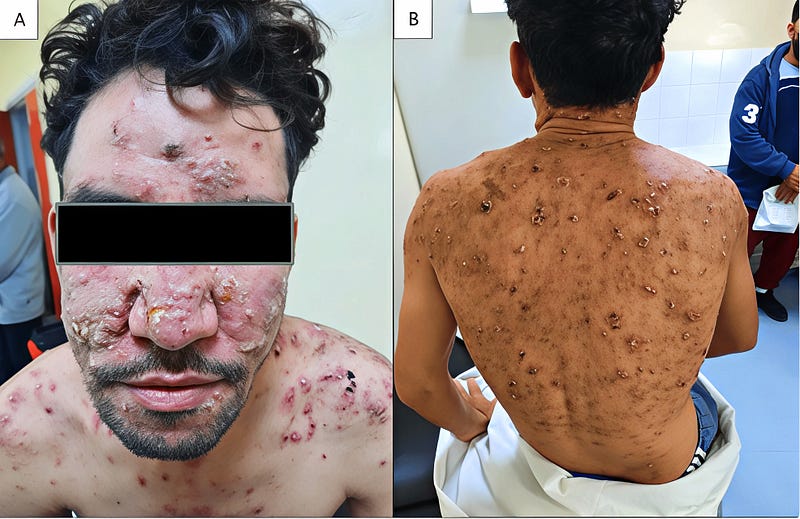
Acne isn’t just a nuisance — it might be an evolutionary relic. Or even a survival tool.
Introduction
Acne is often seen as an unwelcome curse of adolescence. From the moment the first pimple pops up, many of us have wondered, why me? It’s uncomfortable, socially awkward, and seemingly useless. But if evolution is about “survival of the fittest,” why would something as pesky as acne affect nearly everyone?
Could pimples have a purpose?
Surprisingly, several compelling theories suggest that acne might be more than just a dermatological annoyance. In this article, we’ll explore how acne could hold adaptive value, offering a unique window into how human biology, reproduction, and even social behavior have evolved.
Theory 1: Leftover Oil from a Hairy Past
One hypothesis frames acne as a side effect of becoming hairless.
Our primate ancestors were covered in thick body hair, and their oily sebaceous glands helped maintain that fur. As humans evolved to be relatively hairless, the glands remained — but now, without hair shafts to transport the oil, it can clog pores and lead to pimples.
Interestingly, some mostly hairless animals (like the Mexican Hairless Dog) develop acne-like lesions too, reinforcing the idea that this is a byproduct of evolutionary transition, not a bug in the system.
In short, our oily skin may have helped us adapt to life without fur — and acne is just the leftover baggage.
Theory 2: Slippery Babies and Easier Births
This theory suggests acne-prone oil glands evolved to help babies survive childbirth.
Human birth is uniquely difficult due to large skulls and narrow birth canals. Newborns are coated in a waxy, greasy substance called vernix caseosa, largely made from skin oil. This acts as a natural lubricant during delivery.
Sebaceous glands are most active — and most concentrated — on the head, chest, back, and shoulders: exactly where babies face the most resistance during birth. The glands that help you break out at 16 may have helped you get born in the first place.
A smooth entry into the world… followed by a bumpy adolescence.
Theory 3: Acne as Nature’s Contraceptive
Acne may serve as a biological filter for reproduction.
Humans reach sexual maturity in their early teens but are rarely equipped for parenting at that age. Acne, with its inflamed, infection-like appearance, might subconsciously repel mates — reducing teen pregnancy by signaling “not ready yet.”
Simultaneously, teens with acne often feel socially withdrawn or self-conscious, reducing their likelihood of early sexual activity.
The theory holds that acne helped our ancestors delay reproduction until they were more capable caregivers — improving survival odds for their offspring. Once adulthood hits and acne fades, nature gives the green light.
Modern Mismatch: Acne as a Disease of Civilization?
Despite these evolutionary explanations, one fact stands out: acne is nearly nonexistent in traditional societies untouched by Western lifestyles.
Groups like the Kitavans of Papua New Guinea and the Aché of Paraguay report zero cases of acne, even among teenagers. But when similar populations adopt processed diets, sedentary behavior, and urban stress — acne appears.
Modern triggers like high-sugar diets, dairy, sleep deprivation, and stress all influence hormones and inflammation, exacerbating acne. So while the biology may be ancient, the severity is likely modern.
Acne could be the product of ancestral genes in a 21st-century world.
Bonus Insight: Acne and Slower Aging?
Here’s some good news for the pimple-prone: studies show people who had acne often have longer telomeres — indicators of slower cellular aging.
Dermatologists also note that acne-prone skin tends to resist wrinkles longer. That annoying oil may double as a built-in moisturizer that helps maintain youthful skin.
So while acne isn’t fun in your teens, it might be doing your future self a favor.
Conclusion: The Legacy in the Mirror
Acne, frustrating though it is, may be more than just a cosmetic issue — it could be a biological echo of how we evolved.
Maybe it’s the result of a transition to hairless skin. Maybe it helped our ancestors survive childbirth. Maybe it delayed reproduction until we were ready. Or maybe it’s just a mismatch between ancient wiring and modern living.
Whatever the case, acne tells a deeper story: about survival, reproduction, and what it means to be human.
So the next time you glare at a zit in the mirror, you might think: this is the ghost of evolution, tapping on my skin.