Predator of the Currents: The Banded Goonch
Introduction
Introduction
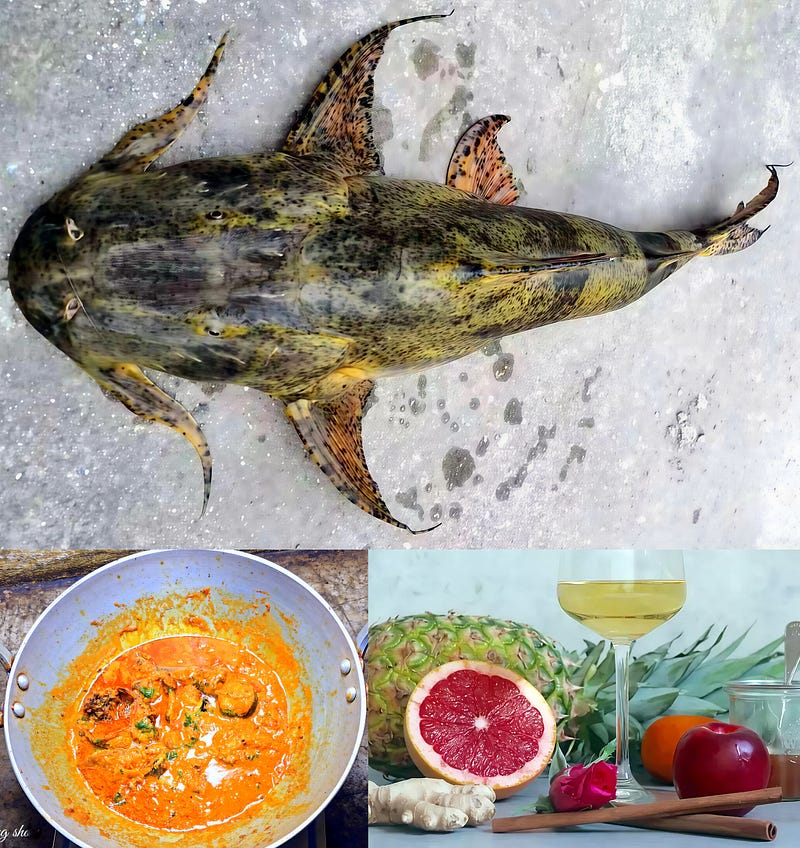
Some fish live quietly in the shadows of streams, barely noticed. The Banded Goonch (Bagarius rutilus) is not one of them. This giant river catfish, armored in stripes and muscle, commands attention wherever it lurks. Known for its immense size and eerie reputation in South Asia, the species has become the subject of folklore, fishing legends, and even food traditions. Yet beyond the myths, the Banded Goonch tells a story of ecology, culture, and sustainability that deserves a wider audience.
Taxonomy
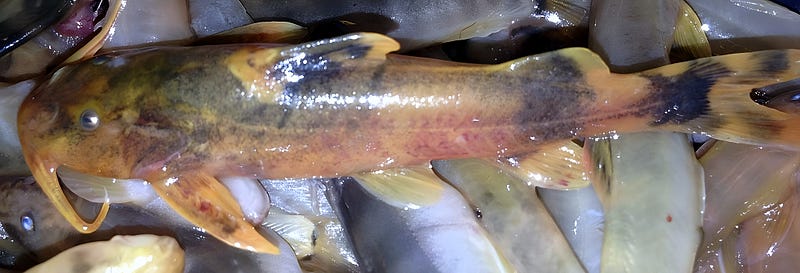
The Banded Goonch belongs to the family Sisoridae, a group of bottom-dwelling catfishes adapted to life in turbulent rivers. Its scientific name is Bagarius rutilus, a species distinguished by its darker banding compared with relatives such as Bagarius yarrelli. Common names include “striped devil catfish” and “giant river goonch,” reflecting both its patterning and intimidating presence. While no recognized subspecies exist, regional varieties show slight differences in size and coloration depending on water conditions.
Biology
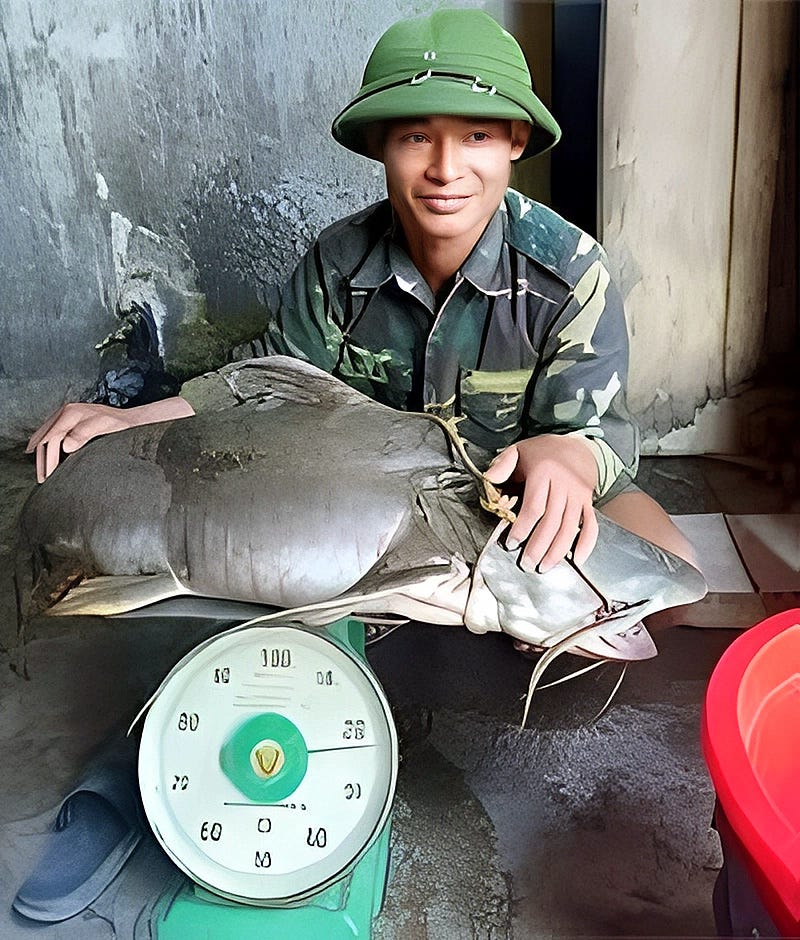
This fish is a powerhouse. Adults can reach lengths of 6 ft (1.8 m) and weigh over 220 lb (100 kg), placing them among the heaviest freshwater predators. Their flattened heads and broad mouths are perfect for ambush feeding, sucking in smaller fish and crustaceans with shocking force. Their bodies are armored with bony ridges, a natural adaptation to withstand strong river currents. Life expectancy can stretch beyond two decades in the wild, with maturity reached slowly, which makes them especially vulnerable to overfishing.
Ecology
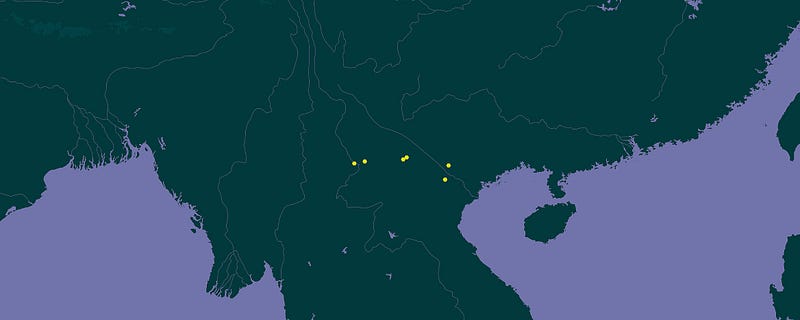
The Banded Goonch thrives in fast-flowing rivers of Nepal, India, and Bangladesh, preferring rocky channels where currents run strong. As an apex predator, it regulates populations of smaller fish and maintains ecological balance. Unfortunately, damming, sand mining, and pollution have shredded much of its habitat. Its need for clean, oxygen-rich waters means it disappears quickly where human interference degrades rivers. Conservationists view the goonch as a bellwether: if it vanishes, the river’s health is already collapsing.
Uses
Historically, large goonch specimens were prized catches in South Asia. In rural markets, their flesh remains a sought-after commodity. However, the slow reproductive rate makes commercial harvest unsustainable. Trophy anglers in Nepal and India once flocked to rivers to pursue them, pumping local economies, but overharvesting has made sightings increasingly rare. Today, the fish’s economic relevance is shifting from consumption to conservation tourism — eco-lodges now advertise the thrill of seeing a living river giant rather than eating one.
Culinary Aspects
Despite its formidable appearance, the Banded Goonch is edible and even esteemed in certain regions. Its flesh is white and flaky, with a firm mouthfeel closer to grouper than the soft texture of common catfish. The taste is clean, slightly sweet, with minimal muddiness thanks to its preference for oxygenated water. When grilled, it develops a mild aroma of roasted shellfish, while in curries, it absorbs spice with balance and depth.
The complexity unfolds across stages: an initial burst of briny sweetness, a rounded body with medium oiliness, and a lingering finish that echoes river minerals. Texturally, it holds well in stews and deep fries, offering a robust bite without falling apart. Nutritionally, the flesh is high in protein, delivering around 20 g per 100 g portion, while remaining low in saturated fat.
In Bengal, fillets are marinated in mustard and turmeric before being steamed in banana leaves. In Nepal, chunks are simmered into spiced broths, where the gelatin from their skin enriches the mouthfeel. The cultural significance lies not only in flavor but in the prestige of serving a rare giant.
Wine Pairings
Pairing wine with such a muscular freshwater fish calls for balance and boldness. A chilled Chenin Blanc from the Loire Valley complements the flesh’s natural sweetness with crisp acidity and hints of quince. For spicier South Asian preparations, a Gewürztraminer from Alsace works beautifully, its aromatic lychee and rose cutting through chili and mustard. Where the goonch is grilled or smoked, a Pinot Noir from Oregon provides earthy complexity without overwhelming the dish.
Conclusion
The Banded Goonch is more than a monster fish whispered about in riverside tales. It is a keystone species, a culinary curiosity, and a mirror of the rivers it inhabits. Its decline warns of collapsing ecosystems, yet its survival could symbolize resilience if conservation wins the race against exploitation. To honor the goonch is to honor the rivers themselves, recognizing that sustainability is not a choice but the price of keeping legends alive.