Running Wild and Feathered: The Enduring Allure of the Emu
The Australian outback hums with a rhythm older than memory, a cadence of wind and red earth, of creatures evolved to survive where the…
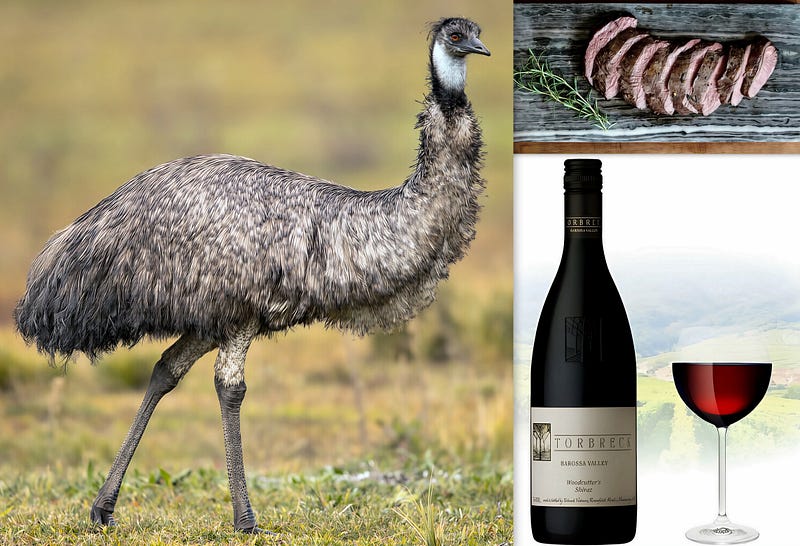
The Australian outback hums with a rhythm older than memory, a cadence of wind and red earth, of creatures evolved to survive where the land itself dares them to falter. Among these survivors strides a bird that defies easy comparison, a creature at once imposing and almost comical, yet essential to the ecology and economy of an entire continent. The Emu, Dromaius novaehollandiae, is more than just a curiosity on a postcard or a fleeting image in a documentary; it is a living testament to adaptation, culinary ingenuity, and sustainable potential.
A Taxonomy Rooted in Antiquity
The Emu belongs to the genus Dromaius, with Dromaius novaehollandiae standing as the sole surviving species. Its name carries the echo of early European explorers, who christened it after encountering Australia’s largest native bird. While no officially recognized subspecies exist today, local variations in size and plumage are noted from the dusty heart of Western Australia to the coastal fringes of Queensland. Common names like “bush chook” and “plains wanderer” pepper the vernacular, a reminder that this bird is woven into Australian identity in a way few animals are. Unlike domestic poultry breeds that split into endless edible varieties, the Emu is uniform across its range, its meat and oil are cherished regardless of region.
Biology on Two Mighty Legs
Standing up to 6 feet tall — about 1.8 meters — the Emu towers over most other birds, second only to the ostrich in size. A mature bird may weigh 100 to 120 pounds, which is approximately 45 to 54 kilograms, yet it can sprint at speeds nearing 30 miles per hour, equivalent to roughly 48 kilometers per hour. Its shaggy, hair-like feathers insulate it from the searing sun and chilling nights, while its long, sinewy legs are engineered for endurance rather than flight. The Emu’s life cycle is as remarkable as its physique. Breeding begins after summer rains, with males incubating the massive emerald-green eggs that weigh around 1.5 pounds, or about 680 grams, each. The males alone brood and guard the hatchlings, surviving for weeks without food or water, a feat few other creatures could endure.
Ecology Written in Dust and Wind
The Emu’s habitat spans nearly every Australian biome, from the sunbaked deserts to the temperate woodlands. They act as long-distance seed dispersers, their powerful gizzards grinding plant matter while resilient seeds pass through unscathed to germinate far afield. This wandering diet shapes landscapes over generations, ensuring plant diversity and resilience. Despite historic culling during the so‑called Emu War of 1932, conservation efforts today emphasize coexistence. Wild populations remain stable, though ongoing land development and fencing challenge their migratory instincts. Sustainable land management — rotational grazing, wildlife corridors, and regenerative agriculture — offers hope that Emus will continue to stride freely across Australia’s future.

Uses Beyond the Feather and the Egg
The Emu is more than a bird; it is an industry. It's lean red meat, high in iron and protein, that commands interest among health-conscious chefs and diners. Its rendered fat produces a prized oil, celebrated in traditional Aboriginal medicine for its anti-inflammatory properties and now used in cosmetics and therapeutic balms. A mature bird may yield 20 liters of oil, about 5.3 US gallons, and this resource can be harvested with minimal waste, reinforcing the species’ role in sustainable farming. Farming Emus also requires less water and feed than many livestock alternatives, making them attractive to regions facing climate stress and resource scarcity.
Culinary Aspects that Surprise and Delight
Emu meat is a revelation to those accustomed to beef or poultry. Dark, lean, and tender, it carries a richness that hints at venison yet cooks with the ease of steak. A perfectly seared Emu fillet, perhaps five ounces or roughly 140 grams, offers a deep crimson center and a whisper of game-like complexity. In Aboriginal traditions, Emu was slow-roasted over coals, its juices mingling with native herbs. Modern chefs marinate it with bush tomato or wattleseed, pairing ancient flavors with contemporary finesse. Nutritionally, it delivers high protein with minimal fat, an ideal choice for those seeking sustenance without excess.
Wine Pairings that Elevate the Meal
The boldness of Emu calls for wines that can stand alongside its intensity without overwhelming it. A robust Shiraz from South Australia, with its notes of blackberry and pepper, harmonizes beautifully with seared Emu steaks. For a lighter touch, a cool-climate Pinot Noir, perhaps from Tasmania, balances the meat’s depth with bright red fruit and subtle earthiness. Those inclined toward white wines may find an aged Chardonnay, with its buttery oak undertones, to be a surprising complement, enhancing rather than muting the bird’s savory allure.
A Conclusion with Wings Unfolding
The Emu endures as more than a symbol of Australia; it is a lesson in survival, adaptability, and sustainable opportunity. Its story invites us to rethink our relationship with food, with the land, and with the creatures that share it. Whether striding through the ochre plains or gracing a carefully curated menu, the Emu embodies a bridge between past and future. In every bite, every drop of oil, every footprint in the sand, there lies a reminder: the world’s most extraordinary ingredients often run wild, waiting for us to rediscover them.