Rush’s Musical Philosophy: A Journey of Mind and Spirit
Rush forged a unique musical philosophy that blended intellectual rigor with transcendent artistry. Their journey began with what Geddy Lee…
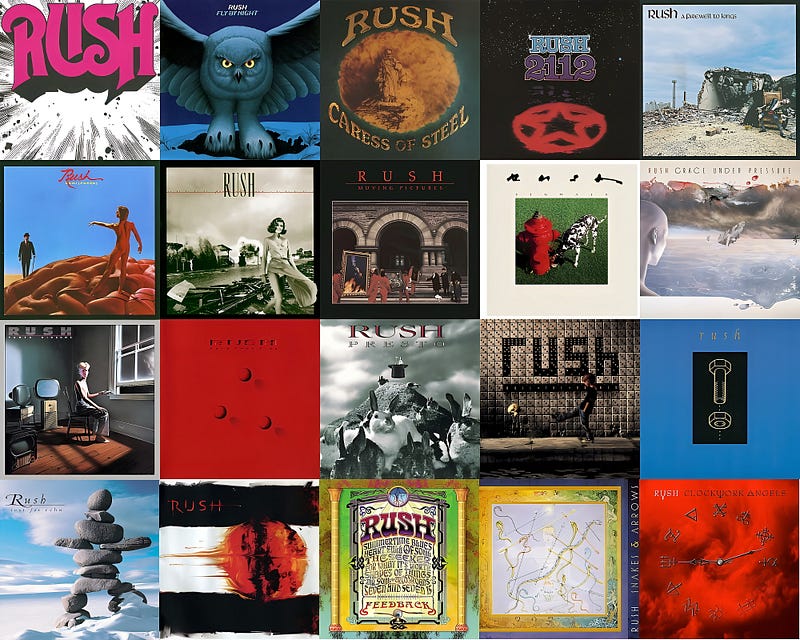
Rush forged a unique musical philosophy that blended intellectual rigor with transcendent artistry. Their journey began with what Geddy Lee called “the fire of youthful certainty,” heavily influenced by Ayn Rand’s Objectivism in early works. The 20-minute epic “2112” became their manifesto, with Neil Peart declaring through its lyrics: “We are the priests of the temples of Syrinx — all the gifts of life are held within our walls.” This confrontational stance against collectivism soon evolved into more nuanced explorations.
As Peart reflected later: “I remain a bleeding heart libertarian who recognizes how even the best ideals can get twisted by humanity’s flaws.” This maturation appeared in songs like “Freewill,” containing what fans consider one of rock’s most philosophically potent couplets: “If you choose not to decide, you still have made a choice.” The band’s worldview expanded to incorporate diverse influences — from George Orwell’s warnings about authoritarianism to Eastern philosophies’ emphasis on balance.
Their spiritual outlook rejected dogma while embracing music’s sacred power. “The Spirit of Radio” famously celebrated “magical music making,” with Peart explaining: “I believe in generosity, charity, kindness and courtesy… I don’t need a threat to act this way.” After personal tragedies, Peart’s motorcycle journey became what he called “a pilgrimage without destination” in his memoir Ghost Rider, revealing how “the healing power of nature and solitude became my religion.”
Musically, their philosophy manifested in what Alex Lifeson described as “the alchemy that happens when three distinct voices create something greater than their parts.” Tracks like “La Villa Strangiato” showcased their technical mastery while avoiding self-indulgence — what Peart termed “difficult music that serves the song.” Their embrace of synthesizers in the 1980s wasn’t trend-chasing but what Lee called “using machines to explore what makes us human.”
Social commentary permeated their work, from “Subdivisions” exposing suburban conformity to “Witch Hunt” warning that “ignorance and prejudice dance to the drums of distrust.” When accused of Satanism during the 1980s moral panics, Peart retorted with characteristic wit: “I don’t even believe in the old wretch!”
Their final album, Clockwork Angels, brought their philosophical journey full circle, revisiting free will versus determinism. As Peart summarized their career: “Music can be a tool for personal and social transformation.” Lifeson added: “We never wanted to preach — just to light sparks in curious minds.” This approach earned them the title “the thinking man’s band,” proving rock could challenge intellects while moving bodies and souls.