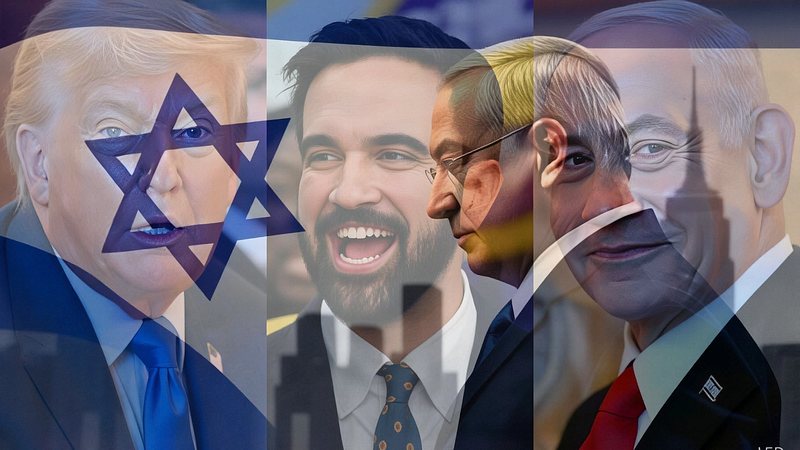
Secularizing Peace: Integrating Interfaith Dialogue into Trump’s Gaza Peace Plan
The Israeli–Palestinian conflict has deep historical roots in both nationalist and religious identities. From the 1917 Balfour Declaration…
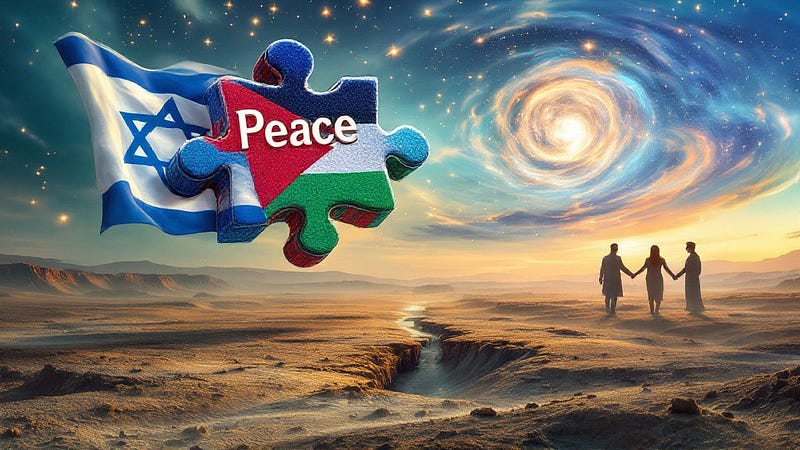
The Israeli–Palestinian conflict has deep historical roots in both nationalist and religious identities. From the 1917 Balfour Declaration and the 1947 UN Partition Plan through the 1967 war and subsequent peace processes, core issues have centered on territory, refugees, and sovereignty. Gaza and the West Bank, occupied since 1967, remain the heart of these disputes, with Gaza under Hamas and the West Bank under the (secular) Palestinian Authority (PA). Past U.S.-backed frameworks — from the 1993 Oslo Accords to the 2000 Camp David talks — have assumed a two-state solution and international law principles (e.g., UNSC Resolutions 242/338) as their foundation. In January 2020, the Trump administration unveiled its “Peace to Prosperity” plan (also known as the “Deal of the Century”), a 180-page proposal for a Palestinian state with no contiguous sovereignty in Gaza or most of the West Bank and with many conditions. The plan allowed Israel to annex large settlement blocs and retain overriding security control, effectively giving Palestinians only a form of autonomy short of full sovereignty. Critics noted that this vision departed sharply from long-recognized UN principles affirming Palestinian self-determination, the illegality of settlements, and the right of refugees (or compensation). In essence, the Trump plan shifted the U.S. position toward Israel’s maximalist demands.
The conflict is often framed as a religious issue, but many analysts emphasize its fundamentally territorial nature. For example, the Theos think-tank explains that both Israeli and Palestinian claims stem from legal, nationalist claims to land, not from theological disagreements. While extremist groups (notably Hamas) have “instrumentalised religion” to pursue political goals, religion was not the original casus belli and instead became a “tool for justifying” the conflict’s prolongation. Nonetheless, neither side can divorce religion entirely: Israel’s identity as a Jewish state and Palestinian claims to Jerusalem’s holy sites have religious dimensions. The broader Middle Eastern context also includes faith-based dynamics: Arab and Muslim states participate in discussions (e.g., through the Arab League and Organization of Islamic Cooperation) and share an Abrahamic heritage. Indeed, recent regional agreements, such as the 2020 Abraham Accords, explicitly invoked interfaith ideals — for instance, affirming that “Muslims, Jews, Christians, and peoples of all faiths… live in… a spirit of coexistence, mutual understanding, and mutual respect.” Such foundational commitments suggest that any enduring peace framework may benefit from secular principles, such as equal citizenship and the rule of law, combined with interfaith dialogue to reconcile historical grievances.
Underlying Assumptions and Inconsistencies
Trump’s plan makes heavy assumptions that reflect its sponsors’ biases. It essentially presumes that a new Palestinian state could be created under Israeli security domination and that Palestinians would accept these terms if given economic aid and gradual improvements. In practice, the plan “envisions Israeli control of the Palestinian state’s airspace, sea, and electromagnetic spectrum” and even licenses Israel to annex territory unilaterally. Palestinian statehood is conditioned on “unreasonable and impractical thresholds” such as disarming militant factions, teaching tolerance in schools, and receiving majority international recognition. Unsurprisingly, this vision disregards UN-endorsed principles: it ignores demands like withdrawal from occupied territory, restoration of sovereignty (including over Jerusalem’s Old City), and refugee rights. In fact, legal experts warn that proposals akin to the Trump plan — particularly any that forcibly relocate Gaza’s population or annex territory — would “trample bedrock tenets of international law,” violating prohibitions against mass expulsion and denial of self-determination.
Another key assumption is that the parties in Gaza will accept this deal without their meaningful participation. The Peace to Prosperity plan was drafted without Palestinian input; Baker Institute analysts bluntly state that “given the total absence of Palestinian involvement… the deal has no way of serving… to resolve the conflict”. Instead, it risks “further blur[ring] the borders between two states” by effectively merging governance. Similarly, the plan adopts a maximalist Israeli position on Jerusalem — declaring a “undivided” Jerusalem under Israeli sovereignty and relegating a Palestinian capital to Abu Dis/Kafr Aqab outside the Old City — which Palestinian leaders immediately rejected. President Abbas protested that he “will not have it recorded in my history that I have sold Jerusalem”. By contrast, past U.S. parameters had envisioned a shared Jerusalem (e.g., Palestinian sovereignty over East Jerusalem’s holy sites). Thus, the Trump plan’s one-sided framing (Jerusalem firmly Israeli; Palestinian state without true borders or sovereignty) reveals its bias.
The plan also downplays the role of religion and ideology, implicitly assuming that peace can be achieved through secular bargains. It says almost nothing about faith or reconciliation between communities. Instead, it focuses on security and economics. This fits a Western secular model but ignores the deep role of identity in Gaza and the region: religion is woven into national narratives, as even Hamas’s charter emphasizes Al-Aqsa Mosque and jihad. Conflict scholars like Aharon Ariel Lavi argue that past solutions failed by “contradicted… deep-seated religious identities”. Ignoring this can strengthen extremist groups, as Western-style secular frameworks may not resonate. In short, the Trump plan’s assumptions — that technical terms and financial incentives alone could overcome decades of mistrust — are inconsistent with the conflict’s complexities and with regional cultural realities.
Competing Perspectives and Counterarguments
Responses to Trump’s plan have been polarized. On one side, many Israeli right-wing leaders welcomed it as a rare U.S. endorsement of their security and territorial goals. They applauded the plan’s core principle of Israeli sovereignty (as opposed to a full Palestinian state) and have pressed Netanyahu to annex the Jordan Valley and settlements. From this perspective, the plan is a “golden opportunity” to achieve long-sought objectives under U.S. backing. Some moderate Arab governments also expressed cautious optimism, framing it as a starting point for negotiations. The UAE and Bahrain embraced the underlying commitment to economic development and regional normalization, even if their interests lie more in diplomatic gains than in Palestinian self-determination. Notably, the 2020 Abraham Accords (Israel-UAE, -Bahrain) embodied a vision of Muslim-majority and Jewish-majority states finding common ground and explicitly promoting interfaith coexistence.
In contrast, Palestinian leaders and most Palestinians outright rejected the plan. Abbas and the PA — secular nationalists — found it unacceptable. Abbas insisted Gaza “is an integral part of the State of Palestine” under PA control and that Hamas must disarm, a stance implicitly aligned with a secular governance model but inconsistent with the plan’s marginalization of any unified Palestinian polity. The PA’s deep mistrust of Israel and the U.S. (exacerbated by issues like Jerusalem) made cooperation unlikely. Hamas, for its part, denounced the plan as a betrayal and remains committed to an Islamist vision of resistance: it has long called for a Palestinian state “from the River Jordan to the Mediterranean” achieved by force. Other stakeholders add nuance: Jordan, as custodian of Jerusalem’s Islamic holy sites, was wary that Washington might strip its role, although U.S. officials ultimately maintained Jordan’s status. Egypt, closely tied to Gaza’s security, has historically favored sidelining Hamas and unifying Gaza under a secular PA, a view that helped drive Egyptian-led reconciliation talks. Even within Israel and Palestine, there are debates: liberal Israelis and secular Palestinians might see the plan as too biased, while their more religious counterparts see it as aligning with a divine mandate or secular nationalism, respectively.
A key debate is whether religion should be a factor at all. Some analysts argue that the conflict’s core grievances are secular — land, rights, security — and that religious dialogue is at best tangential. As one scholar put it, religion has been “instrumentalized” by extremists but is not the root cause. By this view, framing a peace plan around religion or trying to secularize politics risks missing the real issues. For example, the Israeli-Palestinian struggle was not ignited by religious differences (the 1947 UN partition vote was secular, nationalistic); rather, religion later intensified the conflict. Critics from this camp might say a secular approach — focusing on rights, governance, and enforcement of law — is sufficient. They might also worry that calling for “secularization” or emphasizing faith will inflame fundamentalists who see such moves as Western interference.
On the other hand, many peacebuilders contend that excluding religion would be a grave oversight. They note that roughly 50% of Middle East conflicts explicitly involve religious references, and some 75% of countries have experienced faith-motivated violence. A seminal piece in Nexus magazine argues that ignoring religion in peace proposals historically empowered extremist factions rather than moderating them. From this perspective, new initiatives must engage religious identities. Leading global faith figures have made this case: in recent interfaith gatherings, clerics emphasized that “religion has the power to unite people in an increasingly fractured world” and that interfaith dialogue must be a “driving force for peace”. The International Center for Religion and Diplomacy (ICRD) similarly reports that “religious peacemakers have proven instrumental… using their faith-based frameworks to foster dialogue and understanding, and thus nurturing communities that value empathy and social cohesion”. These advocates argue that a peace plan which explicitly incorporates interfaith initiatives (such as dialogues between Muslim, Jewish, and Christian leaders or education programs that highlight shared heritage) could build trust at grassroots levels and address the ideological elements that pure political negotiations miss. In short, while secularists see the conflict’s causes as political, interfaith proponents see religion as an arena where peace must also be forged.
Broader Implications and Significance
Incorporating secular governance principles and interfaith dialogue into the Trump plan has far-reaching implications. At the international law level, emphasizing secular, rights-based governance (rather than ethno-religious exclusivity) would better align the proposal with UN norms and legal commitments. The plan’s current tilt toward unilateral annexation risks breaching laws on occupation and non-discrimination; a more balanced approach could restore international legitimacy. Diplomatically, explicitly including secular and interfaith elements could reshape regional alignments. For example, the Abraham Accords showed how Muslim-majority states (UAE, Bahrain) are willing to normalize relations with Israel under a broad vision of regional security and economic cooperation. Extending that ethos to Palestinians might entice moderate Arab states to bring pressure on Hamas and the PA to moderate. Moreover, Jordan and Egypt — key players on Gaza’s borders — might be more supportive if the plan reaffirmed their roles (e.g., Jordan’s custodianship of holy sites, Egypt’s border security role) alongside a secular civil order that diminishes religious extremism.
Within the field of conflict resolution, this issue highlights the evolving role of religion in peacebuilding. The Middle East case suggests that purely secular negotiation frameworks (popular in Western diplomacy) may not be fully effective without cultural context. This resonates with peace theory: in deeply divided societies, approaches that combine political secularization (ensuring the state treats all citizens equally regardless of faith) and interfaith engagement (building cross-community understanding) are often recommended as complementary strategies. For instance, some analysts note that secular states can provide a neutral framework for governance, reducing sectarian favoritism, while interfaith dialogue works to soften communal animosities. If such ideas are taken seriously in the Gaza plan, it could set a precedent for future peace initiatives in similarly divided regions. Conversely, ignoring them risks fueling a sense that the West is imposing a secular order that undermines local cultures, which could exacerbate backlash.
At the socio-political level, blending secularization with interfaith outreach could transform public support for peace. A faith-neutral state structure might reassure minority groups that their rights (e.g., of Christian and Muslim Palestinians) are protected, while interfaith programs could engage religious communities — clergy, schools, NGOs — in reconciliation efforts. This could undermine extremist narratives that frame the conflict in purely religious terms. Additionally, such an approach could influence global perceptions: the current plan’s international reception was mixed, with many European and UN officials insisting that any settlement be based on equality and agreed norms. A plan revised to include religious pluralism and secular fairness might garner broader international backing, potentially unlocking new diplomatic support. Finally, the war in Gaza and the global rise in polarization (as noted by many commentators) demonstrate that rigid narratives hinder peace. Encouraging more nuanced, interfaith narratives could break such polarization, which is a universal challenge beyond just Israel-Palestine.
Practical Examples and Applications
The call to integrate secular and interfaith elements is not purely theoretical; there are real-world precedents. In Abu Dhabi, the Abrahamic Family House (opened after the Trump era) physically manifests interfaith cooperation by housing a church, mosque, and synagogue to promote understanding. More broadly, the Abraham Accords themselves included provisions for interfaith activities, showing that the idea has traction among regional governments. Civil society organizations also illustrate these principles. For example, U.S.-based NGOs like the International Center for Religion and Diplomacy actively support Mideast peacemakers; they report that religious figures in the region have successfully fostered dialogue and empathy by drawing on shared Abrahamic values. Grassroots initiatives show similar trends: interfaith dialogues between Jewish and Muslim communities (sometimes with Christian participation) have taken place in Jerusalem and elsewhere, creating “sacred spaces” for mutual respect and opening room for empathy.
On the secular front, several countries in the region maintain secular governance models that serve as partial benchmarks. Jordan and Egypt, for instance, constitutionally define Islam as the state religion but operate largely on a secular legal framework; both also promote official tolerance of Christian minorities. Efforts like Jordan’s 2022 interfaith school curriculum reform (which introduced lessons on Christian heritage) exemplify secular policy blending with faith-awareness. Moreover, historical examples show the importance of secular legal norms: after decades of conflict, many U.S. and UN peacekeeping doctrines emphasize protecting religious freedoms and minority rights as core to stability. In Gaza’s context, the Palestinian Basic Law declares Islam the official religion but also prohibits discrimination, reflecting a compromise of secular principles in a religious society. Strengthening that secular commitment (for instance, by explicitly guaranteeing equal citizenship regardless of faith) could align Gaza’s governance more closely with international human rights standards, as was done in places like Tunisia (with its secular constitution) or in the transition planning for post-war Iraq.
Finally, the utility of interfaith engagement is evidenced in conflict zones worldwide. In South Africa’s transition, religious leaders were central to the Truth and Reconciliation Commission and ongoing dialogue. Similarly, global peacebuilding frameworks (UN Alliance of Civilizations, World Council of Churches statements) advocate interfaith dialogue as a key tool. The Middle East already has networks like the Middle East Council of Churches or Islamic-Christian dialogues that operate across conflict lines. A reoriented Trump plan might explicitly support and leverage such networks for Gaza. For instance, encouraging cooperative education (joint textbooks that respect all religious narratives) or community-building projects (mixed faith youth camps) could translate the plan’s ideals into action. In sum, practical initiatives — from treaty provisions and educational programs to community dialogues — demonstrate that combining secular statecraft with interfaith outreach is a viable strategy for peace. Embedding these into the Trump plan could help bridge its current gaps and make its ambitious 21 points more realizable.