Silk Swords in Deep Water: The Hairfin Triggerfish’s Quiet Drama
Introduction
Introduction
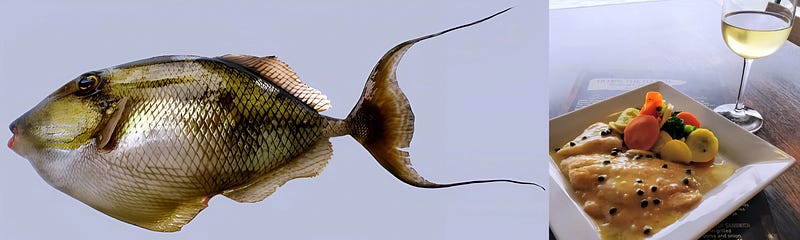
Some species insist on spectacle; others win on restraint. The hairfin triggerfish, Abalistes filamentosus, is the latter — an understated deep-shelf resident that replaces reef flash with sculptural poise. Those delicate upper and lower tail filaments read like calligraphy in motion, a signature laid down over the dim slopes of the Indo-West Pacific. This is an animal built for pressure and patience, holding to the outer shelf between 61–180 m (200–591 ft), where light thins and the food web grows sparse. In a seafood world addicted to the familiar, this fish offers a lesson in overlooked value, ecological caution, and culinary clarity.
Taxonomy
Abalistes filamentosus sits in Balistidae, the triggerfishes, under the order Tetraodontiformes. The genus Abalistes contains two recognized species: the hairfin triggerfish and the better-known starry triggerfish, A. stellatus. The hairfin was only formally described in 2004, a reminder that modern taxonomy still unearths quiet revelations in well-traveled seas. Type material came from the Ryukyu Islands, and the specific epithet “filamentosus” points directly to its signature tail streamers — those filaments that make the silhouette unmistakable. Its conservation status is Least Concern, a sober category that still demands vigilance in a warming, heavily fished ocean.
Biology
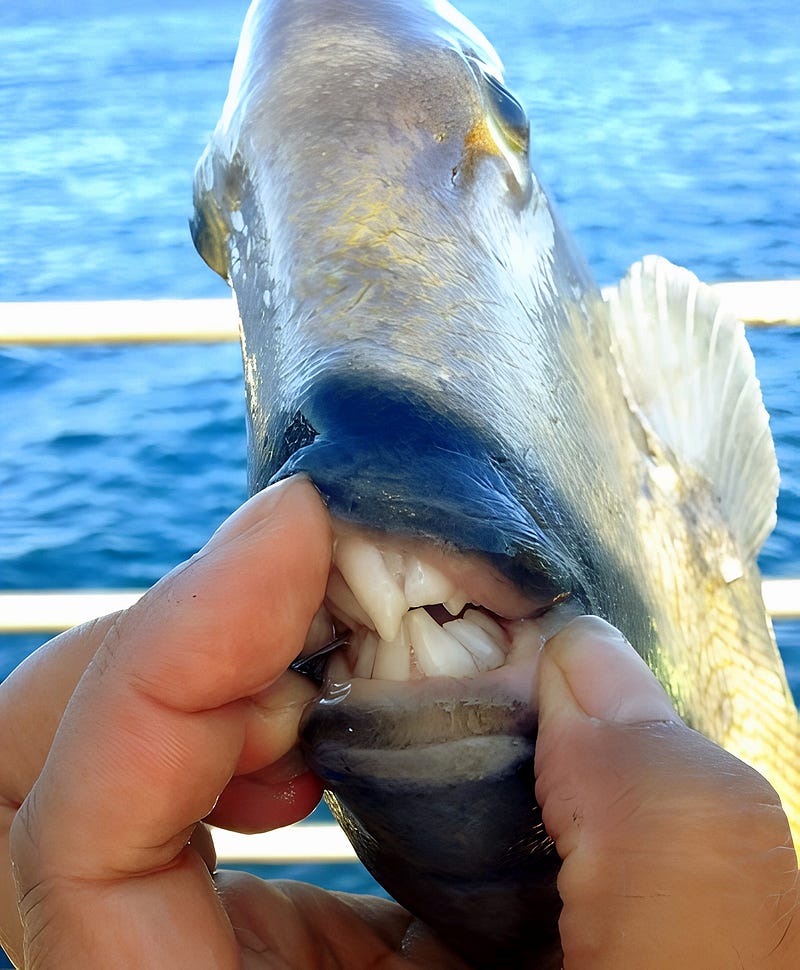
This fish is compact and muscular, with the triggerfish hallmark: a two-stage dorsal “lock” that can jam it into crevices when threatened. Cheek grooves, a compressed cross-section, and the filamented caudal fin complete the profile. A mature male rarely exceeds 32.5 cm standard length — 32.5 cm SL (12.8 in) — while females top out near 24.3 cm SL (9.6 in). The heaviest published specimen rests at 1.4 kg (3.1 lb). It prefers subtropical waters around 18.8–26.9°C (66–80°F), a band that tracks the outer continental shelf’s tempered flow. Reproduction is oviparous with distinct pairing; the shallow romance of reef display is replaced by a deeper choreography, quiet and efficient.
Ecology
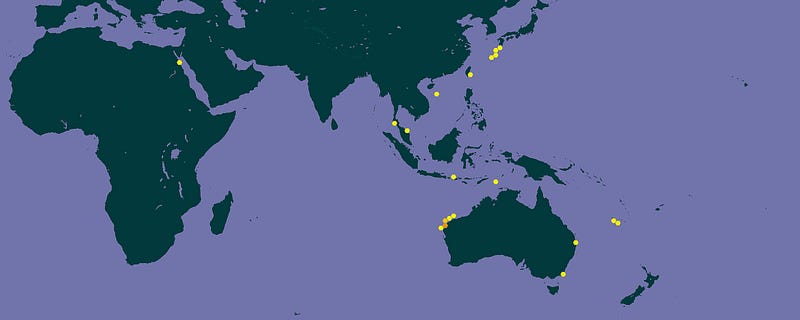
Think of the hairfin triggerfish as a slope sentinel. It works the pelagic-neritic seam, part of a guild that grazes and hunts across coarse sands, rubble, and the drop-off’s mosaic. The species’ known range sweeps from the Ryukyu Islands down to the North-West Shelf of Australia and the Timor Sea, with records pushing into New Caledonia. Depth, temperature, and current keep it honest, and its trophic level sits in the mid-threes — predator, yes, but not an apex dictator. This is a system where energy budgets are tight, and a fish survives by being a generalist without becoming a bully.
Uses
Commercial fame has mostly passed the hairfin triggerfish by. It appears as bycatch in demersal trawls and hook-and-line sets, surfacing in port markets more often than on export sheets. Its rarity in the aquarium trade makes occasional headlines, but the species is too deep, too discreet for routine display. From a sustainability lens, low targeted pressure is a virtue, though bycatch remains a policy problem that demands gear selectivity and observer data rather than hand-waving. A practical buyer’s rule is simple: prefer smaller individuals well above size at maturity but below maximal lengths — here, anything under 30 cm SL (11.8 in) signals a fish earlier in its growth curve, and if you see a specimen advertised at “twelve inches,” read that as 12 in (30 cm) and ask about gear, area, and season. Ethics in seafood is due diligence with teeth.
Culinary Aspects
Triggerfish flesh is famously clean, sweet, and firm, somewhere between grouper and hogfish, with a tighter flake that stands up to heat. That said, the family carries a caveat: ciguatera. The toxin is heat-stable; boiling, frying, grilling — none of it neutralizes the risk. Smart kitchens respect provenance. Buy from cold-chain vendors who can tell you where and when the fish was caught, and avoid high-risk hotspots if local advisories flag them. When provenance is sound, cook like you mean it and keep the technique unfussy.
For a pan sear, a fillet of eight ounces — 8 oz (227 g) — behaves beautifully in a heavy 10-inch skillet — 10 in (25 cm). Use 1 tbsp neutral oil (15 mL) heated to a shimmering film. Salt lightly, about 1 tsp fine salt (5 g), and lay the fish presentation side down. Two to three minutes per side is typical for this thickness, but don’t worship the clock; cook to 145°F (63°C) at the center for finfish safety, then rest a minute. Finish with 2 tbsp lime juice (30 mL) warmed in the pan’s fond and a whisper of 1 tsp grated ginger (5 g). The result is high-definition simplicity: crisp edge, supple center, citrus lifting the natural sweetness instead of burying it.
If you prefer steam or poach, lean on the fish’s gentle character. A court-bouillon of 3 cups water (710 mL), ½ cup dry white wine (120 mL), and a few crushed coriander seeds will cradle the fillets without scalding them. Keep the liquid just off a boil; let the protein set at the same 145°F (63°C), then hold the fish over a towel to flash-dry before saucing. In all cases, avoid aggressive smoke or heavy spice — this isn’t a cut that needs camouflage.
Wine Pairings
Lean, saline whites honor the species’ sweetness and the slope-sea context it comes from. Chablis brings limestone and quiet muscle; Albariño adds stone-fruit cut that flatters lime-finished fillets; Vermentino threads herb and sea spray; Grüner Veltliner meets ginger and citrus with white pepper and pear. If bubbles fit the occasion, a brisk non-dosage Champagne translates seared crust into texture and lift. Temperature matters: pour whites at 8–10°C (46–50°F) rather than a refrigerator’s four degrees — 4°C (39°F) — so the mid-palate doesn’t go numb and the finish can actually speak.
Conclusion
The hairfin triggerfish is proof that modesty survives in the modern sea. It doesn’t court headlines, but it rewards attention — with elegant morphology, a disciplined ecological niche, and restrained culinary grace. Respect the toxin risk with informed sourcing, insist on simplicity in the pan, and treat bycatch stories as invitations to ask better questions at the counter. In an age of noisy seafood, this is a quiet keeper — one that asks for judgment rather than drama, and pays you back with clean lines, clean flavor, and the clean conscience of knowing exactly what’s on your plate.