Silver of the Rivers: The Story of Hilsa Shad
Few fish command the reverence of the Hilsa shad, known scientifically as Tenualosa ilisha. To Bengalis, Oriyas, and Assamese, this…
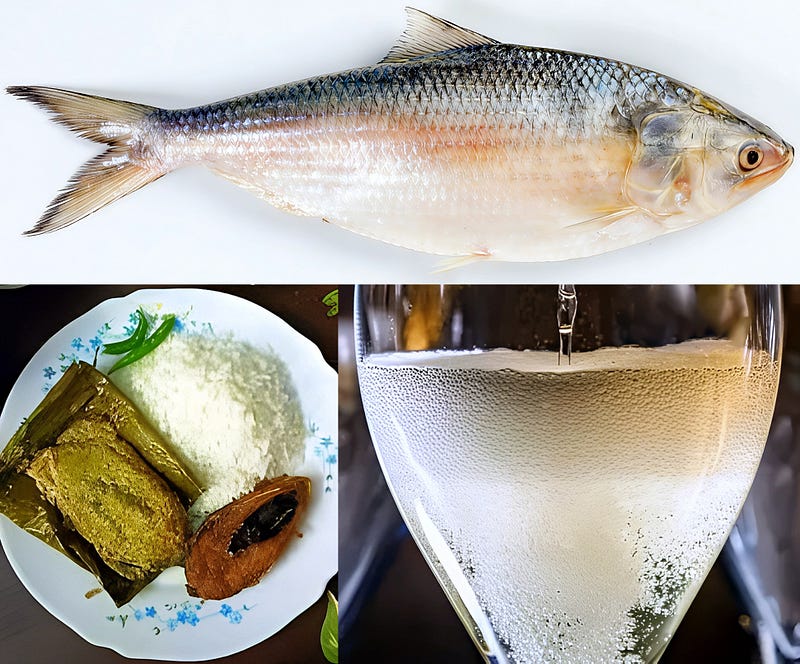
Few fish command the reverence of the Hilsa shad, known scientifically as Tenualosa ilisha. To Bengalis, Oriyas, and Assamese, this shimmering species is more than just sustenance — it is poetry on a plate, a reminder of monsoons and memory, of rivers swelling with life. The Hilsa is a fish that carries with it not just flavor but identity, weaving together biology, ecology, economics, and culture into one iridescent body.
Taxonomy
Tenualosa ilisha belongs to the Clupeidae family, which includes herrings and sardines. Its genus, Tenualosa, distinguishes it from other shads through its migratory habits and distinctive form. The fish is known by many names: Hilsa in English and Bengali, Ilish in Bangladesh, Pulasa in Andhra Pradesh, and Modar in Sindh. While there are no edible “varieties” in the strict scientific sense, regional differences in size and fat content — dictated by river systems — shape local reputations. The Padma Hilsa of Bangladesh, prized for its buttery texture, is legendary, while the Godavari Pulasa, found seasonally in India’s Godavari River, commands premium prices.
Biology
Slender, silver-bodied, and typically reaching 60 cm (about 24 in) in length, Hilsa shad glisten like moving mirrors. Adults weigh around 3 kg (about 6.6 lb), though most marketed fish are between 1–2 kg (2.2–4.4 lb). Their bodies are laterally compressed, with distinctive, sharp scutes along the belly, giving them a slightly serrated feel.
What makes the Hilsa fascinating is its anadromous life cycle. Born in rivers, young fry migrate to the sea where they mature, only to return upriver to spawn. This journey — often spanning hundreds of kilometers — demands stamina and adaptation. Their muscles develop rich fat stores, the very essence of their prized taste. These migrations usually occur during monsoon floods, synchronizing reproductive cycles with seasonal river rhythms.
Ecology
Hilsa thrive in estuaries, deltas, and the lower stretches of rivers across South and Southeast Asia. They are especially abundant in the Bay of Bengal and river systems like the Ganges, Padma, Godavari, and Meghna. As plankton feeders, they play a crucial role in aquatic food chains, converting microscopic life into nutrient-rich biomass for both humans and predators.

Yet, the Hilsa’s world is under strain. Overfishing, habitat destruction, and dam construction have blocked migratory routes, threatening stocks. Once plentiful, Hilsa populations in the Ganges have dwindled, forcing Bangladesh and India to adopt conservation measures such as seasonal bans and net mesh regulations. Sustainable management is now critical to ensuring the species does not slip into scarcity.
Uses
The Hilsa is a lifeline for millions of people. In Bangladesh alone, it accounts for nearly 12 percent of total fish production, contributing billions to the economy. Market prices fluctuate wildly, with large specimens fetching as much as 4,000 Bangladeshi taka per kilogram (about 36 USD for 2.2 lb). In India, Pulasa from the Godavari River can sell for more than 5,000 rupees per kilogram (about 60 USD for 2.2 lb), a seasonal luxury that rivals caviar in exclusivity.
Sustainability, however, hangs in the balance. Practices like juvenile catch — where fish under 23 cm (9 in) are taken prematurely — pose long-term risks. Governments now encourage controlled aquaculture research, though the Hilsa’s complex migratory biology makes farming notoriously difficult.
Culinary Aspects
To taste Hilsa is to understand why it commands such devotion. Its flesh is rich in omega-3 fatty acids, lending both flavor and health benefits. The texture is tender yet oily, with a subtle sweetness balanced by the briny undertone of its migratory life.
Cooking Hilsa is an art of patience and precision, for its bones — thin and numerous — challenge even seasoned eaters. Steamed in banana leaves with mustard paste, fried golden in mustard oil, or cooked in tamarind-laced curries, Hilsa dishes span a spectrum of culinary traditions. Each preparation celebrates its fat content, which melts into gravies like liquid silver.
For Bengalis, Hilsa paired with plain rice and green chilies is not just a meal but an identity marker. Festivals and family gatherings often revolve around Hilsa feasts, where debates about which river produces the “true” flavor can last longer than the meal itself.
Wine Pairings
Though traditionally paired with rice and local brews, Hilsa also welcomes a thoughtful wine companion. Its oily richness pairs beautifully with crisp whites that cut through the fat. A Sauvignon Blanc from the Loire Valley, with its grassy acidity, enhances the mustard notes in Bengali preparations. Riesling, particularly off-dry German varieties, balances the spice with its touch of sweetness. For adventurous pairings, sparkling wines like Prosecco cleanse the palate between bites, taming both heat and oil.
Conclusion
The Hilsa shad is more than a fish. It is a silver thread running through rivers, economies, kitchens, and cultures. Its biology reminds us of nature’s complex rhythms, its ecology underscores the fragility of waterways, and its taste reaffirms why sustainability is not just a scientific mandate but a cultural necessity. Preserving the Hilsa means preserving a living heritage, ensuring future generations, too, can savor the shimmering jewel of South Asia’s rivers.