Silver River Sentinel: The Cultural and Ecological Legacy of Ikan Kelabau
Introduction: In the soft, sediment-rich waters of Southeast Asia, a silvery phantom glides — half-forgotten yet central to the sustenance…
Introduction:
In the soft, sediment-rich waters of Southeast Asia, a silvery phantom glides — half-forgotten yet central to the sustenance, economy, and traditions of countless riverside communities. This is Osteochilus melanopleura, more intimately known as Ikan Kelabau. Often overshadowed by flashier aquatic species, this freshwater cyprinid fish is a quiet workhorse of the ecosystem and a hidden gem of regional cuisine. As rivers grow warmer, murkier, and more fragmented, understanding the story of the Kelabau becomes more than ichthyological curiosity — it becomes a conservation imperative.
Taxonomy:
Ikan Kelabau belongs to the genus Osteochilus, under the family Cyprinidae — a vast assemblage of carps and minnows. The species Osteochilus melanopleura, described in 1852, is distinguished by its soft coloration and the prominent dark lateral stripe along its flank. It shares its genus with several other freshwater fish found in Southeast Asia, including Osteochilus vittatus and Osteochilus schlegelii, though melanopleura remains the most culturally and culinarily significant. In various local dialects across Sumatra, Borneo, and the Malay Peninsula, the species is affectionately called Kelabau, Labeu, or simply ikan sungai — river fish. Unlike introduced species such as tilapia, Kelabau remains largely wild-caught, giving it both ecological and gastronomic purity.
Biology:
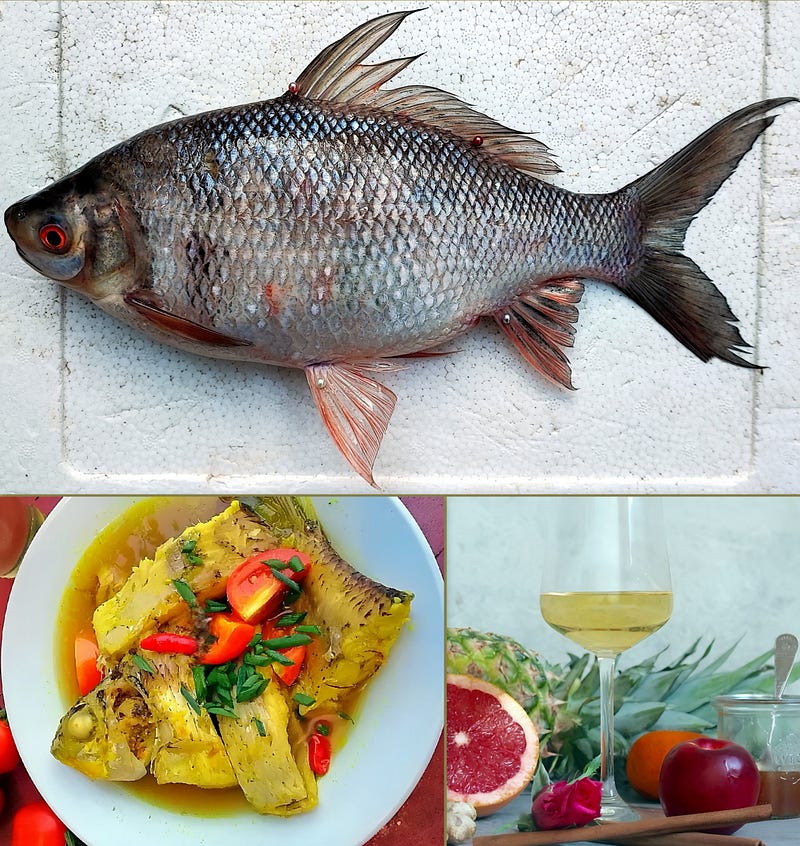
Measuring up to 45 cm or 17.7 in in length and weighing as much as 2 kg or 4.4 lb, Ikan Kelabau is an elegant creature with a streamlined body suited for riverine currents. Its scales shimmer with a muted silver, sometimes tinged with olive or gold, and its signature black stripe runs like an artist’s brushstroke from gill to tail. This fish matures rapidly, with spawning often triggered by the onset of the rainy season when rivers swell and floodplains reconnect. Females lay thousands of eggs, relying on the swollen waters to disperse their offspring across vast habitats. Its diet consists primarily of detritus, algae, and aquatic vegetation, making it a grazer of the riverbed — much like freshwater cattle.
Adaptation-wise, the Kelabau is a master of endurance. It tolerates fluctuating oxygen levels, navigates silt-heavy waters, and demonstrates notable migratory instincts during seasonal changes. This capacity for resilience under pressure has allowed it to persist in regions undergoing rapid ecological change — but even its tenacity has limits.
Ecology:
Native to the lowland rivers of Sumatra, Borneo, and Peninsular Malaysia, Ikan Kelabau thrives in slow-moving, meandering waterways with muddy substrates. It prefers environments rich in aquatic plants, leaf litter, and organic debris. These river systems, often considered brownwater habitats, are naturally nutrient-rich, yet they are increasingly under siege from damming, mining, and palm oil development.
The Kelabau serves a crucial ecological function by recycling organic material, controlling algae blooms, and providing sustenance for larger predatory fish and birds. As a middle-tier consumer, it keeps the food web balanced. Yet, sedimentation, pesticide runoff, and river fragmentation have reduced its numbers significantly in many regions. Once considered common, it is now becoming rare in markets and harder to find in the wild, prompting concern among both conservationists and local fishers.
Uses:
Economically, Ikan Kelabau is vital in rural and indigenous fisheries. It is caught using traps, gillnets, and hook-and-line methods — mostly by small-scale fishers who depend on river bounty for both protein and profit. In local wet markets, a fresh Kelabau can fetch up to 25 Malaysian Ringgit per kilogram, or about 2.7 USD per 2.2 lb. Dried or salted versions are sold at even higher premiums, especially during festival seasons.
Aquaculture has been slow to incorporate Kelabau due to its sensitivity to captive breeding conditions and its preference for wild aquatic vegetation. However, interest is growing in semi-natural pond systems that mimic riverine environments. Such systems offer a path forward in sustainable cultivation without sacrificing the species’ ecological integrity.
Culinary Aspects:
To the discerning palate, Kelabau offers a firm, slightly sweet flesh with low fat content — perfect for a range of traditional dishes. In Riau and West Kalimantan, it is often grilled whole over charcoal, wrapped in banana leaves with lemongrass, turmeric, and galangal. In Sumatra, it appears in spicy, sour broths akin to asam pedas, a dish that balances tamarind, chili, and torch ginger with the fish’s subtle flavor. When dried and smoked, its meat acquires a profound umami depth, reminiscent of anchovy yet more refined. A typical serving of grilled Kelabau — about 200 g or 7 oz — delivers approximately 30 g or 1.06 oz of protein, minimal saturated fat, and a good dose of omega-3s, making it both delicious and heart-healthy.
Wine Pairings:
Pairing wine with river fish requires sensitivity. For grilled or smoked Kelabau, a chilled dry Riesling or Grüner Veltliner offers acidity and minerality to cut through the smokiness while elevating the sweetness of the flesh. Dishes cooked in turmeric-heavy broths find harmony with Gewürztraminer, whose floral nose and lychee undertones counterbalance heat and sourness. In fusion applications — think Kelabau ceviche with lime and chili — a crisp Sauvignon Blanc or a slightly effervescent Vinho Verde can brighten and cleanse the palate without overpowering the fish.
Conclusion:
Ikan Kelabau is more than just a fish — it is a living testament to the entwined fate of rivers, people, and biodiversity. It embodies the quiet resilience of Southeast Asian waterways and the ancestral knowledge passed down through fishing communities. As threats to river ecosystems intensify, the story of Osteochilus melanopleura reminds us of the richness that lies beneath muddy currents and the urgent need to protect it. Whether enjoyed beside a fire on a riverbank or plated in a fine kitchen with a glass of wine, Kelabau deserves not just to be remembered, but revered.