The Aromatic Sentinel of the West: California Bay Laurel’s Botanical, Culinary, and Cultural Legacy
The forests of the American West hold their legends — some in redwood heights, others in the whisper of leaves releasing their scent after…
The forests of the American West hold their legends — some in redwood heights, others in the whisper of leaves releasing their scent after rain. Among them stands the California Bay Laurel (Umbellularia californica), a tree of fragrance, flavor, and folklore. Its glossy leaves perfume canyons and kitchens alike, and its history winds through Indigenous tradition, pioneer life, and modern sustainable practices. More than a botanical curiosity, it is a living reminder of how ecology and culture intertwine along the Pacific coast.
Taxonomy
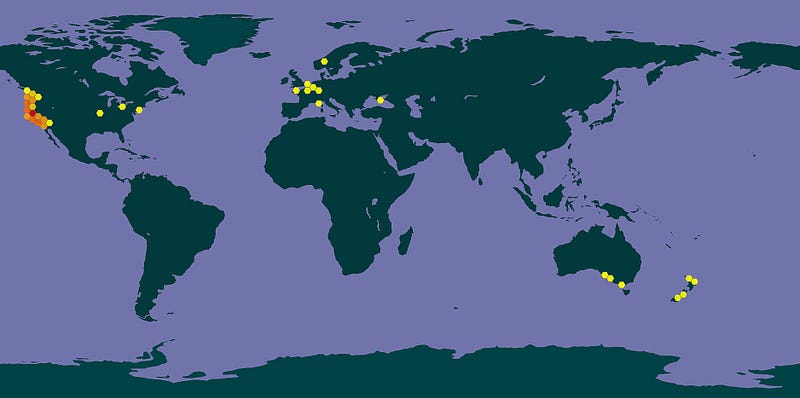
California Bay Laurel belongs to the Lauraceae family, making it a cousin to the Mediterranean bay laurel (Laurus nobilis) and the avocado (Persea americana). Known by several names — Oregon myrtle, pepperwood, or simply bay — it is the sole species in its genus Umbellularia. Unlike its Mediterranean relative, its essential oils are far more potent, a fact that has shaped how it is used in cooking and medicine. No distinct subspecies are officially recognized, but variations in leaf size and oil intensity occur across its range, from southern California chaparral to Oregon’s coastal forests.
Biology
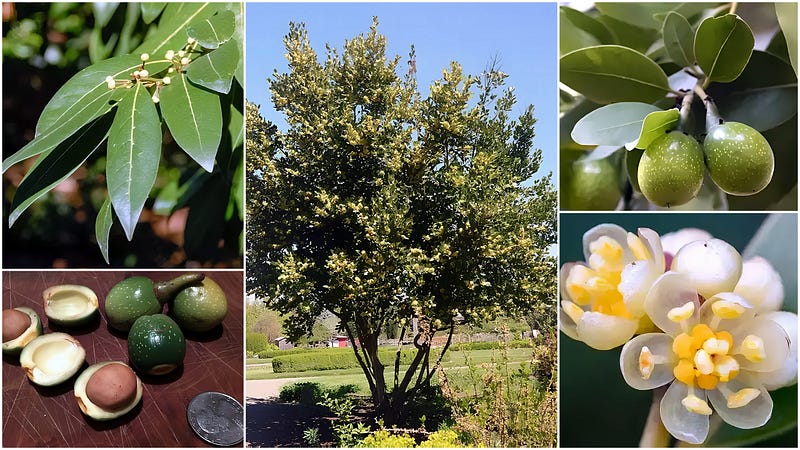
An evergreen tree or large shrub, Umbellularia californica can grow from a modest 10 ft (3 m) in sheltered understory settings to towering specimens over 100 ft (30 m) along fertile river valleys. Its leaves are elliptical, 3–6 in (7.5–15 cm) long, with a leathery sheen and a strong, camphor-like aroma when crushed. Yellow-green flowers appear in winter, often during the rainy months, offering nectar when few other plants bloom. Its fruit, called a bay nut, is about 1 in (2.5 cm) long and ripens to a dark purple, containing a single large seed once roasted and eaten by Indigenous peoples. The tree’s longevity and disease resistance make it a resilient presence in its native habitat.
Ecology
California Bay Laurel thrives in mixed evergreen forests, riparian corridors, and coastal slopes, where it plays a crucial ecological role. Its dense foliage provides shelter for birds, while its fruit feeds mammals like squirrels and deer. The tree is drought-tolerant once established, but prefers well-drained soils and access to winter rains. In fire-prone ecosystems, it can resprout from its base after damage, contributing to post-fire recovery. Conservation concerns center less on its survival — it is not endangered — and more on sustainable harvesting practices, particularly of its aromatic leaves. Its ability to coexist in both pristine wilderness and urban landscapes makes it a flexible ally in climate-adaptive planting.
Uses
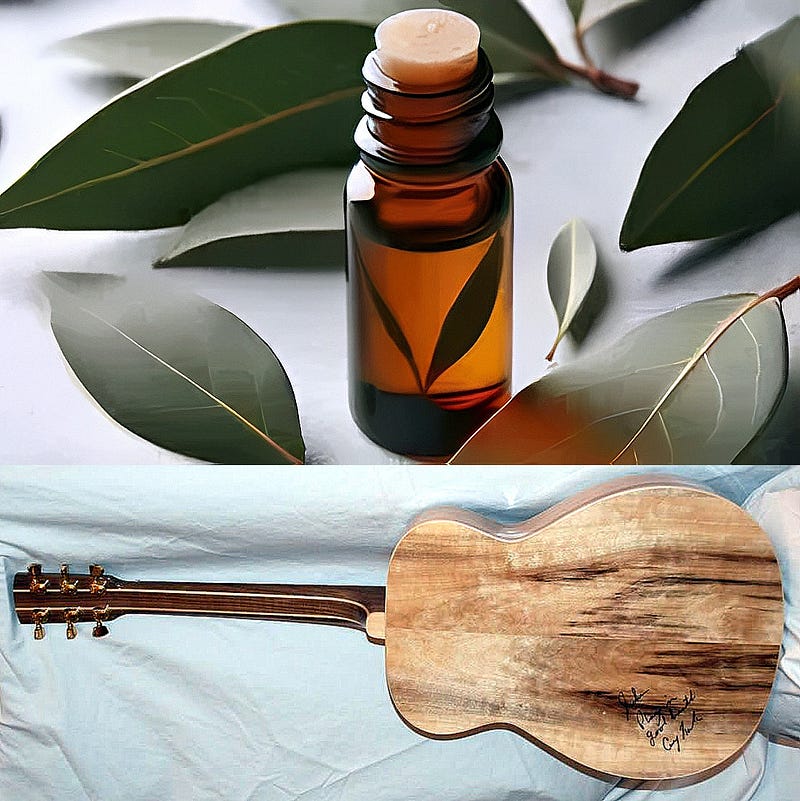
Beyond its culinary fame, California Bay Laurel is prized for its dense, fine-grained wood, often sold under the name “myrtlewood” for high-end furniture, bowls, and musical instruments. Its essential oils have traditional medicinal uses, from clearing sinuses to repelling insects. Sustainable harvesting of leaves and wood supports small-scale artisan economies along the West Coast. As a native, low-water plant, it also plays a role in ecological restoration projects and drought-tolerant landscaping.
Culinary Aspects
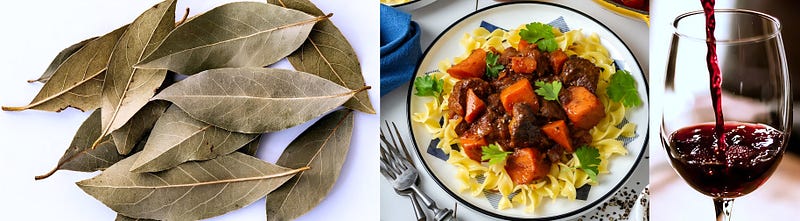
The leaves of California Bay Laurel are a powerful seasoning — so powerful that cooks often use a fraction of the amount called for when substituting them for Mediterranean bay leaves. A single leaf can infuse stews, soups, and braises with a penetrating herbal depth, though overuse can make a dish bitter. Indigenous Californian tribes roasted and ate the oily bay nuts, which develop a rich, coffee-like flavor after processing. The leaves also lend themselves to flavoring pickling brines and smoking fish, providing an aromatic complexity unmatched by common bay laurel.
Wine Pairings
Because of its strong and resinous character, California Bay Laurel pairs best with wines that can hold their own against bold flavors. Dishes seasoned with it harmonize beautifully with robust reds such as Cabernet Sauvignon or Syrah, whose tannins complement the leaf’s intensity. For poultry or vegetable stews where bay is used sparingly, an oaked Chardonnay offers a rounded counterpoint, its buttery notes balancing the laurel’s herbal edge.
Conclusion
California Bay Laurel is more than just a seasoning — it is a cultural touchstone, a native species that bridges wild forest and home kitchen. Its adaptability in ecology, resilience in fire-prone landscapes, and potent culinary presence make it an enduring emblem of the Pacific coast. In a time when both biodiversity and culinary traditions face homogenization, the California Bay Laurel stands as a fragrant reminder that the local, the native, and the distinctive are worth preserving, leaf by leaf.