The Asian Openbill Stork: Evolution’s Gapped-Bill Engineer and Its Quiet Place in Wetland Culture
Introduction In the flooded paddies of Thailand, Cambodia, and Vietnam, a pale bird stalks with the patience of a monk. The Asian openbill…
Introduction
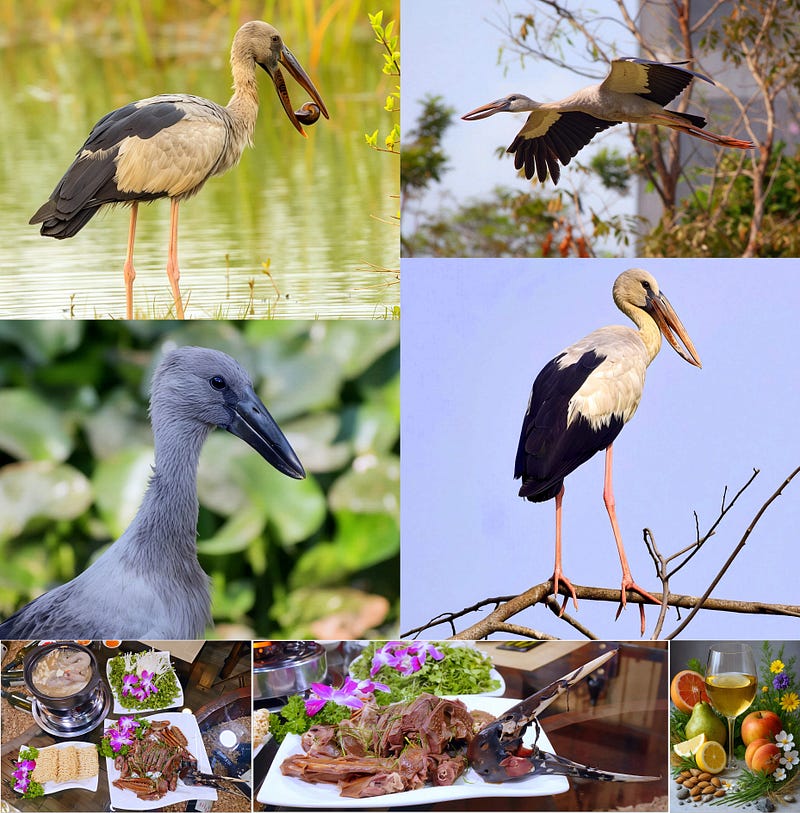
In the flooded paddies of Thailand, Cambodia, and Vietnam, a pale bird stalks with the patience of a monk. The Asian openbill stork (Anastomus oscitans) looks unremarkable until it tilts its head — the gap between its mandibles forming a tool perfectly evolved for cracking freshwater snails. Once dismissed as a drab rice-field scavenger, this bird embodies a deeper truth about adaptation and coexistence. Its survival mirrors the rhythm of monsoon agriculture and the human settlements built around water. In parts of rural Vietnam, it occasionally appears on a table rather than in a tree, part of a long, quiet interface between human appetite and wild abundance.

Taxonomy
Anastomus oscitans belongs to the Kingdom Animalia, Phylum Chordata, Class Aves, Order Ciconiiformes, Family Ciconiidae, Genus Anastomus. The name derives from Greek anastomoo, meaning “to furnish with a mouth,” a nod to the open gap between its upper and lower mandibles. The specific epithet oscitans, Latin for “yawning,” reinforces that same trait. The species is monotypic, with no formally recognized subspecies. Common English names include “Asian openbill,” “open-billed stork,” and “Indian openbill.” In Hindi, it is known as khula chonch saaras; in Vietnamese, cò ăn ốc (“snail-eating stork”); and in Malay, bangau nganga.
The openbill once ranged only across South Asia but has expanded eastward through Indochina into southern China. Unlike the painted or adjutant storks, it was never bred or raised for food. When eaten, it was hunted wild — sometimes called the “beef-steak bird” during the British Raj for its dense, dark meat. No formal edible varieties or domesticated strains exist.

Biology
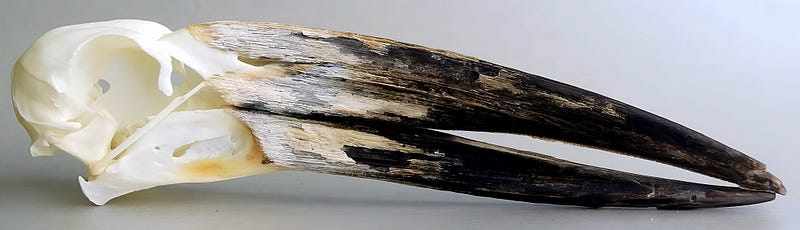
An adult openbill measures about 81 cm (31.9 in) long with a wingspan reaching roughly 149 cm (58.7 in). Weight ranges between 1.3 kg (2.9 lb) and 3.5 kg (7.7 lb). The plumage shifts seasonally: dull grey during non-breeding months, brilliant white with glossy black wings during breeding. The distinctive gapped bill appears only when maturity reshapes the mandibles. This adaptation lets the bird grip and extract snails of the genus Pila or Filopaludina from their shells without crushing them — an evolutionary precision instrument honed by diet.
Breeding follows the monsoon. In northern India and Nepal, it begins around July, while in Sri Lanka and southern Vietnam, it peaks in December. Pairs build stick nests high in trees above flooded ground. Both sexes incubate eggs for roughly 27 days, feeding chicks regurgitated mollusks. Lifespan in the wild exceeds two decades, with high site fidelity to nesting colonies.
Ecology
The species thrives in landscapes of intermittent flooding: rice paddies, irrigation canals, floodplains, and marsh forests. Typical foraging depth is 25–40 cm (10–16 in), where snails and frogs abound. In this niche, the openbill performs two vital ecosystem services: it regulates snail populations that damage rice crops, and it recycles nutrients through droppings that fertilize shallow wetlands. A single adult may consume up to 300 g (10.6 oz) of snails daily.
Population stability remains high, and the International Union for Conservation of Nature lists the bird as “Least Concern.” Yet long-term risks persist — wetland drainage, pesticide contamination, and loss of tall nesting trees. Because openbills integrate seamlessly with rice agriculture, maintaining shallow water margins and tree islands in paddies benefits both the birds and farmers. The species is therefore a model of agro-ecological synergy rather than conflict.
Uses
Direct use is rare. When taken for food, villagers pluck and roast or stew the meat whole. Muscle tissue is lean and iron-rich, yielding an estimated 150 kcal per 100 g (3.5 oz) and around 22 g protein — comparable to wild duck. The liver and gizzard, high in minerals, are sometimes eaten fried. No formal data exist for fat content, but hunters describe it as low, producing a firm texture. Flavor is often compared to goose, but is more metallic from the mollusk-based diet.
The carcass provides no known medicinal or industrial compounds. Feathers, occasionally used in craft or ritual, have minor market value. No portion of the bird enters commercial feed, and its by-products are insignificant. Cultural symbolism, however, is notable. In parts of rural Thailand and Cambodia, openbill colonies are considered signs of fertile paddies. Their nesting correlates with healthy irrigation flow and reduced pest load. Thus, while the “use” is not material, it is ecological capital in pure form.
Culinary Aspects
When eaten, the bird is typically roasted over charcoal or stewed with local aromatics. A field-dressed carcass of 1.5 kg (3.3 lb) yields about 900 g (2 lb) of meat after cleaning. Texture is muscular and dense; the aroma is faintly mineral with a hint of freshwater clay. The taste evokes dark fowl with subtle brine, medium umami intensity, and a finish reminiscent of liver. Optimal internal temperature for safe preparation is 74 °C (165 °F).
Slow roasting at 150 °C (300 °F) for 90 minutes allows collagen to relax without desiccating the lean fibers. When braised in tamarind and lemongrass stock, the acidity balances the faint bitterness of the skin. Chemesthetic qualities — slight metallic tang and earthy aftertaste — benefit from sweetness and spice. Typical accompaniments in Vietnamese countryside kitchens include young water spinach, rice noodles, and fermented chili paste.
From a nutritional angle, wild stork meat likely carries elevated omega-3 fatty acids from snail fat and minimal saturated lipids. However, wetland birds can bioaccumulate contaminants such as mercury and organochlorine pesticides; any consumption must therefore be cautious and localized where wetlands are clean.
Wine Pairings
The dark, lean flesh and tamarind-based preparation demand acidity, minerality, and gentle tannin.
A Chasselas from Switzerland’s Lavaux slopes offers low alcohol and saline delicacy that matches the wetland minerality. Its subtle white-fruit profile complements the sweet-sour glaze.
A Listán Negro from Tenerife provides light smoke and red-berry earthiness that echoes the char from charcoal roasting without overpowering the game.
Finally, a Friulano from northeastern Italy bridges herbal intensity and almond-skin bitterness, pairing elegantly with lemongrass and chili while cleansing the palate after each bite. Each of these wines underlines sensory equilibrium — salt, acid, and aromatic lift against a lean, iron-rich protein.
Conclusion
The Asian openbill stork demonstrates how specialization sustains both species and systems. Its gapped bill keeps rice fields free of destructive snails, its colonies signal ecological balance, and its occasional role in village cuisine ties human subsistence to natural cycles. Yet the lesson is restraint. This is not a species for commerce or export but a living gauge of wetland integrity. Where openbills rise on thermals above green paddies, water management works, and biodiversity endures. Preserving that scene — rather than exploiting it — is the true taste of sustainability.