The Bird That Built a Feast: A Deep Dive into the Domestic Turkey
The domestic turkey is more than a holiday centerpiece. It is a living link between ancient wild landscapes and the modern culinary world…
The domestic turkey is more than a holiday centerpiece. It is a living link between ancient wild landscapes and the modern culinary world, a species whose journey from forest-dwelling game bird to global agricultural mainstay is as rich as its golden‑brown roasted skin. To understand the domestic turkey is to look beyond the carving knife and into the heart of biology, ecology, and the evolving narrative of sustainability.
Taxonomy
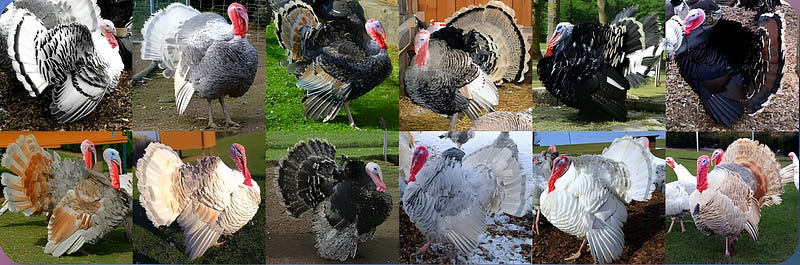
Known to science as Meleagris gallopavo domesticus, the domestic turkey is a subspecies of the wild turkey native to North America. Its ancestors roamed the forests and open woodlands of what is now the United States and Mexico long before European settlers ever set foot on these shores. Over centuries of selective breeding, varieties emerged with distinct traits. The Broad Breasted White, prized for its abundant breast meat, dominates modern markets, while heritage breeds such as the Bourbon Red and Narragansett are celebrated among culinary enthusiasts for their richer flavor and hardier genetics. Despite their differences, all trace their lineage back to the wild turkey, Meleagris gallopavo, a reminder of how human intervention can shape the destiny of a species.
Biology
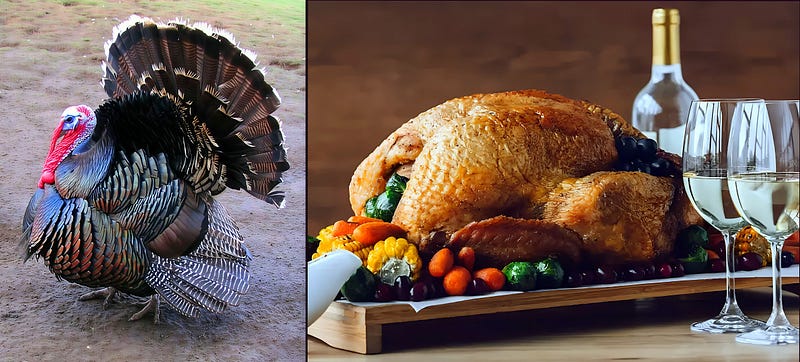
The domestic turkey is a striking bird, its plumage ranging from snow‑white to bronzed iridescence depending on breed. Adults commonly reach weights of 15 to 25 pounds, which is about 6.8 to 11.3 kilograms, though heritage breeds often weigh less and retain the ability to fly short distances. A tom’s fan‑shaped tail, fleshy snood draping from the beak, and the caruncles that flush red during courtship give the turkey a flamboyant appearance that belies its agricultural utility. Turkeys follow a rapid growth cycle; poults hatch after twenty‑eight days of incubation, growing swiftly under controlled conditions that mimic the rhythms of wild habitats. Their keen eyesight, social vocalizations, and adaptability to managed environments make them uniquely suited to domestication.
Ecology
Although domestic turkeys no longer roam wild ecosystems, their ancestry ties them to North American forests and grasslands, where wild turkeys play a vital ecological role by dispersing seeds and controlling insect populations. Sustainable farming practices are now bringing elements of that ecological connection back into focus. Pasture‑raised turkeys, for example, contribute to soil health by foraging on insects and aerating the ground with their scratching. Concerns over habitat loss and genetic bottlenecking have sparked renewed interest in preserving heritage breeds, ensuring that future generations can enjoy birds with resilient genetics and a closer connection to the wild.

Uses
The domestic turkey stands as a pillar of agricultural economies worldwide. In the United States alone, tens of millions of turkeys are raised annually, driving a robust industry that peaks in November and December. Sustainability initiatives are shifting the market toward humane farming methods, reducing environmental impacts through rotational grazing and organic feed. Turkeys provide more than meat; feathers are repurposed for crafts and insulation, while nutrient‑rich manure enriches farmlands. In a world increasingly mindful of food security, the turkey remains both a reliable staple and a symbol of innovation in animal husbandry.
Culinary Aspects
In the kitchen, turkey offers a versatile canvas for culinary artistry. Its white breast meat delivers a mild, lean profile, while the darker leg and thigh meat carries a richer, more succulent depth. A whole bird roasted with herbs and butter fills the air with aromas that evoke both tradition and celebration. Regional cuisines highlight smoked turkey legs at fairs, spiced turkey soups in winter, and tender slices layered into sandwiches. Nutritionally, turkey is a powerhouse, providing high protein with relatively low fat, supporting heart health and lean muscle development. In many cultures, its preparation is a ritual, a testament to how food binds people together.
Wine Pairings
The turkey’s mild, slightly sweet meat pairs harmoniously with wines that balance brightness and depth. A crisp Chardonnay, chilled at about 50 degrees Fahrenheit, which is approximately 10 degrees Celsius, lifts the savory flavors of roasted breast meat, while a Pinot Noir with its cherry and earth notes complements the richness of the darker cuts. For bolder preparations, such as smoked or spiced turkey, a Zinfandel provides a peppery counterpoint that amplifies the meal without overwhelming it. The interplay between turkey and wine transforms a simple meal into a multi‑layered sensory experience.
Conclusion
The domestic turkey is far more than a seasonal indulgence. It is a species shaped by human hands, rooted in wild ancestry yet carried forward by modern science and sustainable practice. Its journey reminds us that the foods we cherish are part of larger stories — of ecosystems, economies, and evolving tastes. Next time you savor a slice, consider not just the flavors but the living history that brought it to your table. In doing so, you honor a bird that has given much and continues to shape the way we think about food, culture, and our shared future.