The Blood Cockle: Anadara antiquata and the Red Heart of Coastal Cuisine
Along tropical coastlines from East Africa to the Indo-Pacific, one bivalve defines both shoreline ecology and human appetite — the blood…
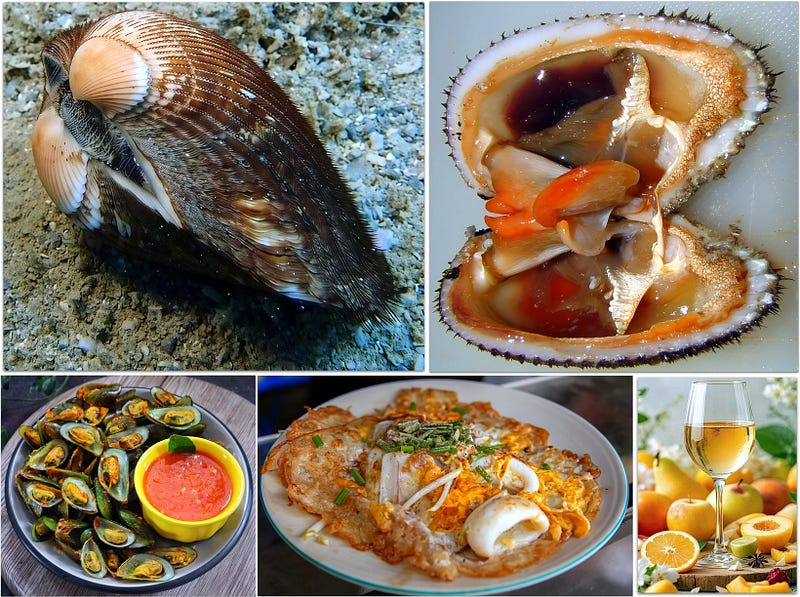
Along tropical coastlines from East Africa to the Indo-Pacific, one bivalve defines both shoreline ecology and human appetite — the blood cockle, Anadara antiquata. Its deep red, hemoglobin-rich flesh and ribbed shell make it instantly recognizable in the shellfish markets of Zanzibar, Kerala, and Southeast Asia. Beyond its striking color, this species supports local economies, enriches intertidal ecosystems, and carries centuries of culinary tradition that bind communities to the sea.
Taxonomy
Anadara antiquata belongs to the family Arcidae, commonly known as the ark clams. Its scientific classification is as follows: Kingdom Animalia, Phylum Mollusca, Class Bivalvia, Order Arcida, Family Arcidae, Genus Anadara, Species A. antiquata.
Regional names tell the story of their broad cultural reach. In English-speaking coastal regions, it is called the “blood cockle.” In Madagascar, the French term “mollusque sang” is used. In Malaysia and Indonesia, it is known as “kerang darah,” while in the Philippines, it is called “mangrove clam.” In Mozambique, fishers call it “bivalve rouge.” Each name highlights the same essential trait — the vivid red hue that sets it apart from all other clams.
Biology
The shell of Anadara antiquata typically reaches about 8 cm (3.1 in) in length, marked by deep radiating ridges that strengthen it against tidal forces. This clam exhibits a rare physiological feature for bivalves: it possesses true hemoglobin, which enables survival in low-oxygen, muddy environments where most mollusks perish.
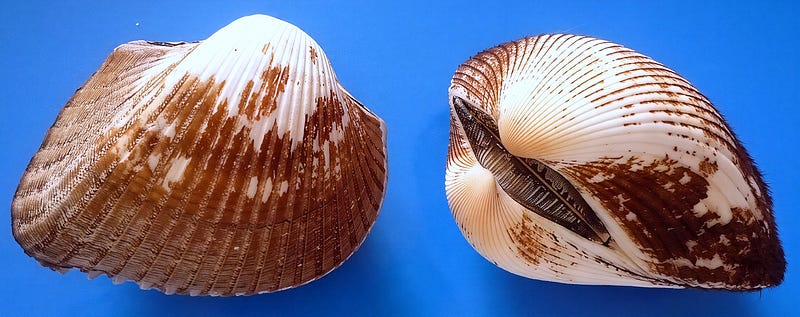
Reproduction occurs through broadcast spawning, where males and females release gametes into the water column for external fertilization. Juveniles settle into mangrove roots and estuarine mudflats, maturing within 12 to 18 months. The shell’s thick periostracum prevents desiccation, allowing the cockle to endure long tidal exposures without drying out — an evolutionary edge in unstable habitats.
Ecology
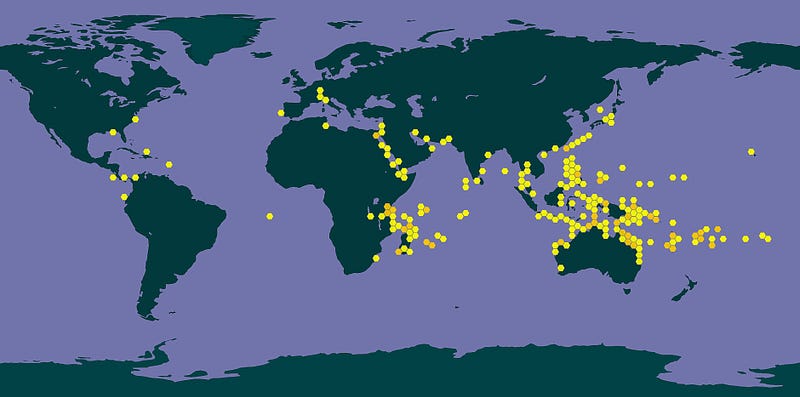
Anadara antiquata thrives in brackish, intertidal mudflats extending from the Red Sea to Polynesia, tolerating salinity ranges between 15 and 30 PSU. As a filter feeder, it plays a vital ecological role, removing particulates and improving water clarity. Its burrowing helps oxygenate the sediment, increasing biodiversity for crustaceans and polychaete worms that shelter among its beds.
Sustainability, however, is a growing concern. Overharvesting in Thailand and Tanzania has reduced natural populations by more than 60% since 1990. In response, community-managed aquaculture has become a model for renewal. Farmers now seed mudflats with juvenile cockles, achieving yields between 1,500 and 2,000 kg/ha (1,340–1,785 lb/acre) over 8 to 12 months — balancing economic need with ecological recovery.
Uses
Every part of A. antiquata’s soft body is edible. Preparation styles are diverse — steamed, grilled, or flash-boiled for salads, curries, and soups. In Malaysia, “kerang rebus” (boiled cockles) are served with chili paste and lime. In Thailand, “hoi krang tod” (fried cockles) is a street delicacy, while in Zanzibar, the meat enriches coconut-braised seafood stews.
Each 100 g (3.5 oz) serving provides about 70–90 kcal and 12–14 g of protein, along with iron concentrations up to 30 mg — ten times higher than most finfish. It contains negligible anti-nutrients, though raw consumption poses bacterial and viral risks, notably from Vibrio and hepatitis A, which makes thorough cooking essential.
The meat’s high glycogen content imparts a subtle sweetness that contrasts with its metallic undertones. Texturally, it is firm but tender when handled gently; prolonged boiling toughens the muscle fibers. Ideal methods include steaming for 90 seconds at 100°C (212°F) or sautéing quickly in 2.5 cm (1 in) of oil at 175°C (347°F).
In traditional Chinese and Malay medicine, the blood cockle is used to “enrich the blood,” reflecting its iron content and symbolic association with vitality. While scientific validation is limited, its nutritional profile supports red blood cell production.
Beyond food, Anadara antiquata yields valuable byproducts. Its shells, composed of roughly 94% calcium carbonate, are crushed for poultry feed and ornamental use. Each hectare of cultured cockles can sequester 0.5–0.8 metric tons (1,100–1,760 lb) of carbon annually through shell deposition — a tangible contribution to blue carbon strategies in coastal ecosystems.
Culinary Aspects
The blood cockle’s flavor is a rare combination of ocean brine and metallic sweetness. The first impression is slightly sweet, followed by a mineral bite that lingers on the palate. The aroma recalls wet sand and seaweed, grounding its marine identity. Texture is dense and chewy, like a marine analog of beef liver, while the mouthfeel is rich and velvety when served fresh.
In Vietnamese street stalls, lightly blanched cockles are dipped in salt, pepper, and kaffir lime juice — a balance of heat, acid, and iron. The interplay of spice and citrus activates chemesthesis, the tingling warmth that heightens perception. Visually, the deep-red meat and glossy surface make it an emblem of vitality, often featured at celebratory feasts for its symbolic link to strength and prosperity.
Wine Pairings
Pairing wine with Anadara antiquata is a study in contrasts: its blood-red flesh and saline bite demand structure without dominance. The ideal companion accentuates the clam’s umami core while neutralizing iron’s metallic edge.
When the cockles are steamed with lemongrass and galangal, the herbal aromatics call for Assyrtiko from Santorini (Greece). Its volcanic minerality, citrus rind sharpness, and saline backbone echo the dish’s maritime freshness while scrubbing the palate clean.
If grilled over coconut husk coals and brushed with chili oil — a common method in Zanzibar and Borneo — a Godello from Valdeorras (Spain) delivers ripe stone fruit and flinty depth. Its weight balances char and spice without muting the iron sweetness.
In Malay curries rich with turmeric, ginger, and coconut milk, the layered spice meets its equal in Clairette du Languedoc (France). The varietal’s waxy texture and melon notes meld with coconut fat, while its faint bitterness reins in residual heat.
For raw or lightly blanched preparations served with lime and sea salt, choose a Txakoli from the Basque Coast (Spain). Its effervescence and high acid slice through brine while amplifying shellfish sweetness — an ideal match for the cockle’s crisp saline pop.
Finally, for coastal stews incorporating tomato and tamarind, the best counterpoint is Pineau d’Aunis from the Loire (France). This light red’s peppery lift and low tannins soften metallic flavors while highlighting the stew’s sour-sweet depth.
Each wine amplifies a different aspect of Anadara antiquata — its iron, its sweetness, its smoke, or its sea — without repetition or compromise.
Conclusion
Anadara antiquata embodies the symbiosis between sea and culture. It sustains livelihoods, enhances marine ecosystems, and tells a story of resilience along coasts where tide and table remain intertwined. Each shell opened is more than a meal — it is a living record of human adaptation, a testament to how tradition and sustainability can thrive in the same tide pool.