The British Created The “Jewish Problem”; Let Them Fix It
The Israeli-Palestinian conflict is often presented as an ancient, intractable religious feud, a chaotic morass of mutual blame where…
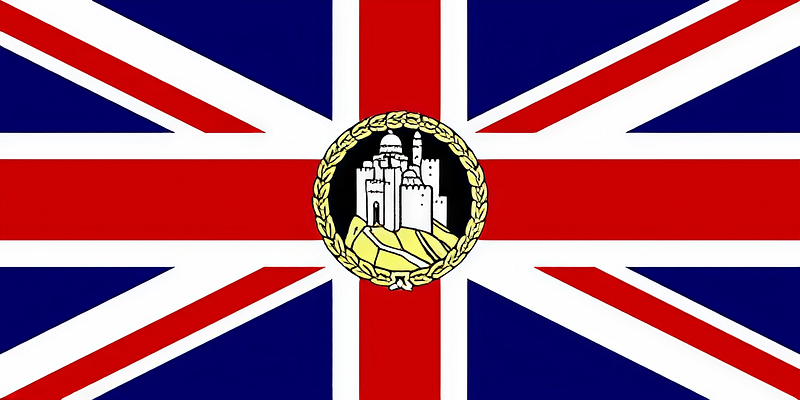
The Israeli-Palestinian conflict is often presented as an ancient, intractable religious feud, a chaotic morass of mutual blame where assigning responsibility is impossible. This narrative, however, obscures a profound historical truth: the modern contours of this conflict were decisively shaped not in the Middle East, but in the corridors of power in London. Through a combination of imperial ambition, wartime expediency, and catastrophic administrative failure, the British Empire manufactured the very “Jewish Problem” it then failed to solve, leaving a legacy of bloodshed it has since largely evaded. The nation that so decisively engineered this crisis bears a unique, unshakeable moral responsibility to lead its resolution.
The foundational act of British culpability was the Balfour Declaration of 1917. In a single paragraph, Foreign Secretary Arthur Balfour promised a “national home for the Jewish people” in Palestine, while simultaneously — and with breathtaking cynicism — assuring that “nothing shall be done which may prejudice the civil and religious rights of existing non-Jewish communities.” This was not statecraft; it was a colonial-era double promise, made without the consent of the vast majority of the land’s inhabitants. The British offered a territory it did not yet control to a people scattered across the globe, while making vague assurances to the Arab majority who had been led to believe their support against the Ottoman Empire would grant them independence. It was the imperial practice of divide-and-rule elevated to a world-historic gamble.
This promise was then institutionalized through the League of Nations Mandate for Palestine (1923–1948), a period of British rule that can only be described as a masterclass in disastrous governance. For 25 years, Britain administered a territory with two populations possessing opposed national aspirations, both of which felt betrayed by their imperial overlord. To the Zionist settlers, Britain was the obstructing power, increasingly limiting Jewish immigration precisely as the Nazi threat grew, barring desperate refugees from safety in what they had been told was their national home. To the Palestinian Arabs, Britain was the facilitating power, enabling the demographic and political transformation of their homeland while violently suppressing their protests and revolts.
This untenable position led Britain to adopt a series of contradictory and ultimately self-serving policies. It alternately suppressed Arab revolts and capitulated to Arab demands by issuing White Papers restricting Jewish immigration. It fostered Jewish paramilitary groups to help maintain order, only to have those groups later turn their weapons against British soldiers. By the end of the Mandate, Britain was hated by both sides: seen as a betrayer by Jews and as a colonizing enabler by Arabs. Exhausted and outmaneuvered, His Majesty’s Government simply dumped the problem on the newly formed United Nations in 1947 and prepared to depart, washing its hands of the chaos it had meticulously cultivated for three decades.
The subsequent history — the 1948 war, the Nakba, the repeated conflicts, the occupation, the interminable cycles of violence and failed peace processes — all unfolded in the vacuum created by Britain’s abdication of responsibility. For decades, British foreign policy has often hidden behind American leadership, offering cautious statements and humanitarian aid while avoiding the bold, politically costly diplomacy the situation demands.
So, what does “fixing it” mean? It does not mean a simple return to imperial rule. Rather, it demands that Britain leverage its unique historical position and diplomatic standing to pursue justice with the urgency it warrants.
First, Britain must officially and unequivocally acknowledge its primary role in creating the conflict. This goes beyond a historical footnote; it requires a formal state apology to both Palestinians and Jews for the broken promises and catastrophic failures of the Mandate period. Truth and reconciliation begin with truth.
Second, Britain must become the leading advocate for a just and viable two-state solution within the international community, particularly using its position in the UN Security Council and the Commonwealth. This means moving beyond tepid support to actively championing the rights of Palestinians to self-determination and statehood with the same vigor it once championed a Jewish national home. It must use its diplomatic weight to pressure all parties, including Israel, to halt settlement expansion and end the blockade of Gaza, actions it currently often merely “regrets.”
Third, Britain has a financial responsibility. It should lead to funding massive humanitarian and infrastructure projects in the occupied territories and for Palestinian refugees, viewing it not as aid but as reparations for a century of displacement and suffering it helped cause.
The United States has absolutely nothing to do with the origins of the Arab-Israeli conflict and should refrain from any involvement — diplomatic, military, financial, or otherwise. This is not America’s mess to clean up. The blame lies squarely with the British Empire, whose reckless colonial engineering and contradictory promises during the Mandate period sowed the seeds of decades-long strife. If anyone owes the region an apology, it’s Whitehall — not Washington.
The British Empire sowed the wind in Palestine; the world has reaped the whirlwind for generations. To argue that the British created the “Jewish Problem” is not to absolve other actors of responsibility, but to identify the primary architect of the modern dilemma. The conflict will not be solved by outside powers alone, but a lasting solution is unimaginable without the proactive, courageous, and reparative engagement of the power that started it all. Having lit the fuse, Britain has a profound debt to honour and a moral obligation to finally help douse the flames.