The Champion’s Paradox: Why Tennis Prodigies Struggle to Survive Their Own Success
The world of professional tennis is a gladiatorial arena where promise is both currency and curse. Each season heralds the arrival of new…
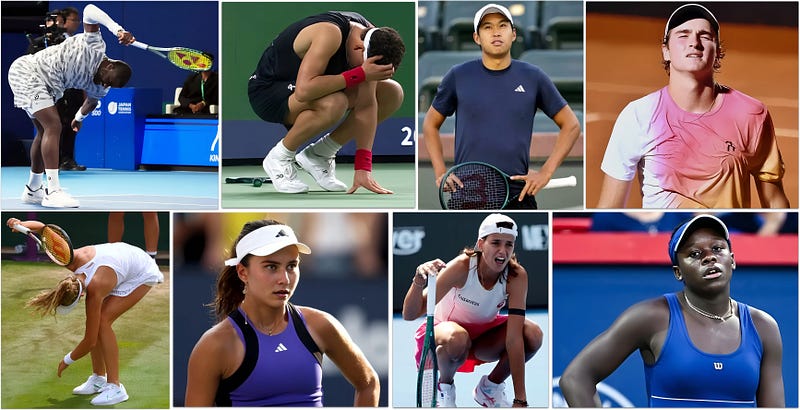
The world of professional tennis is a gladiatorial arena where promise is both currency and curse. Each season heralds the arrival of new stars — players like Frances Tiafoe, Ben Shelton, Learner Tien, João Fonseca, Mirra Andreeva, Iva Jovic, Emiliana Arango, and Victoria Mboko — whose explosive games and charismatic presence ignite the tour. They launch themselves deep into tournaments, defeating established names with a fearlessness that seems destined to redefine the sport. Yet, a year later, a curious and consistent pattern emerges: early exits, withdrawn appearances, and a palpable struggle to recapture that initial magic. This phenomenon, often dismissed as a sophomore slump, is in fact a systemic crisis. It represents the catastrophic collision of raw talent with the sport’s unyielding physical, mental, and existential demands.
The first wall these players hit is physical. The professional tour is a global marathon run at a sprint pace. The constant transcontinental travel, jet lag, and drastic shifts between court surfaces systematically dismantle the meticulous routines that underpin performance. A young body, however powerful, is often ill-equipped for this grind. While a player like Ben Shelton may possess a serve of terrifying velocity, the supporting musculature and joint resilience may not yet be mature enough to withstand the repetitive strain, leading to injuries like the shoulder problem that disrupted his season. The power that wins matches in the juniors becomes a liability without the foundational stamina and recovery capacity to sustain it over a full calendar year.
This physical trial is merely the prelude to a far more complex psychological war. Breakthrough success brings a tsunami of new pressures: sudden wealth, escalating fame, and the burden of expectation. The identity that was once solely “tennis player” fractures into “celebrity,” “influencer,” and “financial provider.” The relentless hunger that fueled the climb is easily dulled by comfort and adulation. Frances Tiafoe’s own candid admission of a “mediocre season” and a loss of motivation following his career-best year is a textbook example of this dynamic. The very rewards of success become its greatest obstacles, creating a conflict between the joy of the game and the pressures of the business.
This internal struggle is exacerbated by the tactical evolution of the tour. A prodigy’s dominant weapon — a thunderous forehand, a blistering serve — is quickly studied and neutralized by opponents. What worked in the juniors is systematically dismantled at the professional level. The player is forced to compete not just with opponents, but with their own emerging reputation. They must develop a “Plan B,” a less instinctive, percentage-based game that feels like a betrayal of their natural style. This explains the paradox of a player like Learner Tien, who can defeat top-ten opponents yet struggle against lower-ranked foes; his explosive game is tailored for the big stage but can be inconsistent in the daily grind, where patience often trumps power.
The common contention that off-court distractions like relationships and fortune are the root cause misses a deeper truth. The issue is not the presence of these elements, but the stage at which they are introduced and the mindset with which they are managed. For a veteran champion, a family and wealth are integrated into a life architecturally designed for performance. For a young player, these novelties can shatter focus, becoming the destination rather than a milestone. The challenge is to build a life where external rewards support the mission, rather than supplant it.
Awareness of these challenges offers little solace, for the greatest battle is biological. Under the suffocating pressure of a match point, the brain’s logical command center is hijacked by its ancient, emotional limbic system. Cortisol and adrenaline flood the body, triggering muscle tension, narrowed vision, and impulsive decision-making. In this state, knowledge is useless. The player is no longer a strategist but a hostage to physiology, unable to execute the very routines they have practiced. This is why mental toughness is not an abstract virtue but a physical skill, built through relentless “pressure drills” that train the nervous system to remain calm under fire. It is the difference between knowing what to do and being able to do it when it matters most.
The path forward requires a radical cultural shift around the athlete. The player must forge a “process identity,” defining themselves by their daily discipline and resilience rather than their ranking. Coaches must cease being outcome-obsessed critics and become architects of mindset, praising focus and tactical execution regardless of the score. Families and friends must provide an unconditional sanctuary, a haven where the individual is valued separately from the athlete. Fans and media must cultivate patience, understanding that a career is a narrative of growth, not a highlight reel of isolated triumphs. The transformation from prodigy to champion is not an upgrade of talent, but a fundamental reconstruction of self. It is the arduous process of building an identity so robust that it can withstand the very forces that success itself unleashes.