
The Crisis in American Air Travel: A Report on Operational Dysfunction
The American air transportation system, once a global benchmark, is now characterized by a profound operational crisis. Passengers…
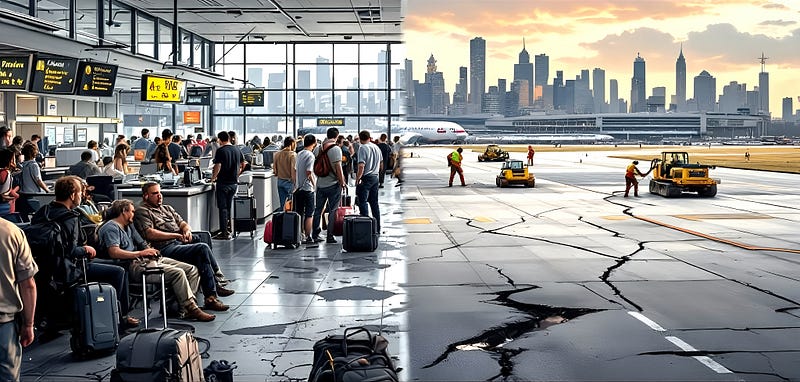
The American air transportation system, once a global benchmark, is now characterized by a profound operational crisis. Passengers routinely face marathon journeys for relatively short distances, such as a trip from Oregon to Wisconsin requiring twelve hours and three flights. This inefficiency is not a random occurrence but the direct result of systemic failures across several key areas.
Aging and Failing Infrastructure
The technological backbone of American aviation is dangerously outdated. The air traffic control system relies on legacy hardware and software, some of which dates back to the 1970s. This includes ancient mainframe systems that airlines use for critical weight and balance calculations, leading to preventable system-wide outages. Furthermore, key air traffic control facilities suffer from communications breakdowns and radar blackouts because they are dependent on obsolete technology like copper wire and even floppy disks. This technological decay creates a fragile network where a single point of failure can cascade into nationwide delays and cancellations, directly impacting the reliability of every flight in the system.
Critical Staffing Shortages
The system is buckling under a severe human capital deficit. The Federal Aviation Administration is critically short of air traffic controllers, with a national deficit of approximately 3,500 controllers. At many of the nation’s busiest airports, staffing levels fall below the minimum required for safe and efficient operations. This forces existing controllers to work excessive overtime, leading to burnout and increased error rates. The problem is deeply rooted and will take years to solve, as training a new controller to proficiency at a major hub can take up to three years. This chronic understaffing is a primary contributor to ground stops, flow control, and the overall reduction in system capacity that makes schedules brittle and delays inevitable.
The Hub-and-Spoke Bottleneck and Market Consolidation
The operational model of most major airlines exacerbates the problem for passengers in non-major markets. The hub-and-spoke system funnels traffic through a limited number of major airports. While efficient for the airlines’ bottom line, this model creates immense bottlenecks and eliminates direct routes between smaller cities. Your experience of needing multiple flights for a cross-country trip is a direct consequence of this model. Furthermore, decades of airline consolidation have reduced competition. With fewer carriers, there is less incentive to offer direct flights between smaller markets, as airlines prioritize filling seats on their high-volume routes between major hubs. This lack of competition and over-reliance on hubs is a fundamental reason why sensible, direct routes often do not exist.
Aircraft Shortages and Supply Chain Breakdowns
Airlines simply do not have enough operational aircraft to meet demand reliably. A massive backlog of orders at Boeing and Airbus, compounded by production delays and widespread maintenance issues, has left carriers scrambling. The average fleet age is increasing, and new aircraft are unavailable. This is exacerbated by specific technical problems, such as the grounding of over 1,100 relatively new aircraft due to engine recalls. With a thinner fleet, any mechanical issue or weather disruption creates a domino effect, as there are no spare planes to back up canceled routes. This supply-side crisis forces airlines to constantly adjust schedules, often cutting less profitable routes — like direct flights between smaller cities — first.
Fragmented Leadership and Inadequate Investment
Ultimately, these problems persist due to a failure of vision and investment at the national level. Modernizing the air traffic control system alone is estimated to cost tens of billions of dollars, a sum that has not been allocated due to political gridlock and budget constraints. There is a lack of coordinated, strategic leadership between the FAA, airlines, airports, and manufacturers. Each entity often operates in a silo, addressing its own immediate crises rather than collaborating on the integrated, long-term solutions necessary to build a resilient and efficient national airspace system.
Conclusion: The Path Forward
The solution to the problem of inefficient and frustrating air travel requires a pragmatic focus on core operational issues. It demands a national commitment to modernizing aging infrastructure, aggressively recruiting and training a new generation of air traffic controllers, and fostering policies that encourage competition and more direct route options. Addressing the aircraft supply chain crisis is also essential to providing airlines with the tools they need to operate reliably. The goal must be to build a system that is not only safe but also logically efficient, reconnecting the country in a way that makes sense for its citizens, not just the balance sheets of its airlines.