The Foul Ball: Stealing Joy in the Age of the Self
The crack of the bat, the soaring white sphere, the wide-eyed hope of a child — these are the timeless rituals of baseball. Yet, in the…
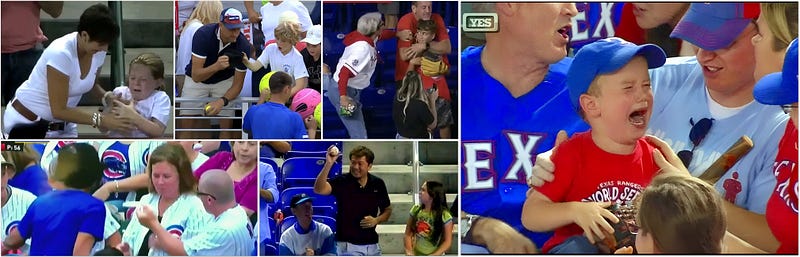
The crack of the bat, the soaring white sphere, the wide-eyed hope of a child — these are the timeless rituals of baseball. Yet, in the aftermath of the COVID-19 pandemic, a peculiar and distressing spectacle has increasingly played out in the stands: adults aggressively seizing baseballs meant for children. This behavior, more than a simple breach of etiquette, serves as a microcosm of a broader societal shift. The prolonged isolation, heightened anxiety, and erosion of communal bonds experienced globally have, for some, fostered a heightened sense of individualism and a diminished regard for shared social contracts. The baseball diamond, once a place of unified celebration, now occasionally becomes a stage for a crasser performance, reflecting a world relearning how to be together.
The psychology behind an adult wrestling a ball from a child is complex, rooted in a confluence of factors. Psychologically, it may stem from a profound sense of entitlement and a stunted emotional maturity, where the immediate gratification of possessing a trophy overrides empathetic reasoning. The perpetrator might be driven by a deep-seated nostalgia or a desire to recapture a lost part of their own youth, albeit through a profoundly misguided and selfish act. Socially and economically, the motivation can be more calculated. In an era where sports memorabilia is a lucrative market, a game-used baseball possesses tangible monetary value. The profit potential, whether through direct sale or as a social media commodity, can corrupt the unwritten rules of the game, turning a token of joy into a mere asset to be acquired by any means necessary. The mindset is one of zero-sum competition, where another’s loss is their gain, a stark departure from the communal spirit that should define a public outing.
Instances of this behavior are not merely anecdotal; they are frequently captured and disseminated, creating a gallery of modern ignominy. One particularly infamous incident occurred at Yankee Stadium, where a man in his thirties was filmed snatching a ball from a young child’s glove, his face a mask of determined avarice as he ignored the boy’s dismay. The video sparked immediate and widespread outrage, but the phenomenon repeated itself at a Marlins game, where an adult fan not only took a ball from a child but then proceeded to argue with surrounding spectators who condemned his actions, displaying a baffling lack of shame. Another case involved a woman who aggressively shoved a child aside to secure a foul ball, an act so egregious that stadium security eventually intervened, returning the prize to its intended recipient. These are not isolated lapses in judgment but patterned behaviors that reveal a troubling prioritization of self.
The role of media in this dynamic is deeply paradoxical. On one hand, the widespread condemnation on social media and sports news networks serves as a powerful tool for enforcing norms, publicly shaming offenders, and reinforcing the expectation that adults should act as protectors, not predators, of childhood joy. The viral nature of these clips acts as a form of communal policing. However, this very visibility can perversely incentivize the behavior for a certain subset of individuals. The quest for notoriety, however negative, drives some in an attention economy where infamy is often mistaken for significance. The constant media coverage of the value of sports memorabilia also fuels the economic motive, implicitly suggesting that the baseball is worth more as an object than as a moment of magic. Thus, the media cycle both condemns and, inadvertently, contributes to the very act it seeks to decry.
These incidents are a bellwether for broader societal values, signaling a fraying of communal bonds and a rise in narcissistic individualism. When an adult openly disregards the well-being of a child for personal gain, it suggests a corrosion of the fundamental prosocial behaviors that glue a community together. It reflects a culture that occasionally prizes material acquisition and personal victory over kindness, generosity, and shared experience. The impact on community attitudes is tangible; it breeds cynicism and distrust, making public gatherings feel less safe and more adversarial. It forces parents to be vigilant not just against generic hazards, but against the antisocial actions of fellow attendees, fundamentally altering the experience of what should be a joyful community event.
Addressing this behavior requires a multi-faceted approach that reinforces social norms and creates consequences. Stadiums have a role to play by implementing more explicit policies and empowering ushers and security to intervene decisively, potentially revoking the season tickets of repeat offenders. Cultural reinforcement is equally important; broadcasters and teams can consistently celebrate and highlight acts of generosity, where adults give balls to children, modeling the desired behavior. Ultimately, mitigation lies in a collective recommitment to civility and empathy. As a society, we must consciously choose to champion the value of a child’s smile over the transient thrill of acquisition or the hollow glow of viral infamy. The true measure of our community is not found in the souvenirs we keep, but in the joys we willingly give away.