The Ghost in the Machine: When Algorithms Paint, Compose, and Write
What does AI “creativity” reveal about art, humanity, and the soul of expression?
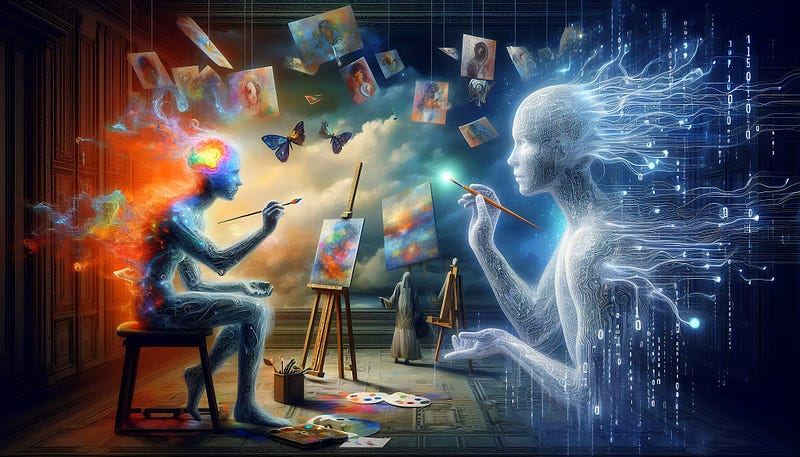
What does AI “creativity” reveal about art, humanity, and the soul of expression?
The Canvas of Code
AI-generated art is no longer science fiction. With tools like DALL-E crafting surreal landscapes and algorithms “writing” symphonies, we’re forced to confront profound questions: What is creativity? Who gets to claim it? And when the lines blur between human and machine, what becomes of art’s sacred connection to lived experience?
Who Holds the Brush?
At the heart of the debate lies authorship. If an AI generates a stunning painting based on a user’s prompt, who is the true creator? The programmer who built the model? The user who guided it? Or the machine itself? Legally, the answer is murky. The U.S. Copyright Office refuses to recognize AI as an author, leaving works in a legal gray zone. Across the Atlantic, the UK Supreme Court ruled that AI cannot be an “inventor.” Without clear ownership, artists and corporations alike navigate uncharted territory where originality feels algorithmically borrowed.
The Echo of Humanity
Critics argue AI art suffers from an authenticity crisis. Human art resonates because it’s forged through struggle, joy, trauma, and epiphany — think of Taylor Swift’s lyrics echoing heartbreak, or Picasso’s Guernica screaming against war. AI, devoid of consciousness, replicates patterns but cannot feel. It produces technically impressive Drake songs that go viral yet leave listeners cold, revealing what many call a “soul deficit.” Can art without a beating heart — or a mind that contemplates mortality — ever move us deeply?
The Ethical Palette
Beyond philosophy, AI art forces urgent ethical reckonings. Bias permeates outputs: Ask for “a nurse,” and AI often depicts women; request “a CEO,” and men appear. These stereotypes reflect the data the models gorge on, amplifying society’s flaws. Worse, that data is often scraped from artists without consent or compensation. As lawsuits mount, creators rightly ask: Why should machines profit from a lifetime of human-honed craft?
Then there’s displacement. If AI mimics a graphic designer’s style in seconds, what happens to the designer? And silently underpinning it all: the environmental cost. Training massive AI models consumes enough energy to power small towns, raising questions about the carbon footprint of digital creativity.
Redefining Art in the Algorithmic Age
Some dismiss AI art as “slop” — homogenized, mass-produced mimicry. Yet history whispers caution. When photography emerged, critics like Baudelaire called it soulless “industry.” Today, it’s a celebrated art form. Could AI, too, evolve from novelty to nuanced medium? Optimists see democratization: Grandmothers composing operas, activists generating protest art. But others fear a world where art loses its rebellious edge, smoothed into predictable algorithms.
The Path Forward: Collaboration, Not Replacement
The future need not be a zero-sum game. Imagine AI as a collaborator — handling technical execution while humans focus on meaning. Artist Helena Nikonole uses AI to explore hybrid organic-digital forms; musicians feed algorithms jazz riffs to spark new improvisations. This symbiosis demands guardrails: transparent sourcing of training data, royalties for artists whose work fuels the machines, and “green computing” standards to curb emissions.
Above all, we must teach creativity differently. If AI excels at replication, human artists can lean into conceptual depth, emotional truth, and cultural context — the irreplaceable terrain of the human experience.
The Ultimate Question
Perhaps AI’s greatest gift is holding up a mirror. In questioning whether machines can create, we’re forced to define what makes our creativity unique. Is it the spark of consciousness? The weight of mortality? The audacity to break rules no algorithm understands? As we navigate this new frontier, one truth remains: Art isn’t just about what’s made. It’s about why — and who it moves. And that, for now, is still beautifully human.