The Giant Beneath the Tides: The Hidden World of the Geoduck (Panopea generosa)
Introduction Buried deep within the mudflats of the Pacific Northwest lies one of the ocean’s strangest and most prized treasures — the…
Introduction
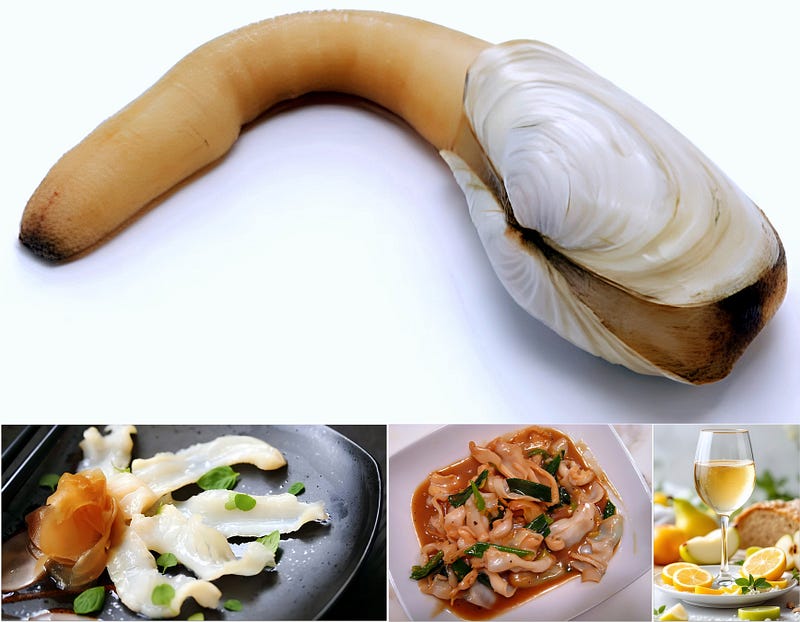
Buried deep within the mudflats of the Pacific Northwest lies one of the ocean’s strangest and most prized treasures — the geoduck, pronounced “gooey-duck.” With a lifespan that can exceed 140 years and a siphon that can stretch over 3 ft (about 91 cm) long, this clam defies expectations of what shellfish can be. Revered in Asia as a symbol of vitality and wealth, yet harvested under strict sustainability programs in North America, the geoduck represents both a biological marvel and a case study in how high-value seafood drives modern aquaculture.
Taxonomy
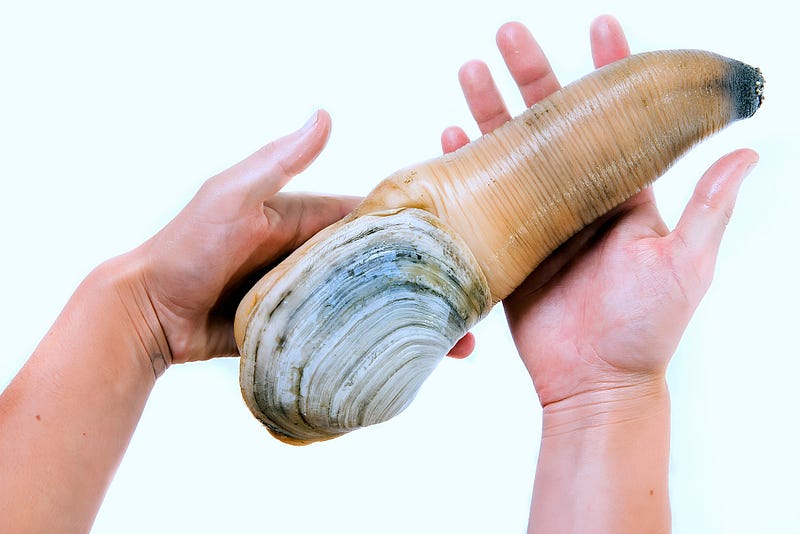
The geoduck belongs to the family Hiatellidae, genus Panopea, species Panopea generosa. No subspecies are officially recognized. Its English common name “geoduck” derives from the Lushootseed term gʷídəq, meaning “dig deep,” reflecting the animal’s burrowing behavior. In Mandarin Chinese, it is called 象拔蚌 (xiàng bá bàng, “elephant trunk clam”), in Japanese ミル貝 (mirugai), and in Korean 미르조개 (mireu jogae). These names, used across major seafood markets in China, Japan, and Korea, emphasize its long neck and impressive size.
Biology
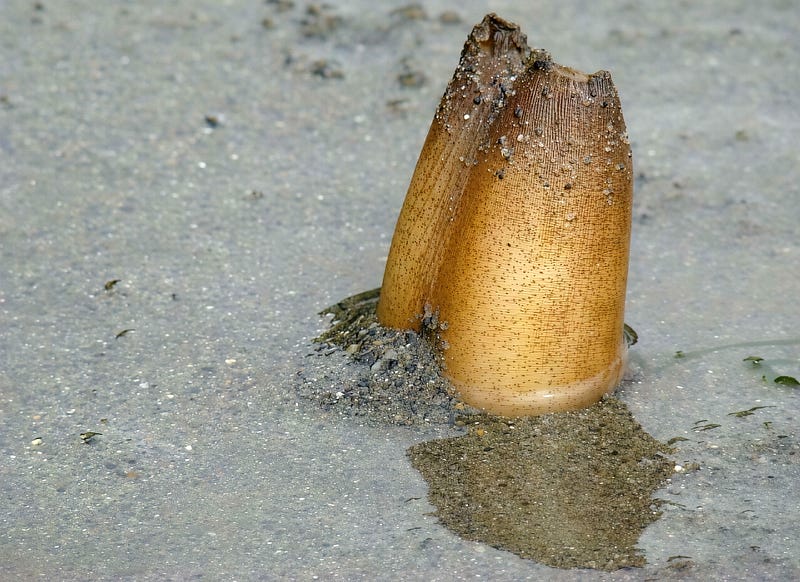
The geoduck is the world’s largest burrowing clam. It can weigh up to 2.2 lb (1 kg) and live over a century, verified by annual growth rings. Its long siphon extends above the substrate, allowing it to filter plankton-rich seawater while remaining buried 3 ft (about 0.9 m) below the surface. Lacking the ability to retract its siphon fully into its shell, the geoduck is vulnerable to predation during juvenile stages but achieves remarkable longevity once buried. Reproduction occurs through broadcast spawning; females release millions of eggs that drift with the tides before settling. The species’ slow growth rate and delayed maturity, often reaching harvest size only after 6 years, make population management essential for sustainability.
Ecology
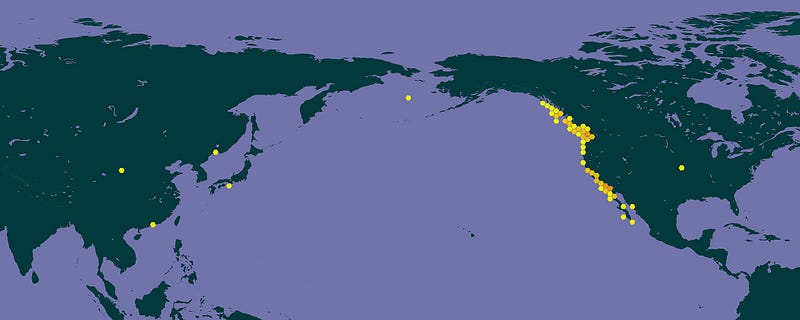
Native to the cold, nutrient-rich coastal waters of the northeastern Pacific, geoducks inhabit mud and sand substrates from Alaska to Baja California. They serve as vital bioturbators, aerating sediment and supporting benthic ecosystems. Their filter-feeding function improves local water quality, removing suspended particles and recycling nitrogen. Sustainable harvest practices — especially in British Columbia and Washington State — are tightly regulated, including quota-based wild fisheries and monitored aquaculture operations. Climate change and ocean acidification, however, threaten shell development, and careful pH monitoring is now standard in hatcheries.
Uses
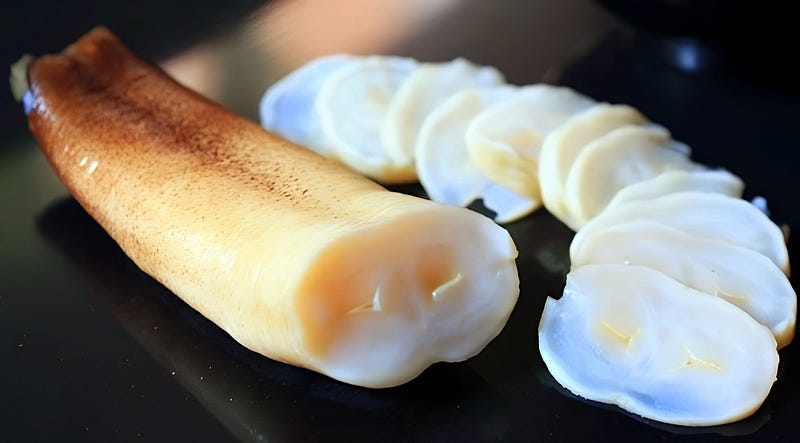
Edible parts include the siphon and mantle. The siphon’s crisp, sweet flesh is eaten raw in sashimi, while the mantle is commonly stir-fried or blanched. Typical dishes include mirugai sushi, Chinese hotpot, and stir-fried geoduck with ginger and scallions. The peak harvest season runs from November to April. Yield averages 1,500 kg per hectare (about 1,340 lb per acre) under optimal aquaculture conditions. Nutritionally, 100 g (3.5 oz) of geoduck provides roughly 85 kcal, 17 g protein, 1 g fat, and notable levels of zinc and vitamin B12. No antinutrients or natural toxins are present, though contamination risk exists in unmonitored waters.
Commercially, geoducks are exported live to Asian markets where they command prices from USD 30 to 80 per pound (about USD 66 to 176 per kg). Harvesting requires divers operating under strict licensing and traceability standards. The Washington Department of Natural Resources and Canada’s Department of Fisheries and Oceans impose tagging, monitoring, and quota restrictions to ensure ecological balance.
Culturally, the geoduck symbolizes fertility and prosperity in East Asian gastronomy. Medicinally, some traditional Chinese formulations claim vitality benefits, though evidence remains anecdotal. The shell, composed of calcium carbonate, is occasionally used in craftwork and jewelry. Processing includes rinsing, blanching for 10 seconds at 100°C (212°F) to loosen the skin, and rapid chilling in 0°C (32°F) ice water before slicing.
Culinary Aspects
Geoduck’s taste is subtle and oceanic with a hint of sweetness. The siphon has a crisp bite similar to razor clam, while the mantle offers a more tender, scallop-like texture. Flavor complexity emerges in its contrast between sweetness and brine, finishing with a faint mineral note. The aroma is clean, reminiscent of fresh sea breeze. When sliced thin for sashimi, its mouthfeel combines crunch with smoothness, creating a delicate chemesthetic sensation of cool salinity.
Cooking methods such as quick blanching, hotpot dipping, or light sautéing preserve its texture. Overcooking leads to rubberiness and loss of umami. It pairs well with sesame oil, soy sauce, mirin, and aromatic greens like garlic chives or leeks. Nutritionally, geoduck offers lean protein and low cholesterol, aligning with heart-healthy seafood diets.
Wine Pairings
Geoduck’s delicate marine sweetness demands wines with precise acidity and minerality. A Muscadet Sèvre et Maine from France’s Loire Valley harmonizes beautifully — its saline minerality mirrors the clam’s briny freshness. For a Japanese preparation, a Junmai Ginjo sake with light pear notes complements sashimi textures without overpowering. When served hotpot-style with ginger and scallions, an Austrian Grüner Veltliner offers a peppery lift that balances umami and heat. For cream-based Western preparations, a Vermentino di Sardegna provides citrus brightness and textural finesse. Finally, in raw or ceviche-style servings, a Galician Albariño accentuates the clam’s sweetness through vibrant acidity and stone-fruit undertones.
Conclusion
The geoduck is more than an oddity of marine biology — it is a symbol of longevity, a pillar of coastal aquaculture, and a bridge between ecosystems and economies. Its future depends on responsible harvest, habitat protection, and the continued refinement of sustainable aquaculture. In its graceful balance between vulnerability and endurance, the geoduck stands as a living metaphor for the ocean’s fragile abundance.