The Grazer of the Coral Reefs: Rabbitfish, the Ocean’s Herbivorous Healer
Introduction
Introduction
In the jeweled shallows of the Indo-Pacific, among coral cities teeming with color and chaos, swims a fish more gardener than gladiator — a creature armed with venom, cloaked in elegance, and vital to reef health: the rabbitfish. Known for its leaf-shaped body, cautious demeanor, and plant-based diet, the rabbitfish is more than just another inhabitant of tropical waters. It is an ecological keystone, a culinary curiosity, and a quiet symbol of sustainable seafood. As climate change and overfishing disturb the balance of marine ecosystems, the story of Siganus — the genus of rabbitfish — becomes more important than ever. To understand this fish is to understand the intricate dance of biology, economy, and gastronomy in the marine world.
Taxonomy
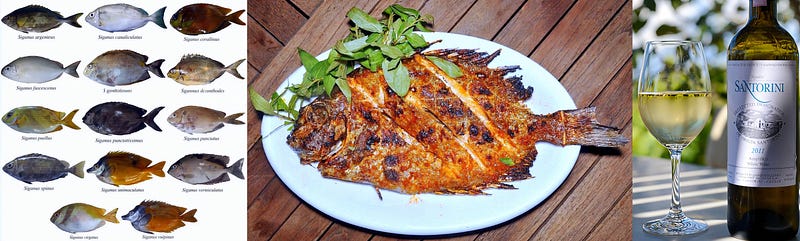
Rabbitfish belong to the genus Siganus, within the family Siganidae, encompassing around 29 recognized species. Commonly referred to as “spinefoots” due to the venomous spines on their dorsal and anal fins, these fish are often overlooked in the shadow of flashier reef species. Edible species like Siganus canaliculatus (white-spotted spinefoot), Siganus rivulatus (marbled spinefoot), and Siganus fuscescens (mottled spinefoot) are particularly valued in Southeast Asian and Mediterranean cuisines. The name “rabbitfish” derives from their small, puckered mouths and wide-eyed, timid expressions — reminiscent of their land-dwelling namesakes. But don’t let the name fool you: unlike rabbits, these fish have venomous defense mechanisms, a trait more scorpion than bunny.
Biology
Rabbitfish typically grow to lengths between 10 and 20 inches, or roughly 25 to 51 centimeters. Most exhibit an oval body shape, laterally compressed for darting agility among rocks and coral. Their coloration varies by species, often blending hues of olive green, silver, and yellow, sometimes marked with brilliant spots or stripes that fade in death but shimmer in life. Juveniles often form large schools for protection, while adults pair off monogamously — a rare trait among reef fish. They are primarily herbivores, grazing on macroalgae and seagrasses, using their sharp, comb-like teeth to nip greenery with astonishing precision. This adaptation plays a critical role in coral reef health by curbing algal overgrowth.
Unlike many other reef fish, rabbitfish possess venomous spines in both the dorsal and anal fins. Envenomation is painful but rarely dangerous to humans. Their internal physiology allows them to digest a variety of algae types, even those that are chemically defended or low in nutrients, giving them an ecological edge.
Ecology
Rabbitfish thrive in warm, shallow waters, with habitats ranging from coral reefs and seagrass beds to mangrove forests. Their range extends from the eastern Mediterranean to the coasts of Australia, with the Red Sea acting as a biodiversity hotspot for several species. In the Mediterranean, the marbled spinefoot has become an invasive species following migration through the Suez Canal — a phenomenon known as “Lessepsian migration.”

Despite their benefits, overfishing, habitat destruction, and coral bleaching threaten many rabbitfish populations. However, unlike carnivorous reef fish, rabbitfish are relatively resilient. Their herbivorous diet, fast growth, and early maturity make them suitable candidates for sustainable aquaculture, especially in Southeast Asia. Their role in reef ecosystems cannot be overstated: they serve as algae-control agents, essential to coral resilience in the face of warming oceans and eutrophication.
Uses
Economically, rabbitfish are an underappreciated gem. Their herbivorous diet lowers production costs in aquaculture — no need for expensive fishmeal or protein-rich feed. Farming them reduces pressure on overexploited carnivorous species and contributes to food security in coastal communities.
Artisanal fisheries, particularly in the Philippines, Indonesia, and the Red Sea region, rely on rabbitfish as a staple catch. They’re often sold fresh, dried, or salted in local markets. In some areas, seasonal spawning aggregations are targeted for large-scale harvests, although this practice demands tighter regulation to prevent population collapse.
Culinary Aspects
Rabbitfish is a beloved staple in many coastal cuisines, prized for its firm white flesh, clean flavor, and mild sweetness. The taste has been compared to sea bream, but with a leaner, subtler character that absorbs marinades beautifully. In the Philippines, samaral (local term for rabbitfish) is grilled whole over coals, its skin crackling, its belly stuffed with lemongrass, garlic, and calamansi. In Egyptian cuisine, Siganus rivulatus is fried or stewed with tomatoes, onions, and cumin, forming a rustic dish that celebrates the bounty of the Red Sea.
Rabbitfish is also highly nutritious: a 3.5 oz portion — roughly 100 g — contains about 22 g of protein, less than 1 g of saturated fat, and ample omega-3 fatty acids, iron, and calcium. With its low trophic level, rabbitfish represents one of the most environmentally friendly seafood options available.
Wine Pairings
The rabbitfish’s delicate, sea-sweet flesh begs for wines that are equally subtle and mineral-driven. A bone-dry Assyrtiko from Santorini pairs beautifully with grilled rabbitfish, cutting through oil while echoing saline coastal notes. If preparing it steamed with lemongrass or ginger, a chilled bottle of Grüner Veltliner offers zesty citrus and herbal overtones without overpowering the dish. For those favoring richer preparations — rabbitfish cooked in coconut milk or roasted with garlic — a glass of unoaked Chardonnay or Vermentino delivers crisp acidity with enough body to match.
Conclusion
The rabbitfish is a paradox: venomous yet gentle, homely in appearance yet ecologically dazzling, underfished yet overflowing with potential. In a time of collapsing fisheries and threatened coral reefs, Siganus offers a blueprint for sustainability. It’s a fish that doesn’t just survive in stressed ecosystems — it heals them. As chefs, conservationists, and curious diners look to the future of seafood, the humble rabbitfish deserves a rightful place at the center of the conversation, and perhaps even, the dinner table.