The Hidden Bloom Beneath the Tide: The Biology and Culinary Promise of Paracondylactis sinensis
Introduction Beneath the tidal flats of East Asia, where silt meets salt, an understated creature thrives in silence — the sea anemone…
Introduction
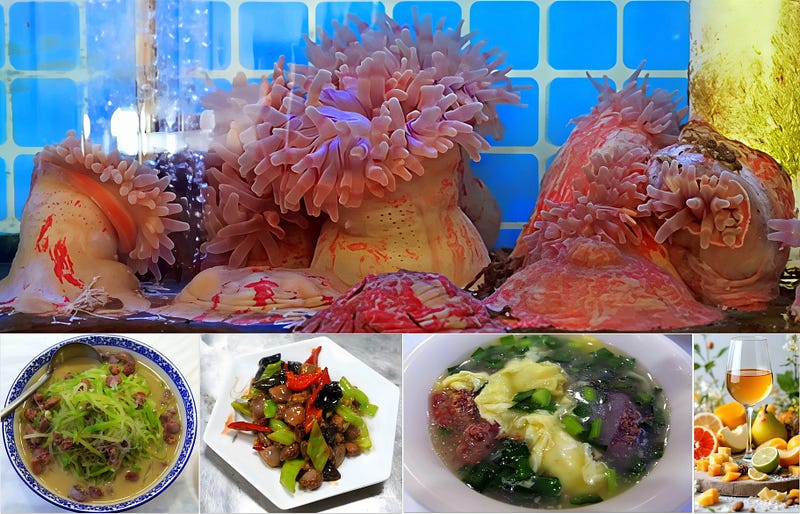
Beneath the tidal flats of East Asia, where silt meets salt, an understated creature thrives in silence — the sea anemone Paracondylactis sinensis. Known to marine biologists for its remarkable morphology and to coastal foragers as an edible delicacy, this species straddles the border between science and sustenance. It is neither coral nor jellyfish, but a solitary, flower-like predator whose body conceals intricate ecological functions and culinary potential that few outside China have explored. In an age where marine sustainability drives both research and cuisine, P. sinensis represents a frontier of responsible harvesting, gastronomic creativity, and biodiversity stewardship.
Taxonomy
Paracondylactis sinensis Carlgren, 1934, belongs to the Kingdom Animalia, Phylum Cnidaria, Class Anthozoa, Order Actiniaria, and Family Actiniidae. It is closely allied with genera such as Actinia and Calliactis but distinguished by its burrowing habit and dense ring of tentacles. Synonyms occasionally encountered in literature include Calliactis sinensis and Cereus sinensis. In English, it is referred to as the “Pearly Sea Anemone.” In Mandarin Chinese, it is generally called 海葵 (hǎi kuí), meaning “sea anemone,” though regional fishers along the Chinese coast sometimes distinguish edible types with informal market terms that rarely appear in print. In Singapore and Malaysia, coastal guides also describe it under the same English common name, linking it to shallow, silty habitats near seagrass beds. No formally recognized subspecies or varietal forms have yet been recorded, though minor color variations are observed depending on sediment type and depth.
Biology
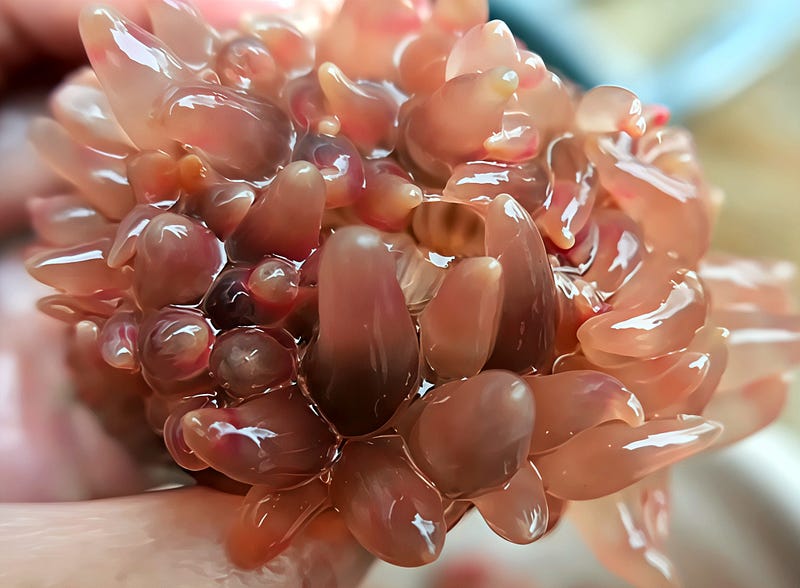
Paracondylactis sinensis is a large, sand-dwelling anemone with a column reaching up to 12–14 cm (4.7–5.5 in) in length and a disc diameter between 5–8 cm (2.0–3.1 in). The column is smooth and cylindrical, usually buried up to two-thirds of its length in silt or fine sand, leaving only the tentacular crown visible. Around 96 tentacles radiate from the oral disc, arranged in concentric rings that retract rapidly when disturbed. The color palette ranges from pale beige to rose pink, with a translucent sheen that lends the surface a pearlescent quality. Like other actiniarians, it feeds through nematocysts — microscopic stinging cells that immobilize small crustaceans and organic particulates.
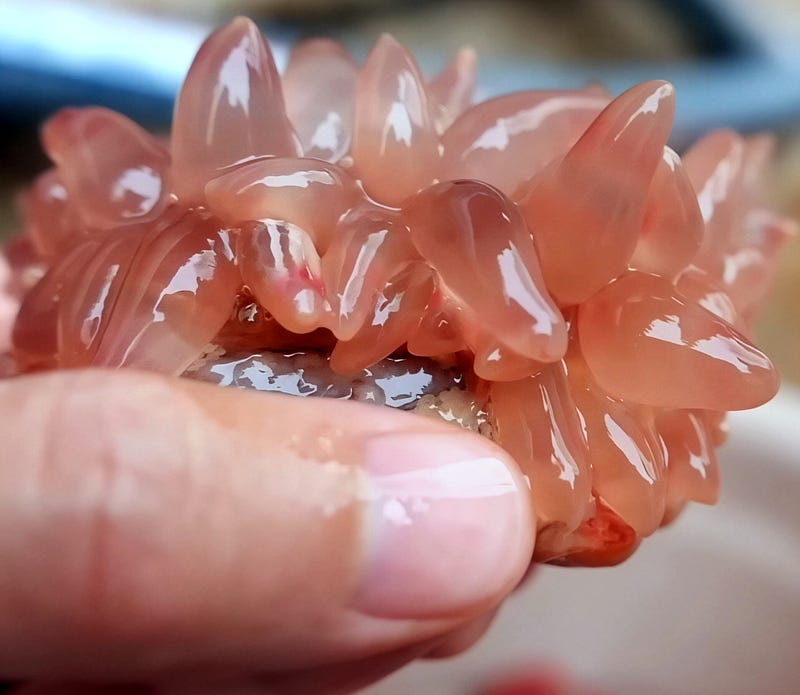
The anemone’s internal structure consists of a gastrovascular cavity lined with septa that partition its interior into chambers for both digestion and reproduction. It reproduces sexually by broadcast spawning, releasing gametes into the water column, but can also reproduce asexually by longitudinal fission. Physiologically, its adaptations to turbid, low-visibility waters include enhanced mucus secretion to clear sediment and the ability to contract deeply into the substrate, minimizing exposure to predators and desiccation during low tide.
Ecology
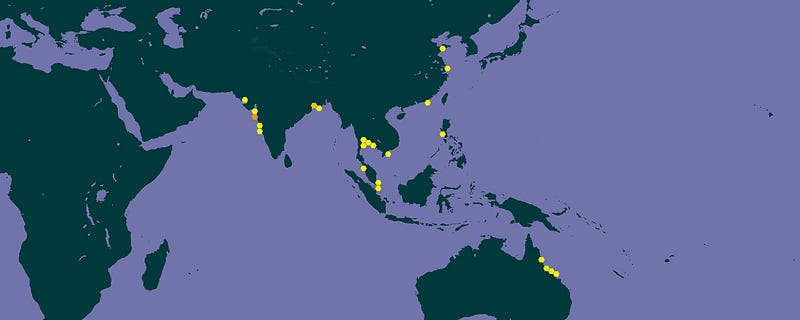
This species inhabits coastal zones throughout the Indo-West Pacific, including the East China Sea, South China Sea, Bay of Bengal, and coastal waters of Singapore and Pakistan. It prefers silty or muddy sands adjacent to seagrass meadows, where the substrate provides both anchorage and abundant detrital food. The ecological role of P. sinensis is dual: it preys on zooplankton and benthic larvae while simultaneously serving as substrate for epibiotic algae and small crustaceans. In nutrient cycling, it contributes to sediment aeration by its slow burrowing and withdrawal movements, effectively stirring the upper few centimeters of sediment (roughly 2–3 cm or 0.8–1.2 in).
Population studies indicate that overharvesting in parts of China has reduced its abundance in local intertidal zones, prompting calls for aquaculture development and genetic conservation programs. While not listed by the IUCN, its ecological vulnerability stems from habitat disturbance caused by dredging, coastal development, and sediment pollution. Sustainable practices could include rotational harvesting and seed-restocking using lab-propagated juveniles, an approach already being trialed for other actiniarians in China’s coastal aquaculture research institutes.
Uses
The edible body column and tentacles of Paracondylactis sinensis are harvested in parts of coastal China and Southeast Asia. After removal from the substrate, the anemone is rinsed repeatedly to eliminate silt, then blanched to neutralize nematocyst toxins. When boiled for 3–5 minutes in seawater, the texture firms without turning rubbery, yielding a product that can be sliced or stir-fried. Traditional uses include soups, hotpot additions, and seafood medleys served with mild soy or ginger sauces.
Nutritional data remain limited, but based on related edible anemones, the flesh is estimated to provide 75–90 kilocalories per 100 g (≈3.5 oz), with about 14–16 g (≈0.5–0.6 oz) of protein and low fat content. Key nutrients likely include glycine and taurine — amino acids responsible for umami and sweetness — alongside trace minerals like iodine, zinc, and selenium. The absence of chitin (present in crustaceans) makes its texture smoother and more gelatinous when cooked.
No confirmed anti-nutrients have been reported, and toxicity appears minimal when heat-treated. However, as with other cnidarians, enzymatic peptides and minor neurotoxins could irritate if eaten raw. The species’ processing needs are moderate: cleansing, brief boiling, and either immediate consumption or freezing at −18 °C (0°F). Commercial potential lies in frozen or vacuum-packed seafood assortments marketed as exotic, sustainable proteins.
No medicinal uses are formally recorded, though peptides from related actiniids are being studied for anti-inflammatory and antimicrobial properties. Industrial-scale extraction or aquaculture has yet to develop. For energy use, dried residues might serve in chitin-free protein hydrolysate production with calorific value approximating 3.8 kcal/g (≈15.9 kJ/g). Market prices fluctuate regionally but remain high due to rarity, occasionally exceeding 160 CNY per kilogram (≈22 USD per 2.2 lb).
Culinary Aspects
When properly prepared, P. sinensis offers a sensory profile that blends delicacy with depth. The initial taste is saline-sweet, similar to tender scallop yet marked by a distinct mineral undertone from its silty habitat. The flavor develops toward a subtle umami reminiscent of clam broth. Its aroma is clean and faintly briny, with whispers of seagrass and marine iron. Mouthfeel is springy but yielding, the texture between calamari and abalone, retaining a pleasant chew without toughness.
Chemesthetically, it presents a slight tingling due to residual peptides, giving a lively sensation on the tongue. Appearance-wise, when cooked, it contracts into pale ivory spirals edged with translucent frills. The finish lingers with a soft metallic sweetness that encourages light acid or herbal counterpoints.
Ideal preparations include blanching for 2 minutes at 95 °C (203°F), slicing thin, and finishing with sesame oil and Shaoxing wine reduction. Steaming for 10 minutes at 100 °C (212°F) maintains structure while amplifying natural sweetness. Deep-frying is discouraged due to the collapse of gelatinous tissue. Nutritionally, the low-fat content and high protein yield make it suitable for modern health-conscious seafood cuisine. Culturally, its rarity has earned it prestige in coastal Chinese banquets as a “sea vegetable” symbolizing prosperity and renewal, reflecting how ancient foraging knowledge can inform today’s sustainable gastronomy.
Wine Pairings
Pairing Paracondylactis sinensis demands wines that emphasize salinity, minerality, and controlled acidity rather than overt fruit. A distinct trio aligns with its flavor and texture.
A Picpoul de Pinet from Languedoc, France, offers bracing acidity (6.8 g/L) and subtle lime zest tones that cut through the briny sweetness of lightly blanched anemone dressed with garlic oil. Its saline minerality mirrors the marine terroir, achieving precise palate alignment.
A Godello from Valdeorras, Spain, particularly those aged on lees for six months, adds creamy mid-palate weight with pear and almond nuances. This supports richer preparations such as steamed anemone with ginger-soy emulsion, harmonizing texture without overwhelming aroma.
Finally, a Riesling Kabinett Trocken from the Mosel valley, Germany, provides tension between residual sugar and sharp acidity. The delicate floral and slate notes interact elegantly with the subtle sweetness and metallic finish of the anemone, enhancing its complexity through aromatic contrast.
Each selection transcends generic pairings by engaging texture, minerality, and preparation context — the trifecta of intelligent marine gastronomy.
Conclusion
Paracondylactis sinensis stands as a case study in how overlooked marine organisms can bridge scientific inquiry and culinary evolution. Its hidden ecology beneath silty seabeds contributes to nutrient turnover, while its firm yet delicate flesh offers chefs a new palette of texture and taste. For sustainability advocates and seafood entrepreneurs alike, the path forward lies in research-backed aquaculture, transparent traceability, and cultural revival. To rediscover such a species is to remember that food innovation often begins not in laboratories or markets, but quietly, in the unseen rhythm of the tides.