The Hidden Guardian of Japan’s Shores: The Japanese Bullhead Shark
Introduction
Introduction
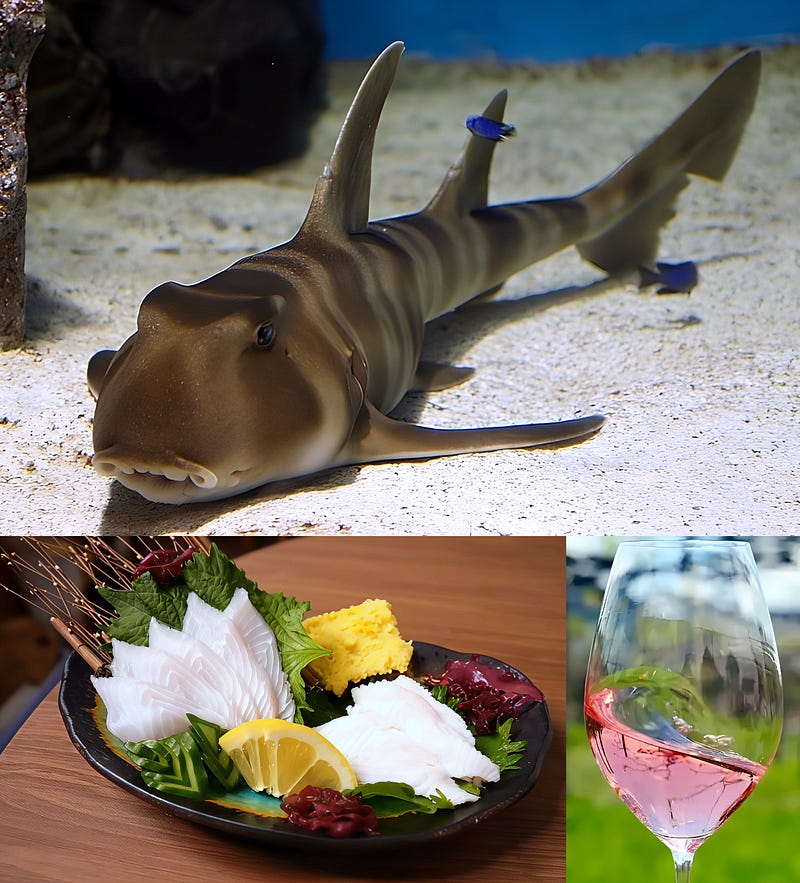
The seas around Japan are alive with mystery, and among their lesser-known inhabitants swims a creature as striking as it is overlooked: the Japanese bullhead shark (Heterodontus japonicus). With its blunt head, harness-like body markings, and curious nocturnal habits, this shark inhabits a world where biology, culture, and sustainability converge. While it may lack the cinematic menace of its larger cousins, the Japanese bullhead has long fascinated biologists, fishers, and gourmands alike. Its story is one of evolutionary resilience, ecological importance, and quiet culinary tradition.
Taxonomy
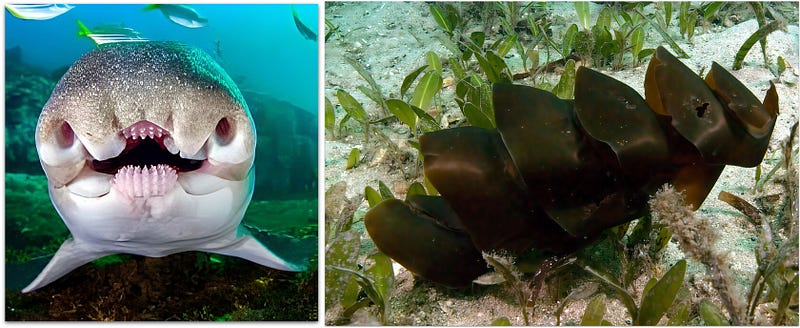
Belonging to the family Heterodontidae, the Japanese bullhead shark is closely related to the horn sharks of the Pacific. Its scientific name, Heterodontus japonicus, reflects its defining feature: “heterodont” means “different teeth,” a nod to the combination of sharp front teeth for gripping and broad molars for crushing. This adaptation sets it apart from many other sharks. No subspecies are formally recognized, and it remains endemic to the northwestern Pacific. Common names include Japanese bullhead, Japanese horn shark, and, in local dialects, terms tied to its od,d blunt face and ridged dorsal fins.
Biology
The Japanese bullhead shark is modest in size, rarely exceeding 1.2 meters, or about 4 ft. Its stout body is patterned with dark bands that resemble a harness, giving it camouflage against rocky reefs. It is a slow swimmer, preferring to crawl across the seafloor with its strong pectoral fins rather than dart through open water. Its teeth provide a window into its diet: sharp points at the front seize crustaceans, while the back molars crush shells with ease. It is a nocturnal feeder, emerging at night to hunt crabs, sea urchins, and mollusks. Reproduction follows an oviparous strategy, with females laying spiral egg cases tucked into crevices. These egg capsules, measuring about 10 cm or 4 in, are uniquely designed to anchor against currents.
Ecology
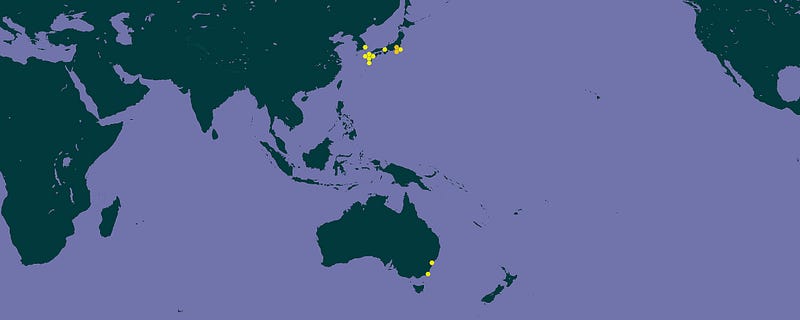
This species is found along the coasts of Japan, Korea, and parts of China, favoring rocky reefs, kelp forests, and sandy bottoms at depths ranging from 6 m (20 ft) to 50 m (164 ft). As a predator of benthic invertebrates, it plays a key role in regulating populations of sea urchins and crustaceans, balancing the marine ecosystem. While not globally endangered, the species faces localized pressure from bycatch and habitat disruption. Its restricted range means that coastal development, pollution, and overfishing of reef ecosystems can indirectly threaten its survival. Responsible management of coastal fisheries and protection of spawning habitats remain vital for long-term sustainability.
Uses
The Japanese bullhead shark has modest economic value. It is occasionally caught by bottom-set nets or as bycatch in coastal fisheries. Though not a commercial target, it does enter local markets. Its flesh is consumed fresh or salted, while the skin and cartilage have been used in traditional products. Sustainability concerns are modest compared to larger, migratory shark species, but the principle remains: limited harvest and respect for local ecosystems help prevent overexploitation.
Culinary Aspects
Though far from a global delicacy, the Japanese bullhead shark finds a quiet place in regional cuisine. Its flesh, when properly prepared, is firm yet tender, with a mild, slightly sweet flavor reminiscent of cod. The meat benefits from gentle cooking methods such as steaming or simmering, often paired with soy-based broths that enhance its subtle character.
In some fishing communities, it has been preserved through drying or salting, making it a source of protein during leaner months. Unlike certain sharks with high urea content, its flesh does not carry the strong ammonia notes that deter some diners, making it more approachable. Nutritionally, it is a source of lean protein and minerals, though it is rarely consumed in large quantities.
Wine Pairings
The flavor of Japanese bullhead shark pairs well with wines that balance delicacy with minerality. A crisp Muscadet from France or a Japanese Koshu offers a clean, citrus-driven profile that complements its mild sweetness. For richer preparations, such as broths or soy-braised dishes, a light Pinot Noir or Beaujolais provides enough fruitiness to offset the savory depth without overwhelming the dish. The guiding principle is harmony: subtle wines that allow the marine freshness of the shark to linger.
Conclusion
The Japanese bullhead shark is no giant of the seas, but it is a reminder that even the humblest marine creatures carry stories worth telling. From its dual-toothed jaw to its spiral egg cases, from its role in reef balance to its place at the table, it embodies the intricate ties between ecology, culture, and cuisine. To honor this shark is to honor the quieter rhythms of the ocean, where beauty hides not in size or spectacle, but in resilience and subtlety. As we consider the future of sustainable seas, the Japanese bullhead deserves recognition — not as a forgotten bycatch, but as a guardian of Japan’s coastal ecosystems.