The Hidden Theater of Tennis: How Courts Shape Minds, Myths, and Magic
Tennis isn’t just a game — it’s a psychological drama played out on a stage where every line, surface, and shadow influences the mind…
Tennis isn’t just a game — it’s a psychological drama played out on a stage where every line, surface, and shadow influences the mind. Unlike team sports with their roaring crowds and chaotic energy, tennis is an intimate duel, a gladiatorial dance where the court itself becomes a silent opponent. The environmental psychology of tennis isn’t just about where the ball bounces — it’s about why players choke under open skies, why red clay feels like a slow-motion dream, and why Wimbledon’s grass is the sport’s most sacred illusion.
The Court as a Psychological Arena
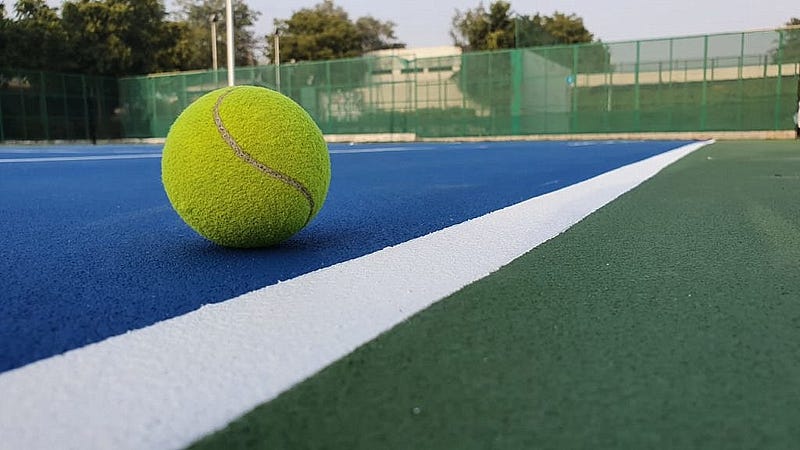
A tennis court is a ritual space, a rectangle of order in a chaotic world. The white lines are borders of control — cross them, and the point is lost. But the real magic lies in how different surfaces warp perception. Clay courts, with their burnt-orange grit, slow time itself. The ball drags, spins wildly, and leaves skid marks like scars — every point is a war of attrition. Players who thrive here are patient, calculating, almost meditative. Contrast this with grass, where the ball skids low, stays fast, and rewards instinct. Wimbledon’s hallowed lawns are a mirage — lush yet treacherous, demanding both aggression and reverence. And then there’s hard court blue — not just any blue, but that specific, almost synthetic “Plexicushion” turquoise used at the US Open, designed to make the fluorescent ball scream against the background. It’s a color that heightens focus, but also fatigue — a relentless, unforgiving stage.
The Weight of Walls and the Sky
Some courts are cages; others are cathedrals. The US Open’s Arthur Ashe Stadium is a coliseum, its towering stands swallowing sound, turning every grunt and gasp into an echo. Players here don’t just battle opponents — they fight the crowd’s murmurs, the flicker of camera flashes, the dizzying sense of exposure. Meanwhile, Monte Carlo’s clay courts are nestled against cliffs, the Mediterranean breeze carrying the scent of salt — a setting so serene it lulls players into a false sense of calm before the mental grind begins.
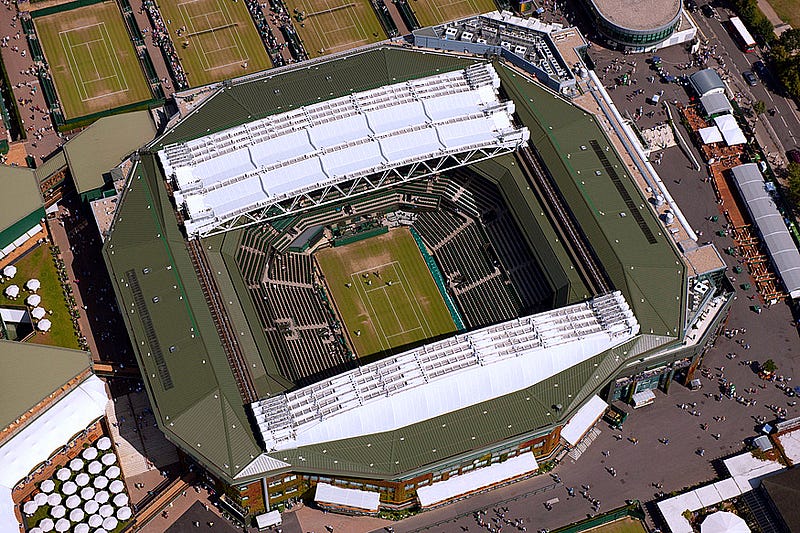
And then there’s Centre Court at Wimbledon, where the absence of a roof (for so many years) meant playing under the capricious English sky. Rain delays weren’t just interruptions — they were psychological torture, stretching nerves to breaking point. Now, with its retractable roof, the drama changes: the air grows still, the sound turns intimate, and every exhale feels louder.
The Soundtrack of the Game
Tennis has its soundscape, a rhythm that seeps into the subconscious. On clay, there’s the shushing slide of sneakers, the gritty thud of the ball. On grass, it’s the crisp pop of a volley, the crunch of crushed blades underfoot. Hard courts are the loudest — the hollow boom of the ball, the squeak of rubber soles. These sounds aren’t just noise; they’re feedback, a way for players to measure power and spin without looking. Silence, then, becomes the real disruptor — when crowds hush before a serve, the pressure doesn’t just mount, it crushes.
The Light, the Heat, the Ghosts
Lighting alters reality. Floodlit night matches at the Australian Open turn the court into a glowing island, shadows stretching long like ghosts. Players talk about the ball “jumping” differently under artificial light — depth perception shifts, and timing falters. Heat does stranger things — it melts resolve, shortens tempers. The 2022 Australian Open, where players collapsed from 40°C (104°F) temperatures, wasn’t just a test of skill; it was a psychological furnace, exposing who could endure the slow burn of attrition.
And then there are the ghosts of past matches. Walk onto Court Philippe Chatrier at Roland Garros, and you’re stepping where Nadal bled into the clay. Wimbledon’s Centre Court has the whispers of Borg, McEnroe, Federer — legacies that haunt the baseline. Some players thrive on this; others buckle under the invisible weight.
Why This Matters
Because tennis is the most psychological sport in the world. The court isn’t just a surface — it’s a collaborator, an antagonist, a therapist’s couch. It rewards those who understand its tricks: the way red clay teaches patience, how grass punishes hesitation, why hard court blue sharpens focus until it burns. The greatest players aren’t just athletes; they’re psychologists of space, reading the unseen currents of wind, sound, and shadow.
So next time you watch a match, don’t just follow the ball. Watch how the court plays the player.