The Hidden Treasure of the Giant Pacific Octopus: A Journey into Tako Tamago
In the shadowy depths of the North Pacific, where kelp forests sway like underwater giants, lives a creature of remarkable intelligence and…
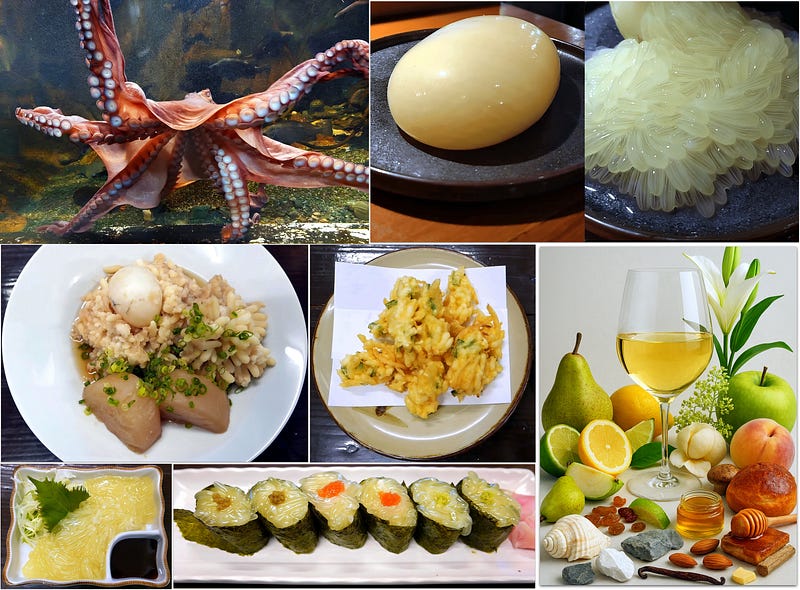
In the shadowy depths of the North Pacific, where kelp forests sway like underwater giants, lives a creature of remarkable intelligence and grandeur: Enteroctopus dofleini, the Giant Pacific Octopus. Yet, from this magnificent animal comes a delicacy so rare and visually striking that it divides culinary adventurers and conservationists alike — the raw, unfertilized roe known in Japan as Tako Tamago. This is not the skewered street food of market stalls, but the internal ovarian sac of the female GPO. This delicacy embodies both the pinnacle of seafood luxury and a profound ethical dilemma. To encounter Tako Tamago is to gaze upon the potential future of one of the ocean’s most intelligent invertebrates, presented on a plate.
The Biological Source: A Titan of the Deep
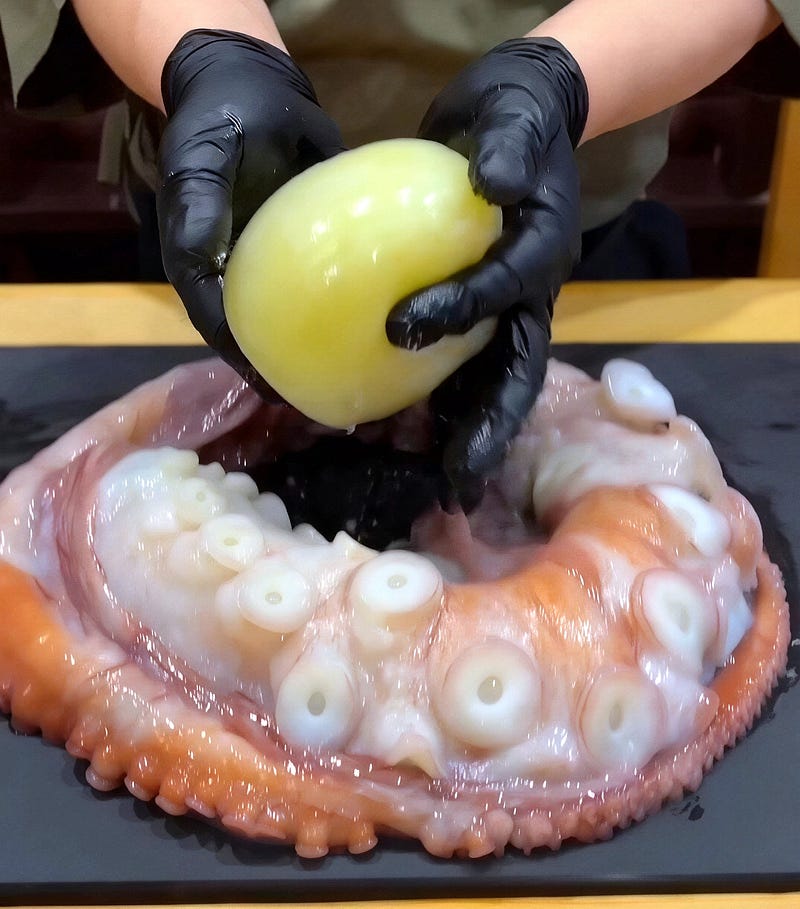
The Giant Pacific Octopus is the largest of all octopus species, with an arm span that can reach an impressive 4.3 meters (approximately 14 feet) and a weight that can exceed 50 kilograms (approximately 110 pounds). This solitary creature inhabits the cold, oxygen-rich waters of the North Pacific, from California to Japan, dwelling in dens on rocky reefs and seagrass beds. The female GPO is a dedicated mother, and her reproductive strategy is one of ultimate sacrifice. After mating, she retreats to her lair and produces tens of thousands of eggs — up to 100,000 — which she meticulously attaches in long, grape-like strands to the ceiling. She will spend the next six to seven months guarding them, without eating, slowly wasting away as she ensures her offspring receive clean, oxygenated water.
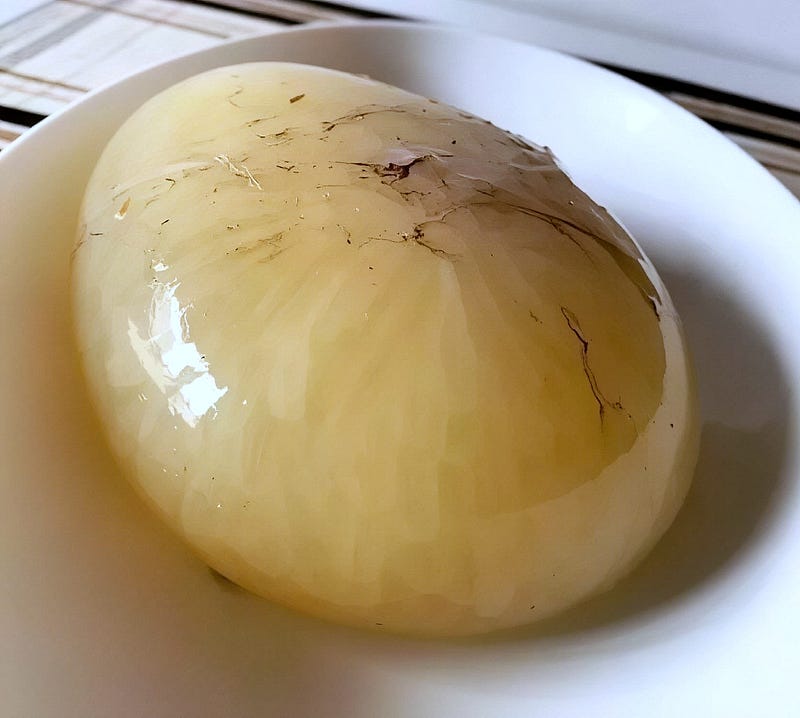
The Tako Tamago delicacy is harvested from a female that has been caught just before this final brooding stage. The roe sac itself is a breathtaking biological structure; a delicate, cohesive mass of tiny, pale eggs, each like a minuscule pearl, clustered together in a formation that resembles intricate coral or a delicate, otherworldly chrysanthemum.
The Culinary Experience: Texture and Taste of the Sea
In the world of ikizukuri (live preparation) and extreme gastronomy, Tako Tamago holds a revered spot. Its appearance is its first marvel — a creamy, white-to-pinkish mass that is both beautiful and alien. The aroma is clean and briny, a direct echo of the cold, deep ocean, with no hint of fishiness, even when the fish is perfectly fresh.
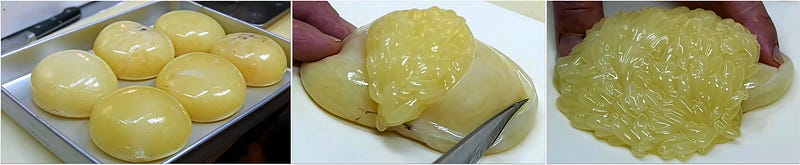
But it is the texture that truly defines the experience. The tiny eggs pop delicately on the tongue with a subtle burst, releasing a liquid essence of the sea. This sensation is reminiscent of the finest caviar, but is followed by a uniquely soft, slightly gelatinous, and creamy mouthfeel from the surrounding matrix. The flavor profile is a masterclass in subtlety: a profound, sweet umami dominates, followed by a clean brininess and a distinct minerality. The aftertaste is remarkably clean and persistent, leaving a pure, oceanic memory.
To assume Tako Tamago is solely a raw delicacy is to miss half its story. This ingredient reveals its full personality through fire, transforming under heat into a spectrum of textures and flavors that showcase remarkable culinary versatility. While the raw experience is celebrated for its purity, cooked preparations unlock entirely new dimensions.
When served raw, the experience is one of delicate, marine freshness. The appearance is a stunning natural sculpture: a cluster of tiny, pearlescent eggs forming a coral-like mass in shades of creamy white to pale pink. Its aroma is a clean, oceanic breeze. The signature sensation is textural; the tiny eggs pop on the tongue with a gentle burst, releasing a briny-sweet liquid, while the surrounding matrix offers a soft, slightly gelatinous creaminess. The flavor is a direct, profound umami with a clean, sweet finish.
However, cooking revolutionizes the experience. Grilling or pan-searing creates a captivating contrast — a faintly crisp, caramelized exterior giving way to a warm, firm, and densely creamy interior. The flavor deepens, trading bright brine for rich, savory, and slightly smoky notes. Steaming or gentle poaching yields a firm, cohesive texture, similar to a delicate, crumbly paté, which concentrates the sweet umami essence. Perhaps the most transformative is tempura frying, where a light, airy, and crisp shell shatters to reveal a hot, softly set, and intensely savory center, creating a masterful play of textures and temperatures. Each method proves that Tako Tamago is not a one-note ingredient, but a versatile canvas for culinary artistry.
A Sustainable and Ethical Conundrum
The enjoyment of Giant Pacific Octopus roe cannot be separated from significant sustainability concerns. The GPO has a life history that makes it vulnerable to overfishing. Its long brooding period and the fact that females reproduce only once in their lifetime mean that harvesting a gravid female removes not only one animal, but also her entire genetic legacy of up to 100,000 potential offspring.
While the Giant Pacific Octopus is not currently classified as endangered, localized populations can be heavily impacted by fishing pressure. The global demand for octopus, including rare delicacies like Tako Tamago, often outpaces the natural reproductive capacity of these animals. Sustainable practices are paramount. This includes implementing and enforcing strict size limits, establishing closed seasons during spawning periods, and developing robust traceability systems to ensure the integrity of the fishery. For the conscientious epicure, the decision to partake in Tako Tamago must be weighed against the imperative of ocean stewardship. Inquiring with a chef or supplier about the origin of the octopus is a crucial step in making an informed decision.
Wine Pairings for the Deep
Pairing wine with the subtle, briny sweetness and explosive texture of Tako Tamago requires wines that are precise, acidic, and mineral-rich in depth.
- Chablis Grand Cru (France): The quintessential pairing. A Chablis like “Les Clos” or “Valmur,” with its stark, flinty minerality, sharp acidity, and notes of green apple and lemon zest, creates a harmonious bridge to the roe’s oceanic character, cleansing the palate between bites.
- Sake (Junmai Daiginjo): For a native pairing, a premium Junmai Daiginjo sake is unparalleled. Its complex aromatics of melon, pear, and anise, combined with a clean, dry finish, complement the sweetness of the roe without overpowering it. At the same time, the alcohol content, around 15–16%, provides a gentle warmth.
- Assyrtiko (Santorini, Greece): This Greek white wine, grown in volcanic soil, offers a stunning alignment. Its high acidity, saline core, and citrus-driven profile mirror the sea’s influence on the roe, while its smoky undertones add a layer of intriguing complexity.
- Blanc de Blancs Champagne (France): The fine, persistent bubbles and crisp, chalky structure of a Champagne made exclusively from Chardonnay provide a brilliant tactile contrast to the popping eggs. The notes of brioche and lemon curd elevate the roe’s creamy umami, making the entire experience feel celebratory.
Conclusion: A Taste of Wonder and Responsibility
Tako Tamago from the Giant Pacific Octopus is more than a meal; it is a profound encounter with one of nature’s most incredible life cycles. It offers a taste that is both primitive and refined, a texture that delights and surprises, and a story that is as much about sacrifice as it is about sustenance. To choose to eat it is to accept a deep responsibility — to understand its source, to demand sustainable and transparent practices, and to consume it with the reverence such a rare and poignant ingredient deserves. In the end, the legacy of the Giant Pacific Octopus should not only be found on our plates, but thriving in the cold, dark deep for generations to come.