The Painted Predator: How the Clown Triggerfish Became Asia’s Hidden Reef Delicacy
Introduction Few marine creatures command attention like the clown triggerfish (Balistoides conspicillum). With its surreal mosaic of…
Introduction
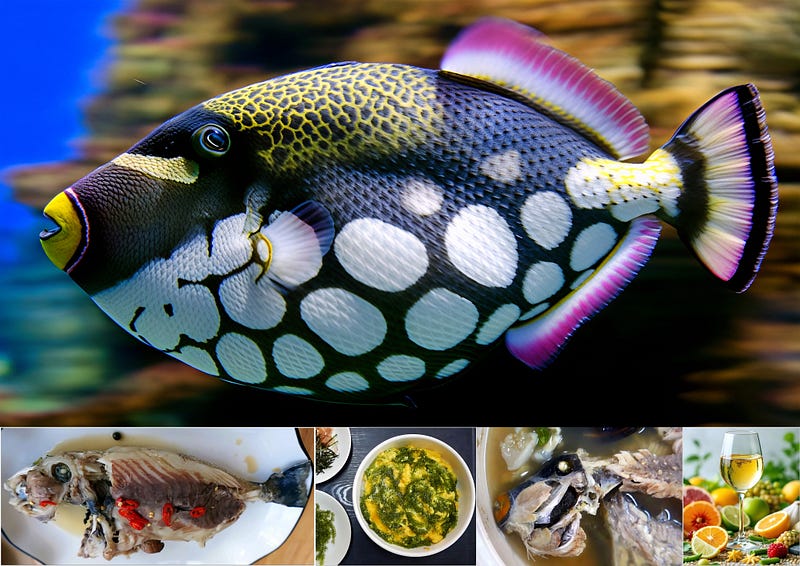
Few marine creatures command attention like the clown triggerfish (Balistoides conspicillum). With its surreal mosaic of patterns — white spots, yellow lips, and geometric contrasts — it looks as if a surrealist painted it. Yet beneath its comic façade lies a predator of precision and ferocity. This species fascinates aquarists, divers, and scientists alike, not only for its flamboyant appearance but for its ecological intelligence and cultural symbolism across Indo-Pacific communities.
Taxonomy
The clown triggerfish belongs to the family Balistidae, order Tetraodontiformes, within the class Actinopterygii. Its scientific name is Balistoides conspicillum, first described by Bloch and Schneider in 1801. The genus Balistoides includes a handful of triggerfish species, though none rival the clown triggerfish in visual complexity.
Common names vary widely. In English-speaking regions, it is known as the clown triggerfish or bigspotted triggerfish. In Japan, it is known as “Kiguchidai” (キグチダイ), and in Indonesia, it is referred to as “Ikan Badut Pemicu.” In French Polynesia, it is sometimes referred to as “Baliste clown.” Despite its global recognition, it is rarely harvested for consumption; instead, it is prized in the ornamental fish trade for its high aesthetic and symbolic value.
Biology
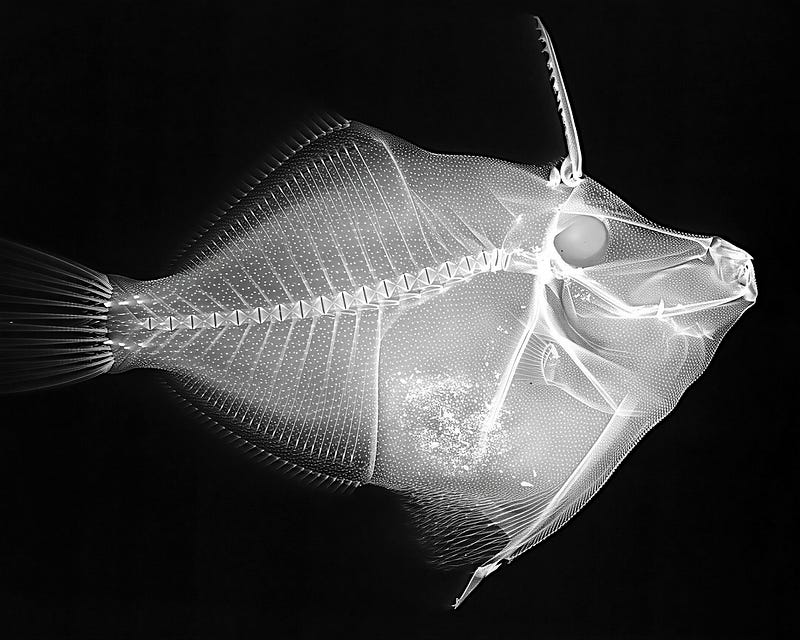
The clown triggerfish is a robust, laterally compressed fish, typically reaching lengths of 50 cm (19.7 in). Its defining characteristic is its body pattern — white oval spots on a black belly, a yellow snout, and a honeycomb pattern on the dorsal half. These patterns serve dual functions: camouflage among coral shadows and deterrence through bold aposematism.
Its mouth, equipped with strong, chisel-like teeth, can crush crustaceans, mollusks, and sea urchins with ease. Territorial and aggressive, the clown triggerfish defends its domain with near-fanatical zeal, biting intruders and even divers when provoked. It possesses a “trigger spine” on its dorsal fin that locks into place when threatened — a feature that gives all triggerfish their name.
Reproduction is seasonal, with spawning occurring in warmer months when water temperatures exceed 26°C (78.8°F). Females guard egg clusters within shallow reef depressions, fanning them for oxygenation. The larval stage is pelagic before settling into the reef structure.
Ecology
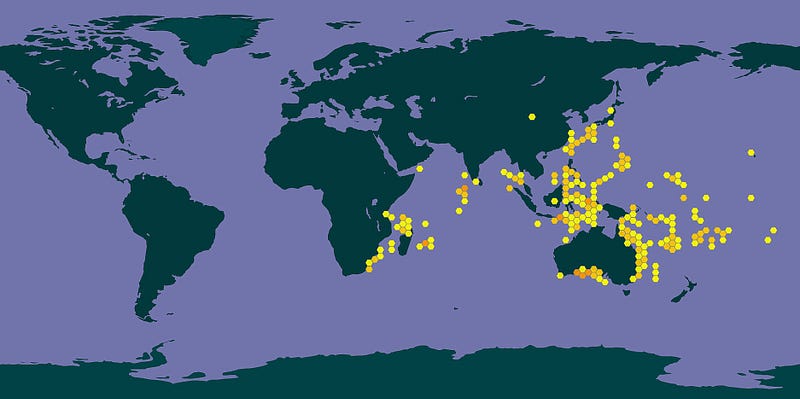
Distributed across the Indo-Pacific, from East Africa to Samoa and from southern Japan to New Caledonia, the clown triggerfish thrives in coral-rich lagoons and outer reef slopes at depths of 1–75 m (3.3–246 ft). It plays an essential role in regulating populations of invertebrates that might otherwise overgraze coral substrates.
Despite its resilience, the species faces indirect threats. Coral bleaching, destructive fishing, and the ornamental fish trade stress its populations. The IUCN currently lists Balistoides conspicillum as Least Concern, but local declines are evident in overexploited reefs. Sustainable reef management and regulated trade are critical to maintaining population balance.
Uses
Across coastal Asia and the Pacific, the clown triggerfish is a valued food fish. In Indonesia, the Philippines, and coastal Vietnam, it appears in wet markets alongside parrotfish and wrasses. Fishermen often grill it whole over charcoal or steam fillets with galangal, lemongrass, and lime leaves. Its firm, ivory flesh holds together under high heat, making it ideal for grilling, stewing, or deep-frying.
In Okinawa and Taiwan, cooks pan-sear it in sesame oil or marinate it with miso, which highlights the meat’s mild sweetness and delicate umami. Market yield from reef-associated fisheries averages 300–500 kg/ha (270–450 lb/acre) annually under mixed-species harvest. The edible portion — about 55% of body mass — provides roughly 110 kcal per 100 g (3.5 oz), with lean protein, omega-3 fatty acids, calcium, and phosphorus, and very low saturated fat.
While ciguatera risk exists in some reef systems, most commercially traded fish come from monitored zones where risk is minimal. Processing typically involves gutting, skinning, and light brining to firm texture and neutralize oceanic odor. Export demand is steady, driven by Hong Kong, Singapore, and Manila’s seafood markets. Retail prices range between USD 8–14 per kg (USD 3.60–6.35 per lb), with monsoon seasons tightening supply.
Culinary Aspects
The clown triggerfish’s flesh combines sweetness and salinity similar to coral grouper, with a firmer, more elastic flake. Its aroma is clean and briny, occasionally hinting at shellfish when grilled. The mouthfeel is smooth and lightly oily, producing a gentle richness without heaviness.
Flavor deepens with acid and herbs — lime, tamarind, lemongrass, or ginger — revealing subtle marine umami and seaweed undertones. In Thai coastal cooking, it holds structure in coconut curries. When smoked or sun-dried, it develops a nutty depth reminiscent of bonito.
The finish is clean and brief, leaving room for spice and aromatic complexity. Its slight chemesthetic tingle — enhanced by chili or char — adds sensory intrigue. Across the Indo-Pacific, it carries symbolic value as a festive fish, served during coastal holidays as a representation of abundance and reef beauty.
Wine Pairings
For charcoal-grilled preparations with lime and chili, a Santorini Assyrtiko provides sharp acidity and sea-breeze minerality that heighten the fish’s saline character.
When served in coconut or tamarind curry, a dry Gewürztraminer from Alsace complements both spice and aromatics; its lychee and rose notes mirror the dish’s tropical sweetness.
For miso or sesame-based steaming, a Chablis Premier Cru balances the savory nuttiness with chalky structure and restrained citrus.
If smoked or dried, a Junmai Ginjo sake aligns with the fish’s umami depth and clean finish, preserving subtlety without overpowering the texture.
For a hot pot featuring clown triggerfish, use a Grüner Veltliner from Austria. Its crisp acidity, white pepper notes, and subtle vegetal tones cut through the broth’s richness while balancing the fish’s mild sweetness. The wine’s minerality harmonizes with umami from seafood stock, mushrooms, and leafy greens without clashing with dipping sauces like sesame or chili oil.
If you prefer something fuller, a dry Riesling from Clare Valley works well — the citrus backbone and slate finish refresh the palate between bites while accentuating the fish’s delicate texture.
Each pairing accentuates the fish’s texture, sweetness, and saline finesse — an approach that treats the clown triggerfish not as a rarity, but as a refined ambassador of tropical coastal cuisine.
Conclusion
The clown triggerfish stands as both a triumph of natural artistry and a warning about the fragility of reef ecosystems. Its beauty draws admiration, but its venomous potential and ecological importance remind us that marine life cannot be commodified without consequence. Protecting this species means protecting the reefs themselves — the living mosaics upon which much of oceanic life depends.