The Paradox of Nothing: How Physics and Philosophy Collide Over the Meaning of Emptiness
Introduction What if nothing isn’t nothing at all? From ancient cosmologies to cutting-edge quantum physics, the idea of “nothingness”…
The Paradox of Nothing: How Physics and Philosophy Collide Over the Meaning of Emptiness
Introduction
What if nothing isn’t nothing at all? From ancient cosmologies to cutting-edge quantum physics, the idea of “nothingness” has intrigued, haunted, and defied humanity’s greatest minds. We often imagine it as a blank slate — a void, a vacuum, a space where nothing exists. But modern science and philosophy have turned that assumption on its head. Today, “nothing” isn’t just empty — it’s volatile, dynamic, and even creative. As physicists probe the depths of the vacuum and philosophers wrestle with the language of absence, one thing becomes clear: understanding “nothing” may be the key to understanding everything.
The Void in Ancient Thought: Still Waters or Hidden Depths?
The roots of the nothingness debate stretch deep into antiquity. The atomists, Leucippus and Democritus, viewed the void as a necessary backdrop for motion — a static emptiness in which atoms collided and created form. Newton’s classical mechanics inherited this framework, envisioning space as an immutable stage upon which forces played out.
But not everyone was convinced. Parmenides claimed that to even speak of “nothing” gives it a kind of being, creating a paradox that philosophers still grapple with today. In medieval and early modern metaphysics, the notion of a true void was often viewed with suspicion — either metaphysically impossible or theologically unacceptable. The intellectual tension between “absence” and “something hidden” was baked into our earliest attempts to make sense of reality.
Quantum Fields and the Illusion of Emptiness
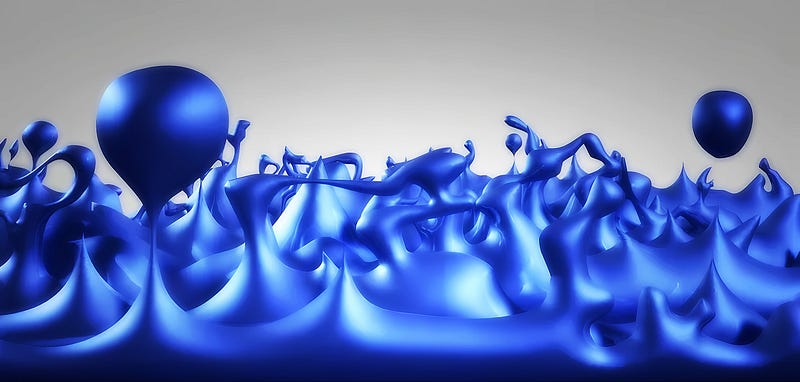
The 20th century cracked open a new dimension of the nothingness problem. Quantum field theory demonstrated that even in a perfect vacuum, the so-called “emptiness” isn’t truly empty. Virtual particles pop into and out of existence in infinitesimal flashes. The Casimir effect, where two plates in a vacuum mysteriously attract each other, is just one eerie reminder that space seethes with invisible energy.
This upends classical notions of emptiness. Physicists now define the quantum vacuum as the lowest-energy state of a field — not a void, but a simmering background noise of potential. This quantum “nothing” is a special kind of “something,” complete with structure, rules, and measurable effects. Yet here’s the kicker: if our emptiest state is full of laws and fields, does “true” nothingness even exist?
Big Bangs and the Birth of Everything from Nothing
In cosmology, the nothingness problem reaches its dramatic peak. What came before the Big Bang? Some theories, like Stephen Hawking and James Hartle’s no-boundary proposal, suggest that spacetime itself curled into existence without a “before,” eliminating the need for a temporal void. Others, like Lawrence Krauss, argue that the universe emerged from quantum fluctuations in a vacuum — cosmic fireworks bursting out of a quantum field.
But is that “nothing”? Philosopher David Albert and others have pushed back. A quantum vacuum, they argue, already contains physical laws, mathematical structures, and fields — so how can it be truly nothing? In that light, even the phrase “universe from nothing” starts to look like clever marketing. The deeper truth may be that we can never escape “something” — even when trying to describe its absence.
Philosophical Puzzles: The Weight of Words
Where physics ends, philosophy begins. Heidegger’s infamous question — “Why is there something rather than nothing?” — refuses to go away. Sartre, too, framed nothingness as a psychological and ontological force, a product of human consciousness that negates, defines, and contrasts against being.
Philosophers challenge scientists to confront hidden assumptions: Are physical laws eternal truths or artifacts of this universe? If they precede matter, do they exist in some non-physical Platonic realm? Can we ever define “nothing” without smuggling in the language of “something”? These questions strike at the metaphysical core of the debate and reveal just how slippery our concepts become when pushed to the edge.
Theological and Spiritual Views of the Void
Long before quantum physics, religion and mysticism grappled with the mystery of nothingness. In Abrahamic faiths, the doctrine of creatio ex nihilo speaks of a divine creation from absolute nonbeing — a nothing that only God could transcend. Eastern philosophies, particularly Buddhism, offer a more nuanced take. Rather than denying the void, Buddhist notions of śūnyatā (emptiness) embrace it, portraying existence as interdependent and impermanent.
These views don’t mirror scientific models, but they resonate in surprising ways. Both challenge our assumptions about permanence, identity, and isolation. Both question whether “things” truly exist apart from the systems that give them meaning. And both suggest that perhaps what we call “nothing” is not the absence of being — but the absence of separateness.
Language, Logic, and the Limits of Knowing
Here’s the human dilemma: our brains evolved to deal with “stuff” — rocks, rivers, other people — not ontological paradoxes. So when we try to speak about “nothing,” we inevitably use the tools of “something.” This creates a linguistic trap. As Wittgenstein famously said, “The limits of my language mean the limits of my world.”
Mathematics — our most precise tool — might be part of the problem. When we model vacuums with equations or define a “zero-energy state,” we’re already imposing structure. Are we discovering reality, or inventing a convenient fiction? The truth may lie somewhere in between. But as long as our minds are wired for existence, we may never be able to truly grasp its absence.
The Final Paradox: Something About Nothing
The clash between science and philosophy over nothingness is less a fight and more a dance. Physics describes what we can observe — vacuums, quantum fields, spacetime geometries. Philosophy probes what we assume — our language, our categories, our inability to step outside the box of being.
And yet, the pursuit of “nothing” keeps producing revelations about “something.” The emptiest concepts teem with implications. The deepest voids pulse with possibility. Maybe that’s the secret: “nothing” is never really empty — it’s a mirror. In it, we see the limits of knowledge, the hunger to understand, and the strange, fragile miracle of existence itself.